
Bonjourno
Our time to explore Sicily included 3 days in Taormina and 3 days in Palermo….opposite sides of the island. It’s the largest island in the Mediterranean, but by Texas standards it’s a small island…you could probably drive around the complete coastline in 7 or 8 hours. The population is only about 5 million…. But judging by the number of cars and traffic, everyone must have multiple cars😩. Before I forget, here’s a little advice….you MUST have WhatsApp and Uber to survive here.
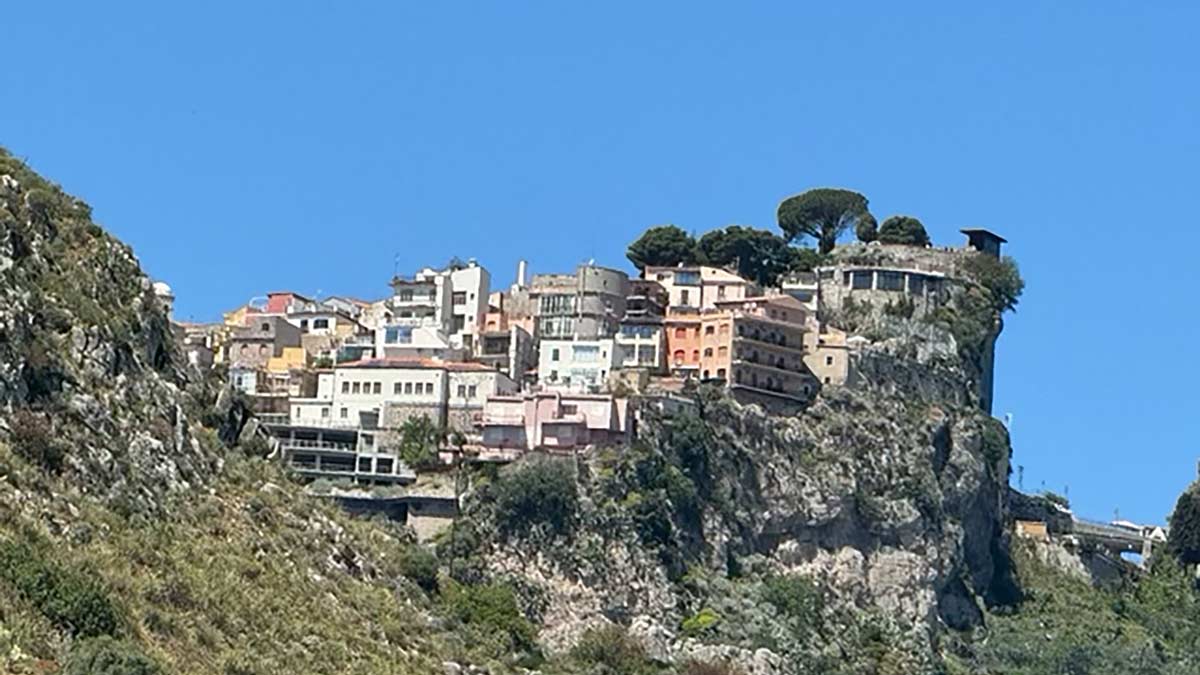
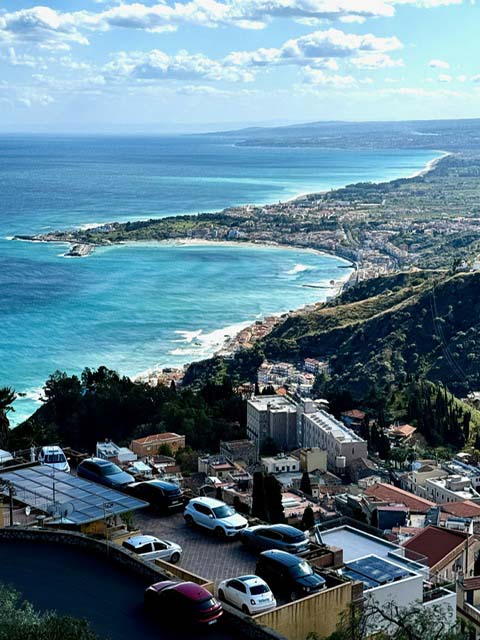
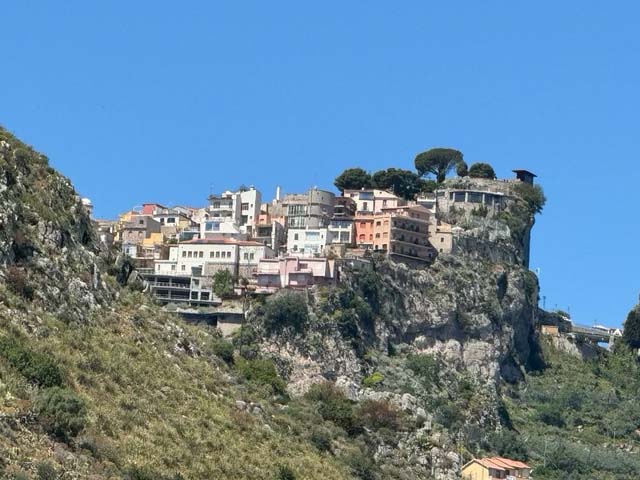
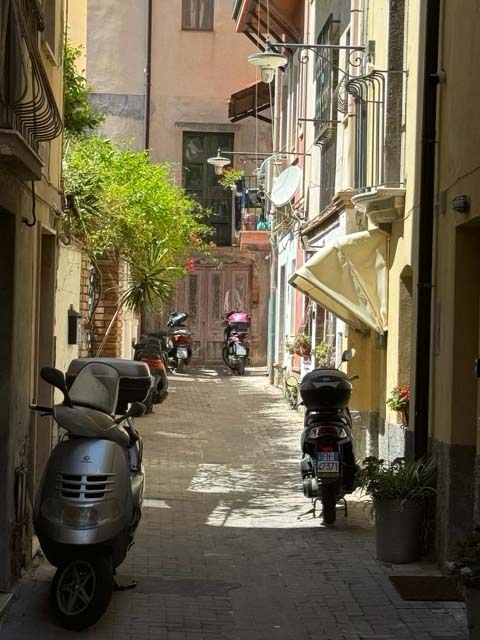
Taormina is a quaint OLD town and full of history….Lots of Alleys to explore with cafes, souvenir shops, ceramic wares, and historic sights.
Highlights include…
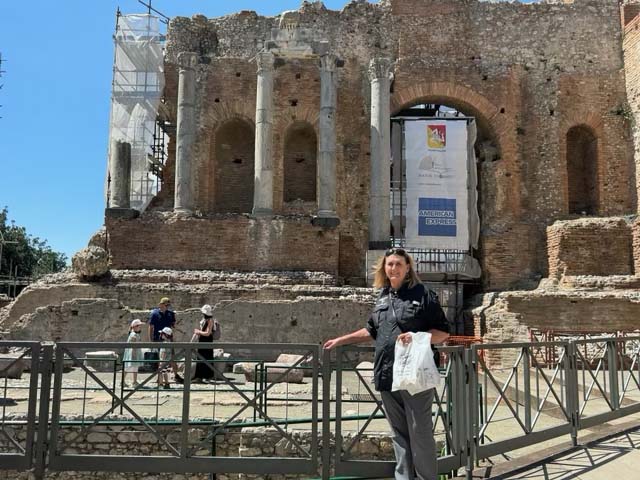
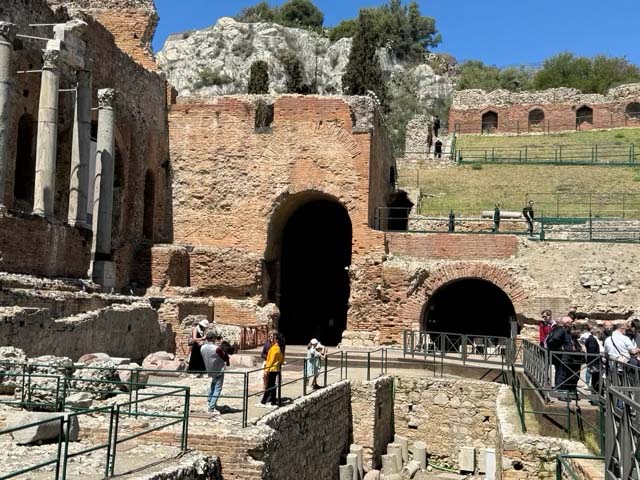
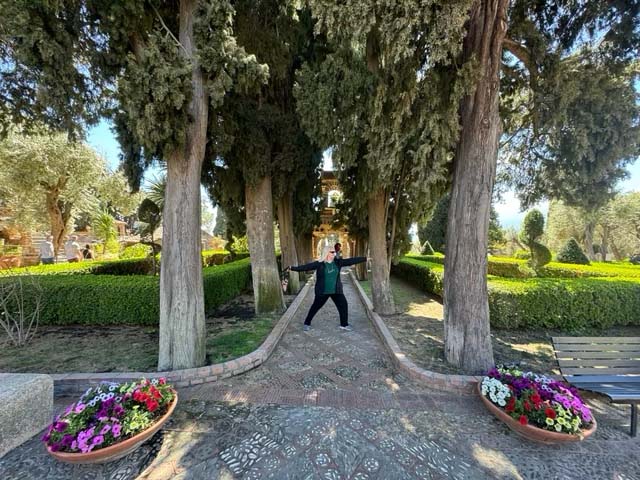
The Greek Theatre….built in the 3rd century BC and expanded later by the Romans. It’s the world’s best known and most admired. Holding 10,000 people, it also provides a view of the Ionian Sea and Mt Etna. No better place for KK to do her warrior pose😉. And then ONCE AGAIN we ate pasta 🍝
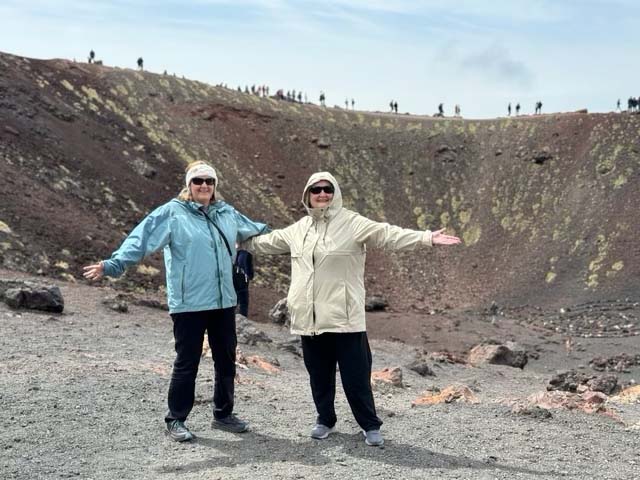
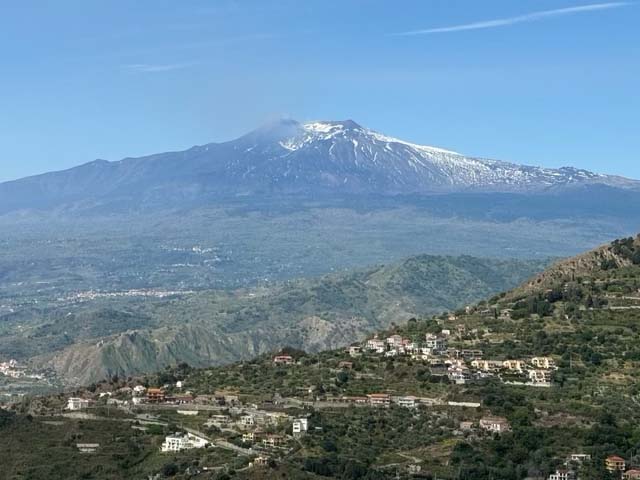
Mt Etna…one morning we set out to go to the top of Mt Etna, the most active volcano in the world (last erupted 20 years ago). It erupts once a year on average. We had a great view of it (and the old city of Taormina) from our hilltop B&B….but we were anxious to get a closer look. Sergio, our driver was a local to the area and full of knowledge…both facts and legends. The roads and fields were highlighted with the bright yellow wildflowers similar to Croatia’s coastline. Driving as far up as the road would take us (2000 meters or 6,500 feet), we got out and walked up a hill to see the inside of one of Mt Etna’s “baby craters”. This was a new discovery for me….Surrounding the main crater, many baby craters can form from the underground pressure stemming out from the main crater. These babies can only erupt and flow lava once…then they are dormant forever. The liquid in the earth is called magma, and once is hits the surface, it is then called lava. The darker the lava, the newer the eruption. Most of the roads in the older towns in Sicily are made from Basalt…which is crushed lava mixed with water. We actually visited a town where in 1991, during Mt Etna’s highest eruption, the lava had flowed right up to a house on the outskirts of town and just STOPPED. They have a legend that this town is blessed and a statue of Maria SS Della Provvidenza is placed where the lava flow stopped. There’s also a building (now a store) that has survived 3 eruptions…everything else burned but the lava flow went around the building. Reminded me of how a tornado or fire will hit a house, but the house next door doesn’t get touched.
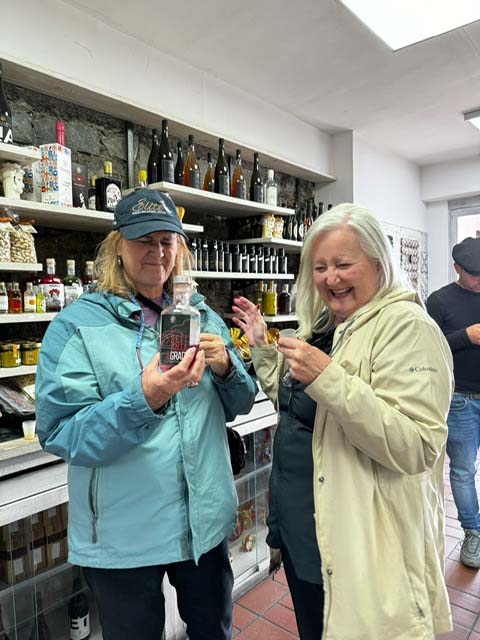
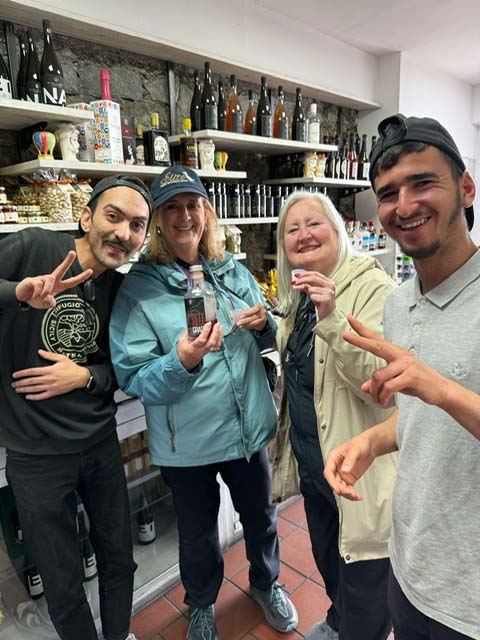
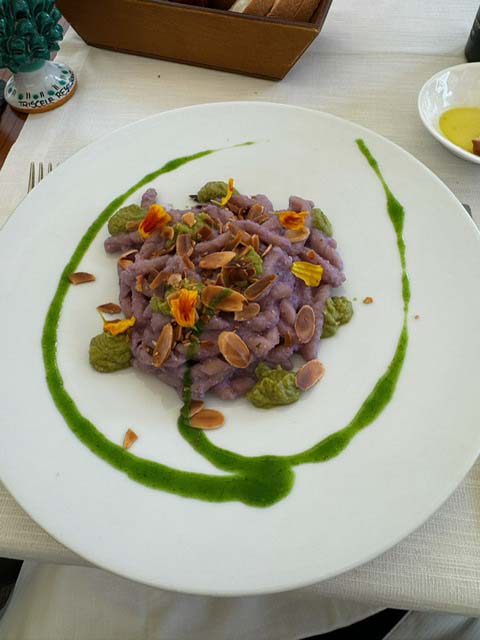
Everything here is about pistachios😋and the nuts are much darker green because the trees are grown in the lava fields and get lots of minerals. They are also expensive because they only produce fruit every 2 years. We ate pistachio pesto on our pasta regularly, pistachio ice cream, and even pistachio cannoli. And then there’s lemons…yelp, everywhere you look. The lemons don’t turn bright yellow like ours due to less rain in this area…but they do grow year round. Limes won’t grow here…go figure! No lime or ginger ale for my Jamison😢. We did try a shot “Fire of Etna” during our visit to the volcano…it’s 70% alcohol and burned in my throat for at least 10 minutes. I definitely felt the FIRE part. Remember we learned about Grappa being 50% alcohol – (moonshine) and should be used to clean wooden items😜 …so you can imagine the kick Fire of Etna had!
Another fun fact…you can fry & eat Wisteria…not sure I’m in on this treat.
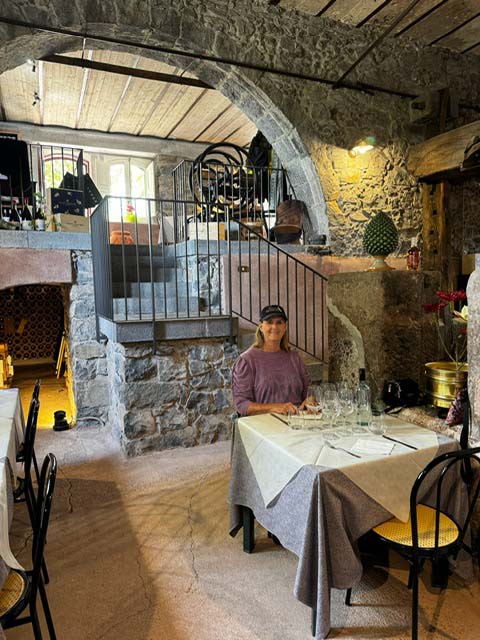
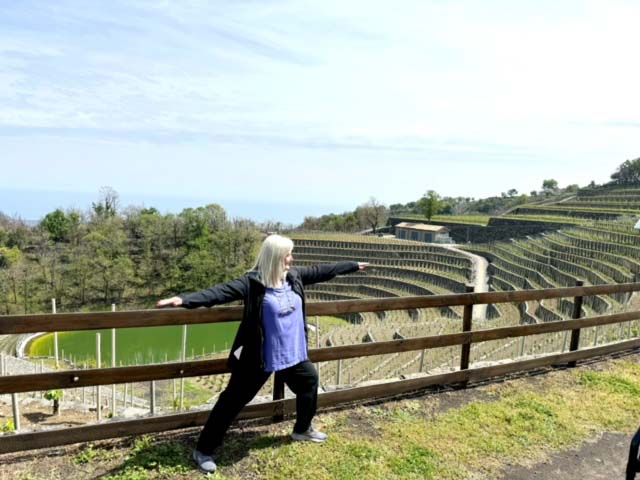
Sergio suggested we visit the La Gelsomina Winery. Driving down a very steep road built in 800 AD, headed straight toward the water, I became a little leery of where we were going. But once we arrived, this winery was the most spectacular one I’ve ever seen. It’s built on the side of the hill, overlooking the Straits of Messina , with 15 hectares (37 acres) of terraced vines, olive groves and fruit trees in every direction you look. They built it inside a “baby crater”….so it had the same feel as the Greek Theatre we visited. The vines grow great here because Black ash contains minerals & the sea nearby adds salt for more color and flavor. This family started building this winery 45 years ago and the lava walls that appear throughout the estate were all built by hand. There’s even a beautiful outside alter where you can not only say a prayer, but also admire the excellent craftsmanship of these workers. They harvest most of the grapes for wine in Aug and Sept.
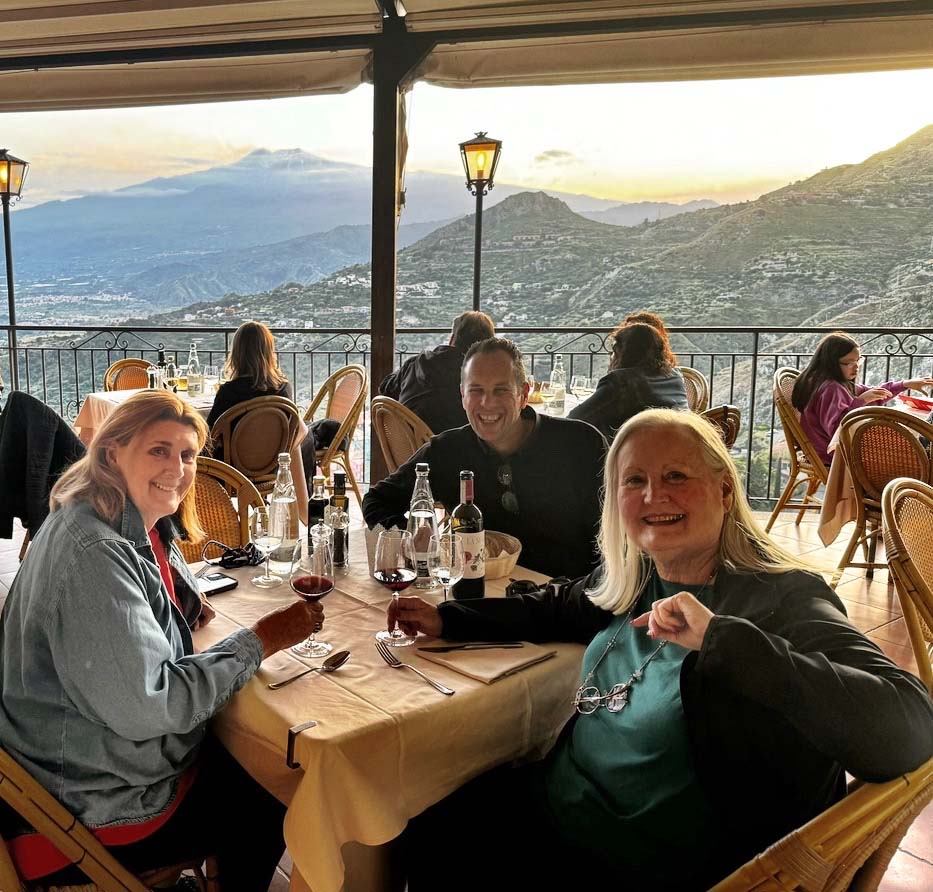
Each region in Sicily is known for specific grapes…we tried many, as I’m sure you guessed, but I liked Nero d’Avalo the best. Cheers ….saluti

0 Comments