
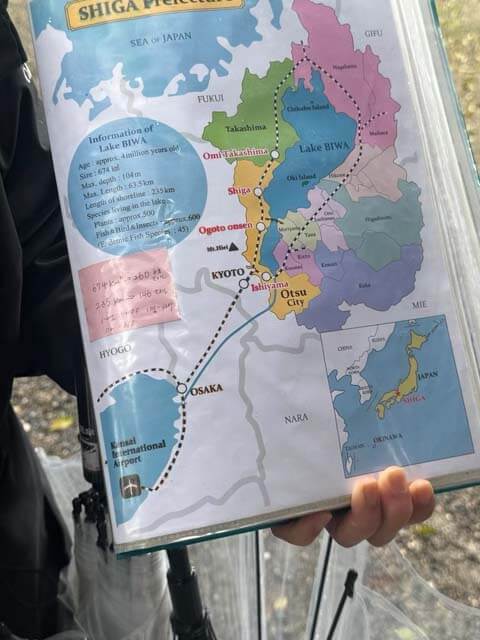
Today we took a car to a tucked-away village up in the hills above Lake Biwa, the largest freshwater lake in Japan that’s over 4,000 years old. YELP you read that right!
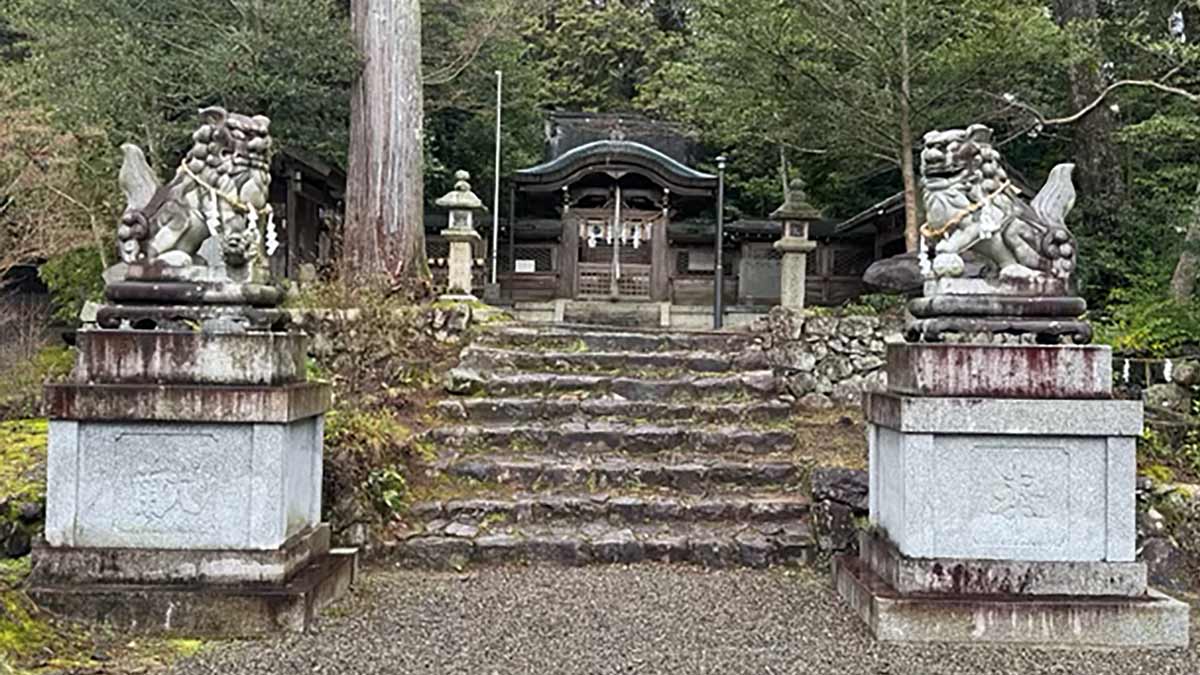
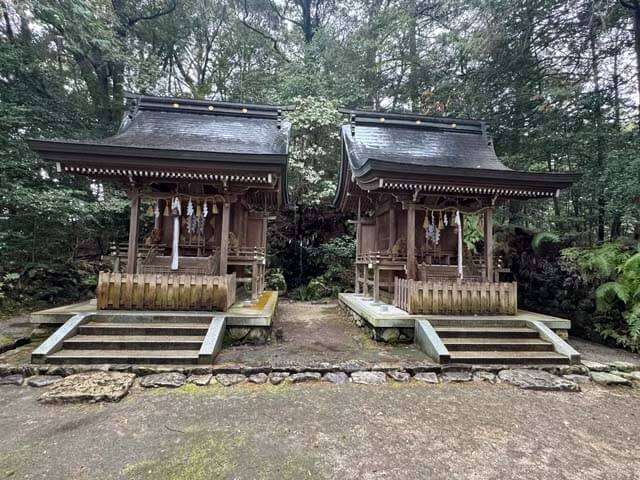
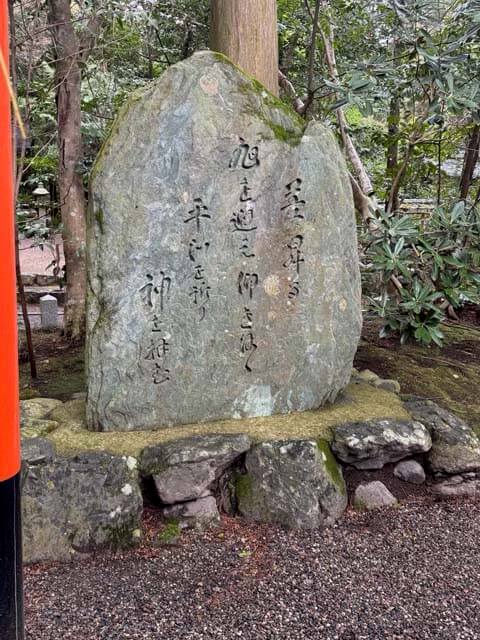
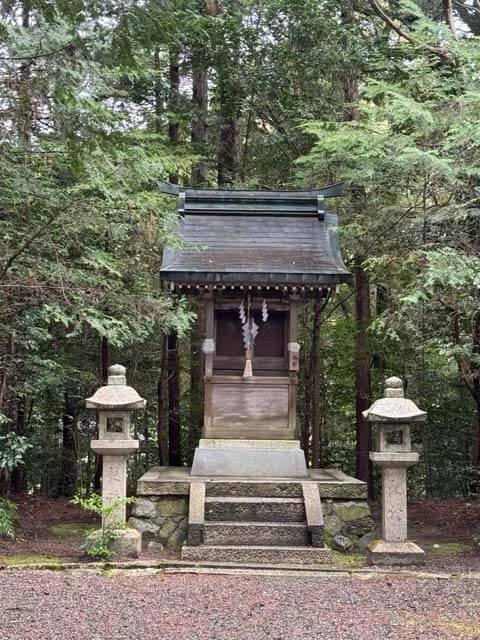
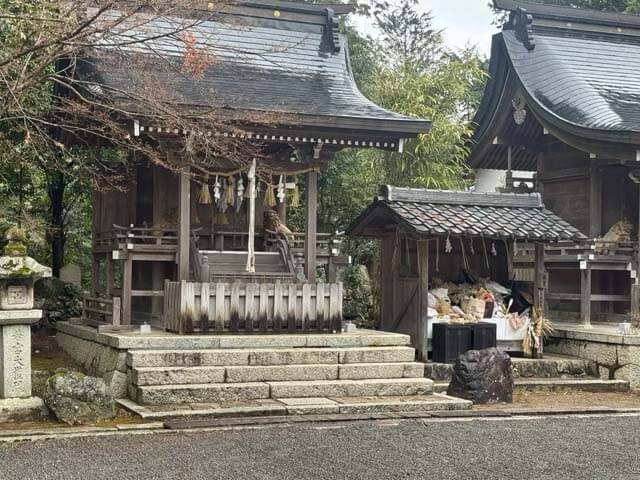
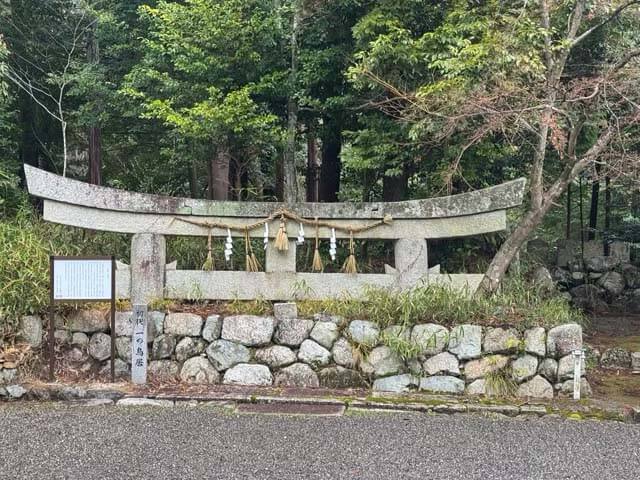
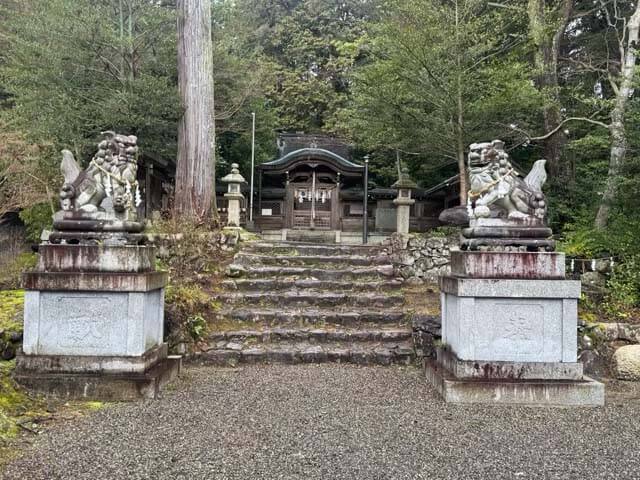
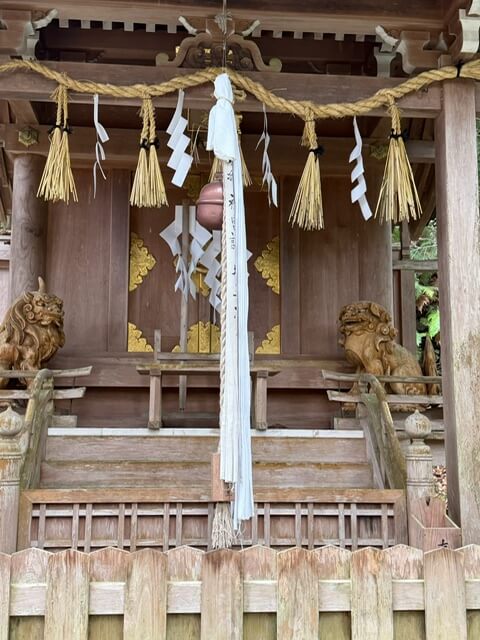
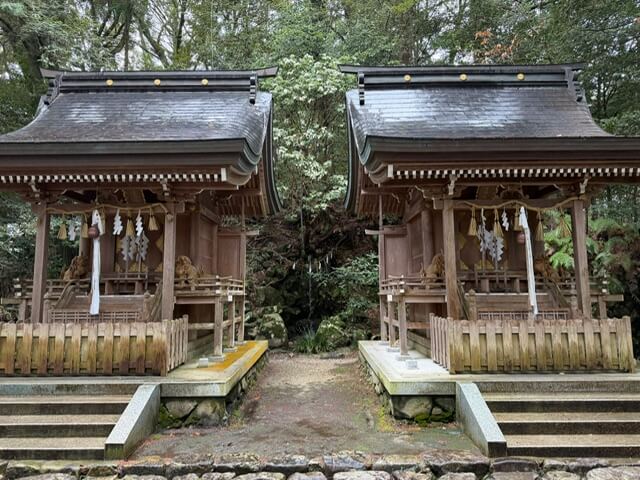
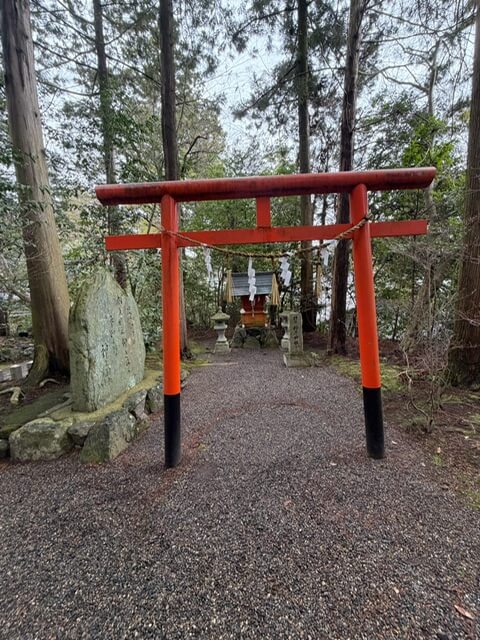
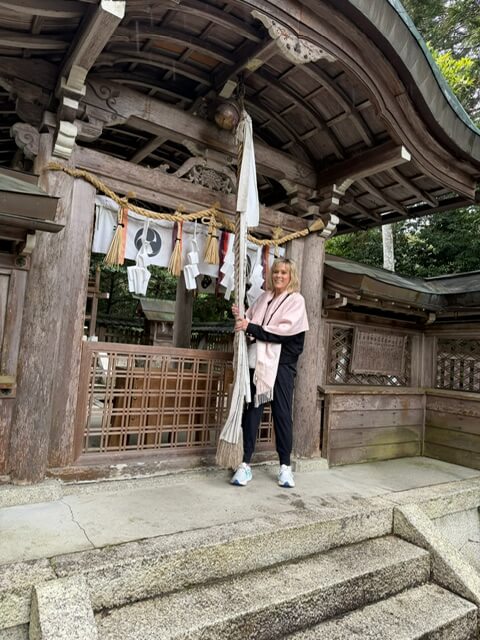
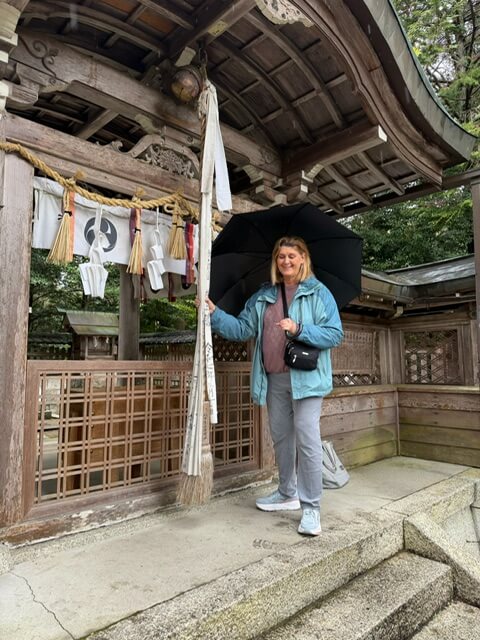
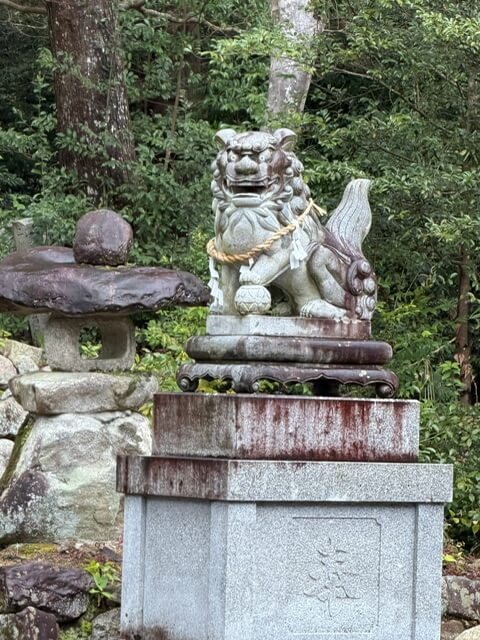
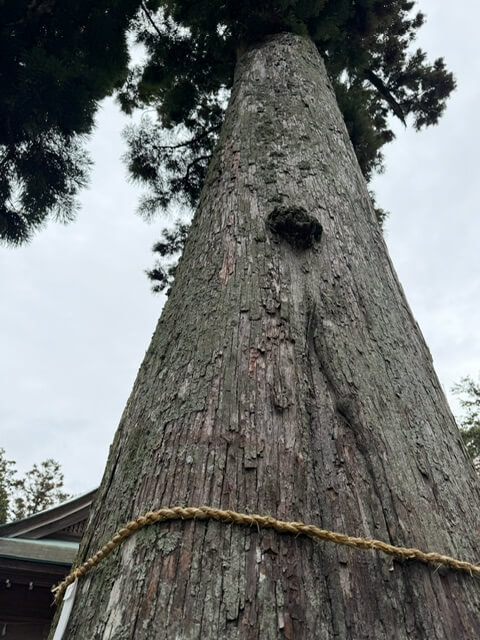
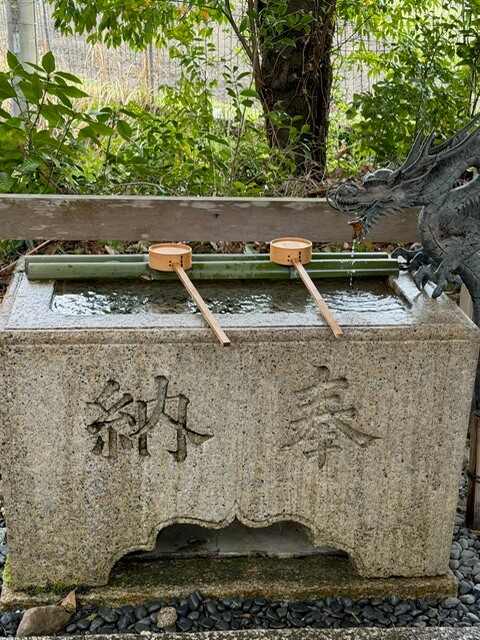
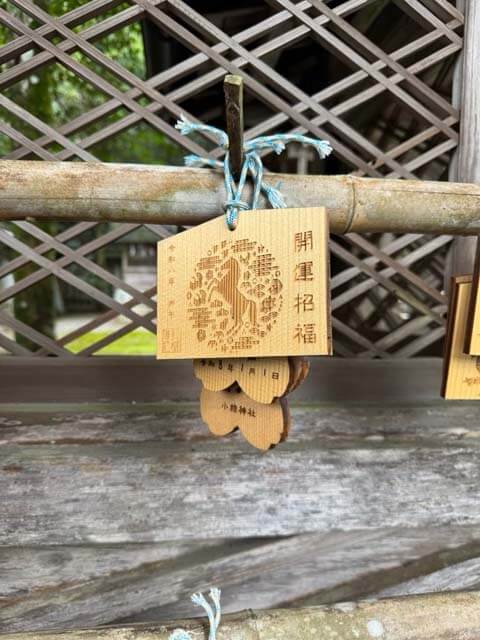
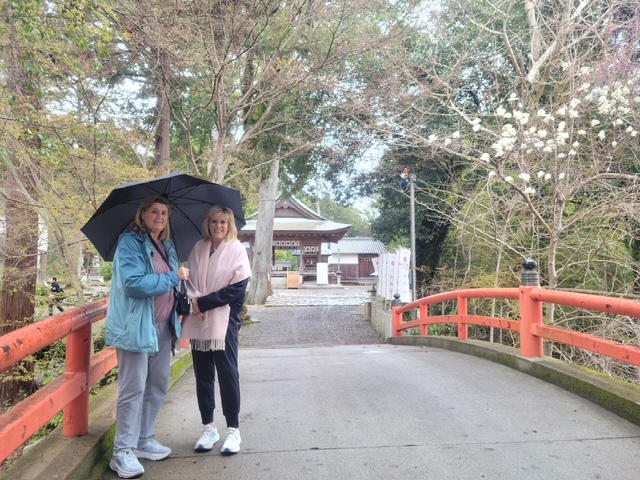
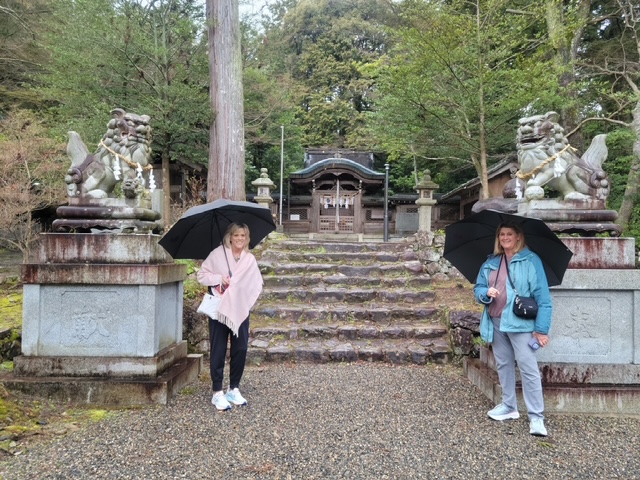
First, we visited the village’s beautiful Shinto shrine, well cared for by the local community. There are 14 million BUSY people in this region of Japan, but only 1700 in this small village, which is approximately 1200 years old. We are learning some of the local traditions, and so when we reached the shrine, we bowed before going under the gate, then washed our hands, rang the bell to awaken the spirits and then went thru the prayer routine ending with a bow.
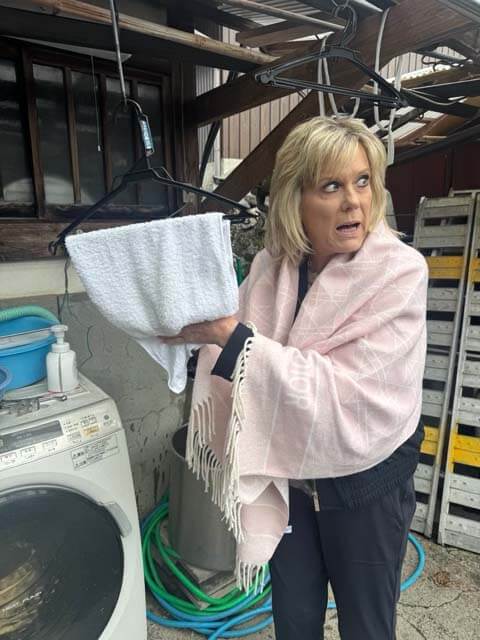
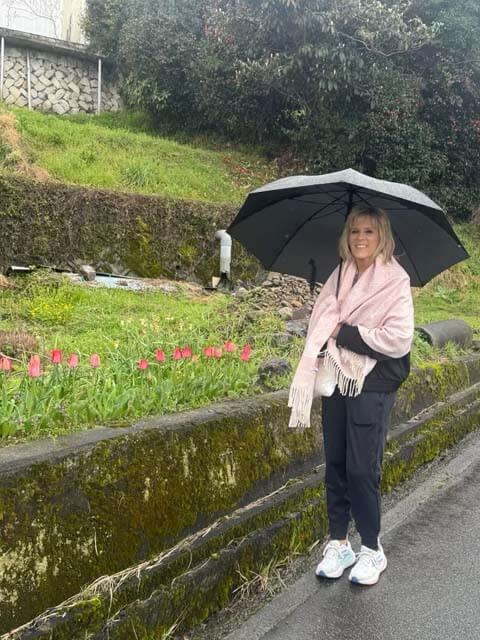
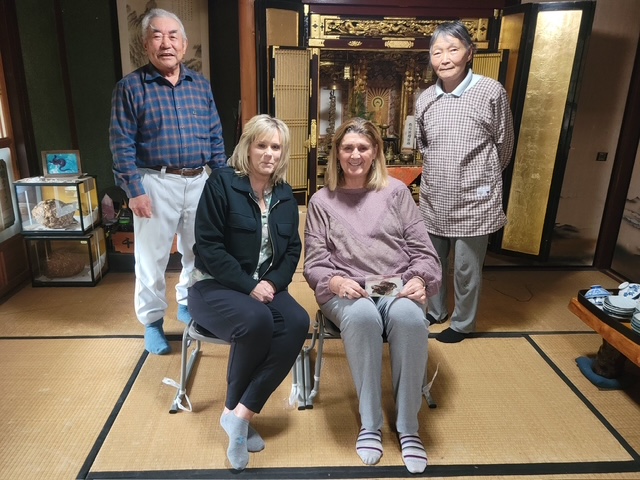
Next we walked up a steep hill SLOWLY further into the village, admiring the rice fields and learning about how they grow the rice. Finally, we arrived at a local farmer’s home. They were very gracious and explained their harvesting techniques, giving us some insight into the traditional Japanese countryside life.
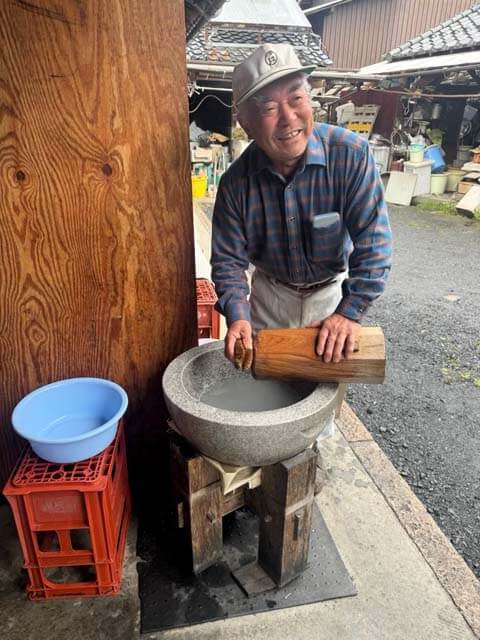
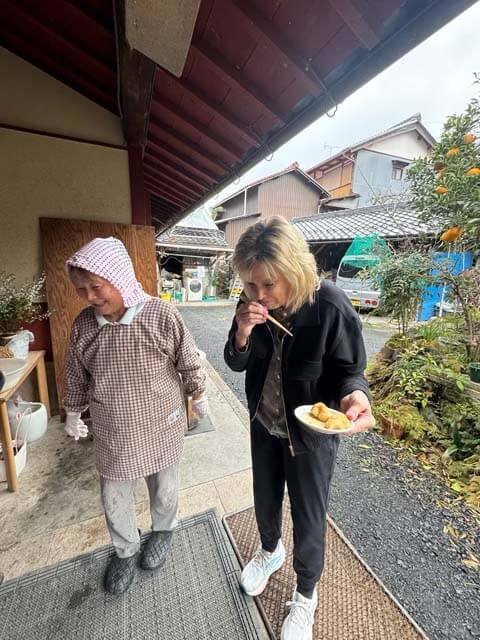
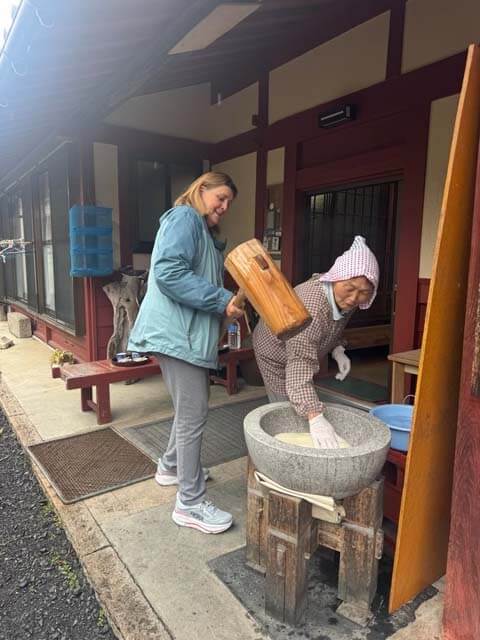
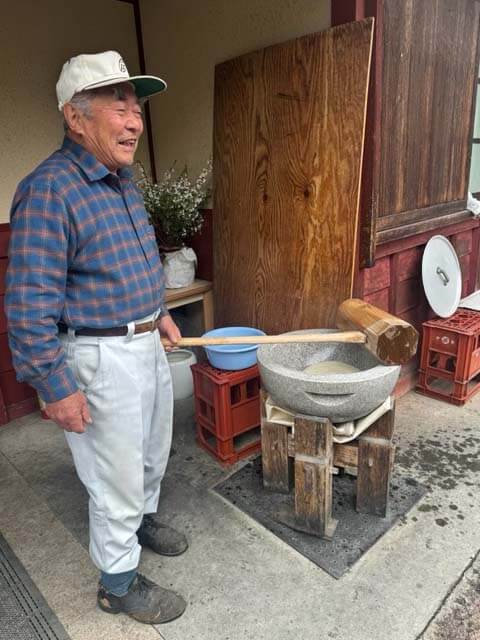
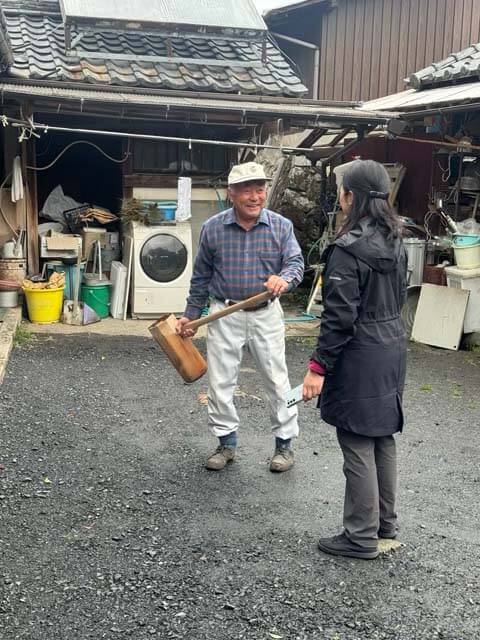
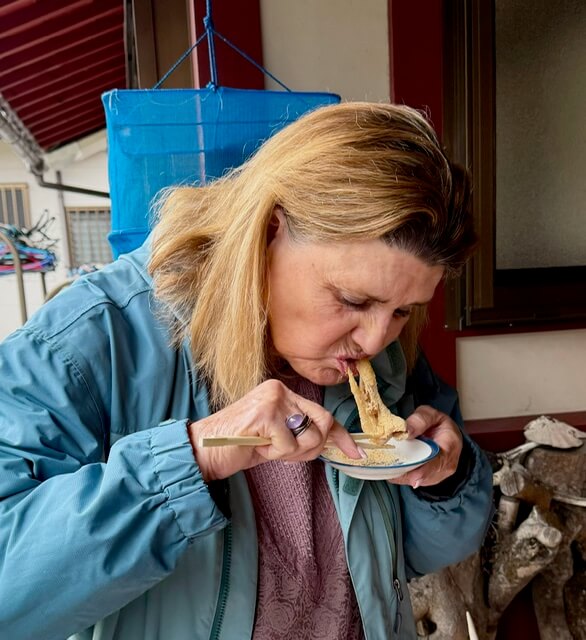
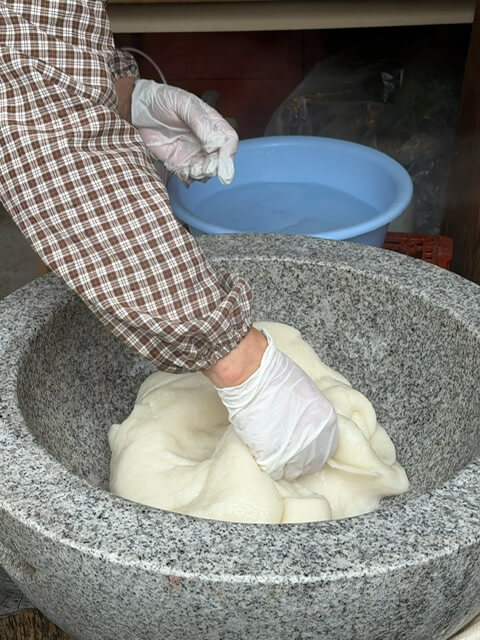
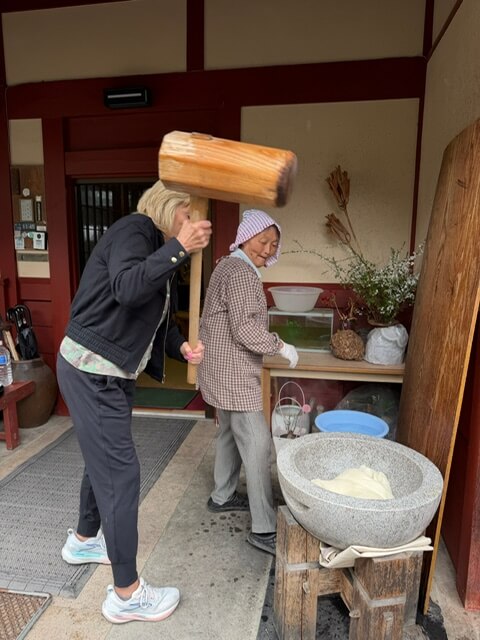
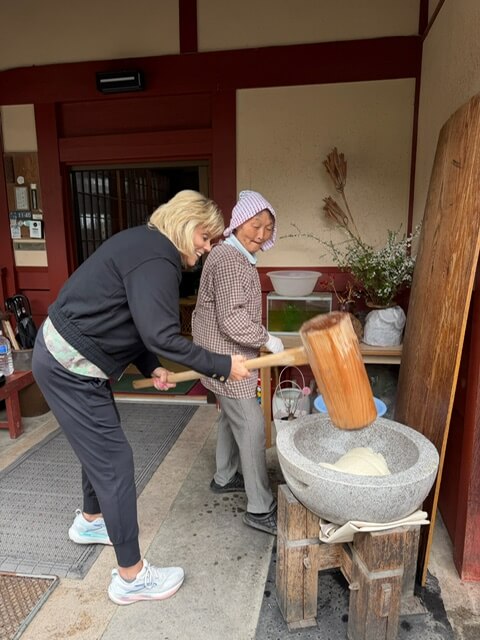
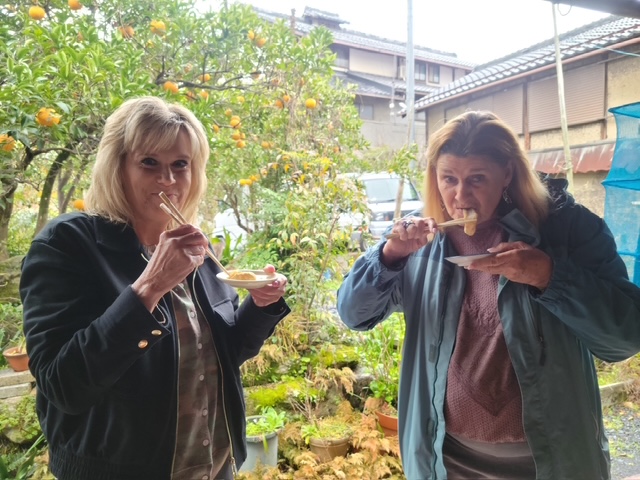
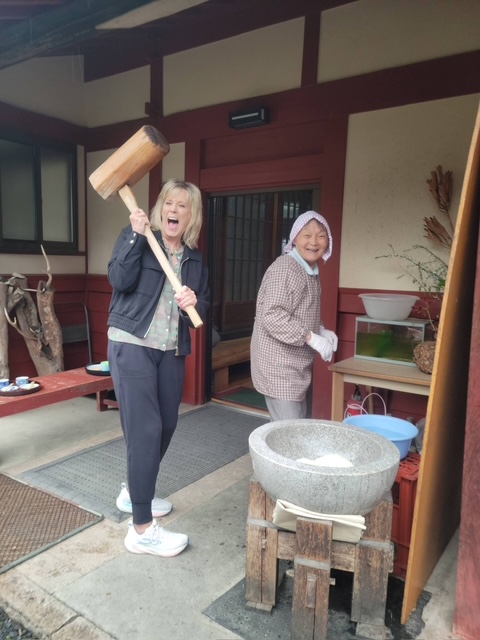
Then, it was time to swing the mallet!!! ⚒️a 12 lb mallet no less, as we participated in preparing their traditional mochi rice cakes. The main ingredient is grown locally on the farm. The technique to make mochi is to hit the steamed rice with a large (heavy) wooden mallet until it achieves the right chewy consistency….soft as a baby’s skin. I will confess after having shoulder surgery in December, I wasn’t excited to injure myself, so Connie did the hard labor. Then it was time to taste the rice… it was very gooey & sticky dough tasting with a soybean paste. I managed to eat my piece with some effort, but Connie was gagging and struggling for quite a few minutes….in the end she managed to swollow her piece. Tradition ….they make mochi rice usually 3-4 times a year to represent happy times.
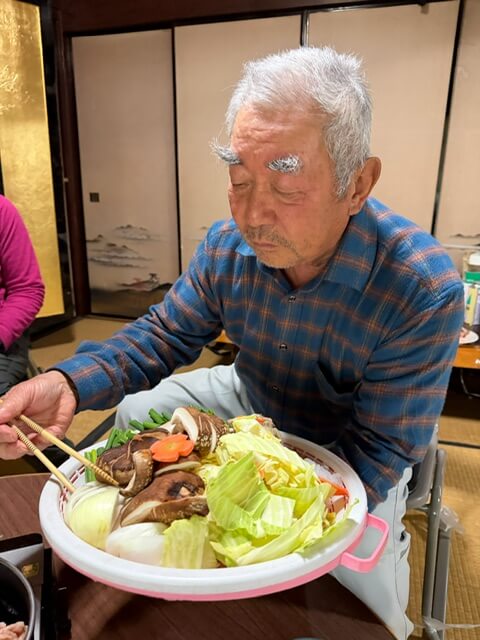
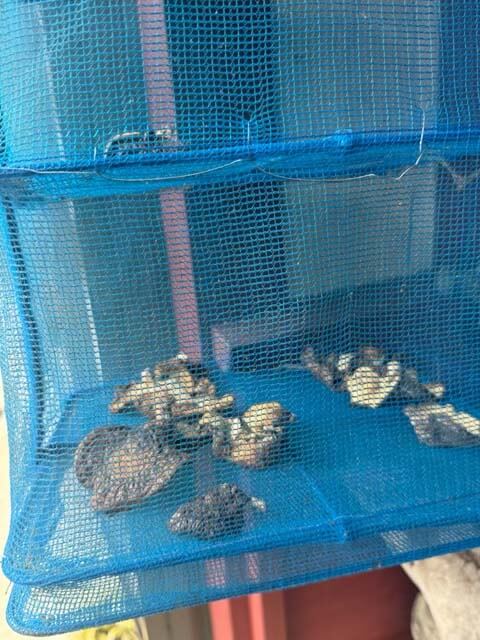
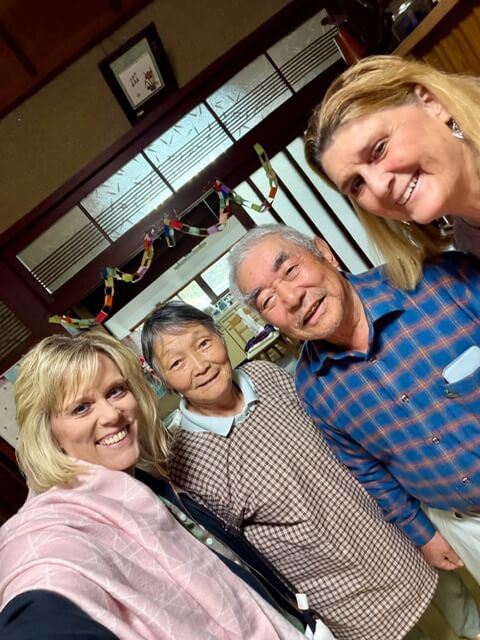
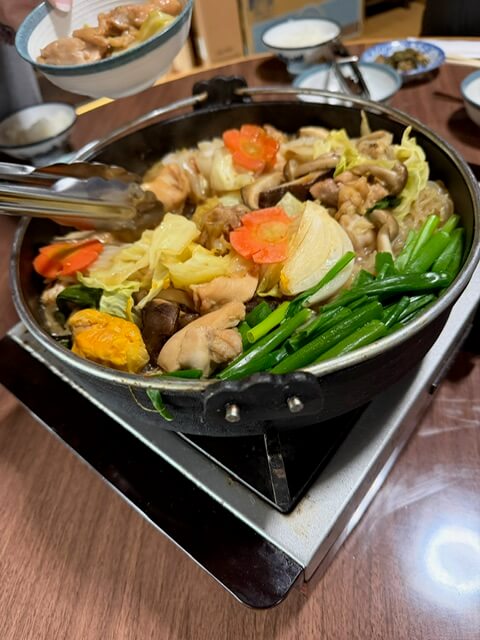
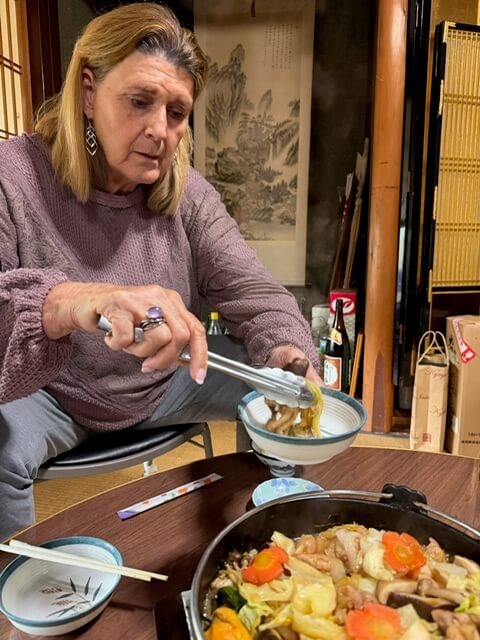
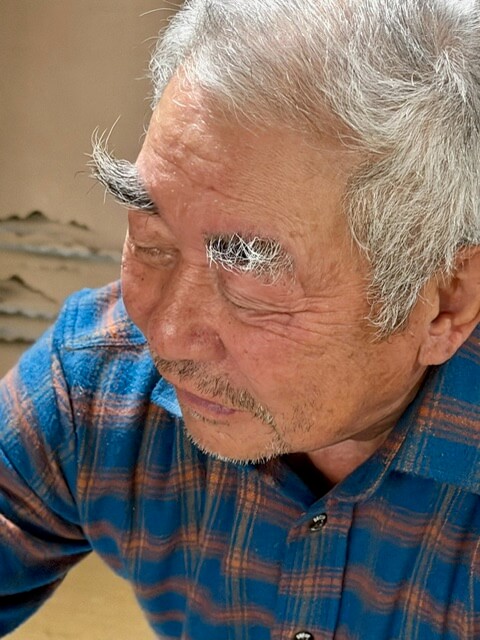
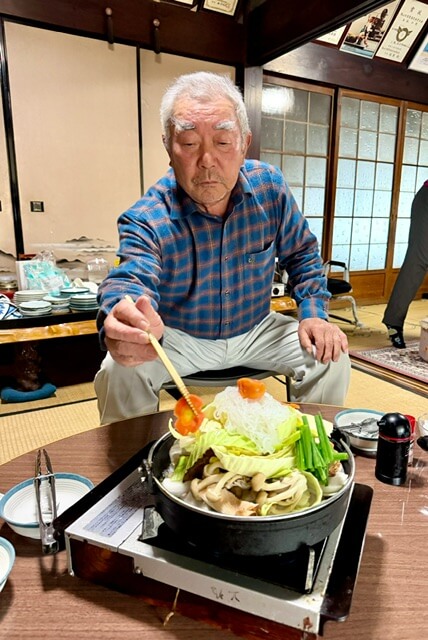
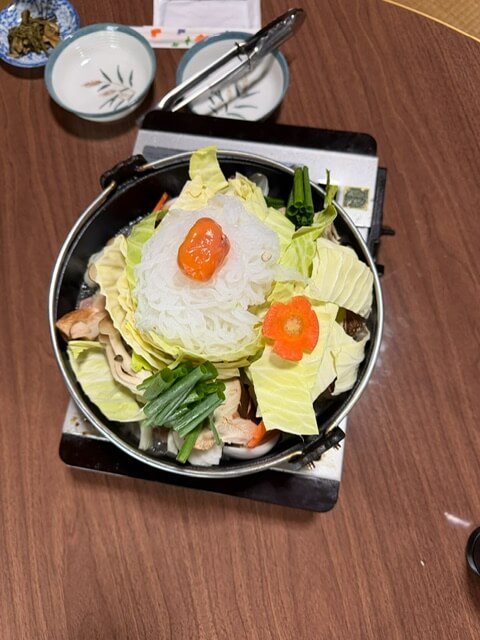
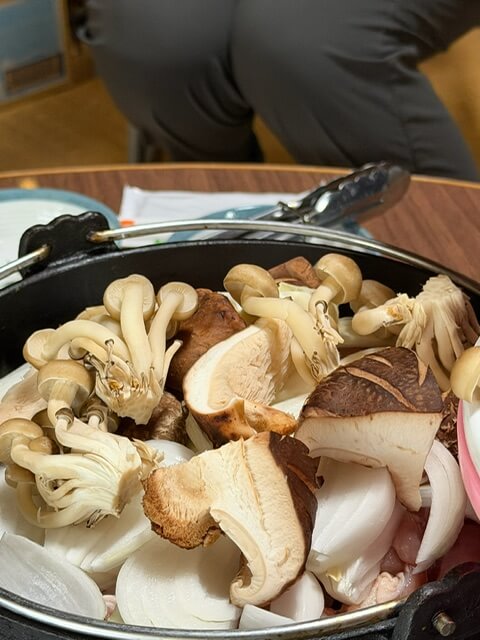
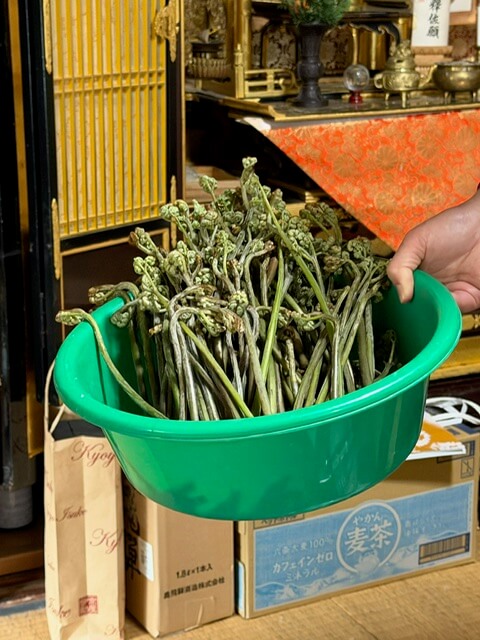
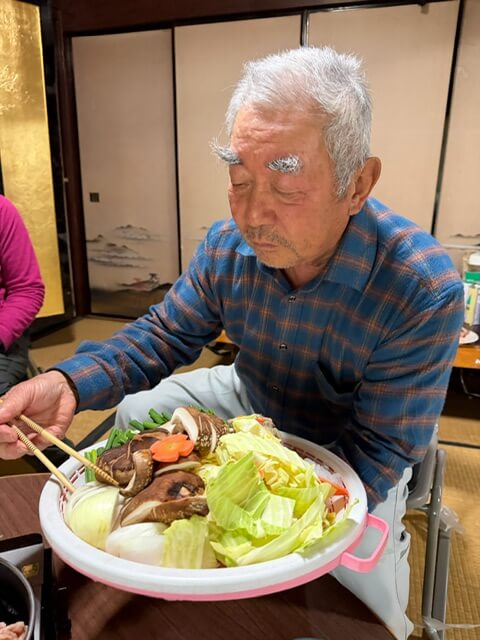
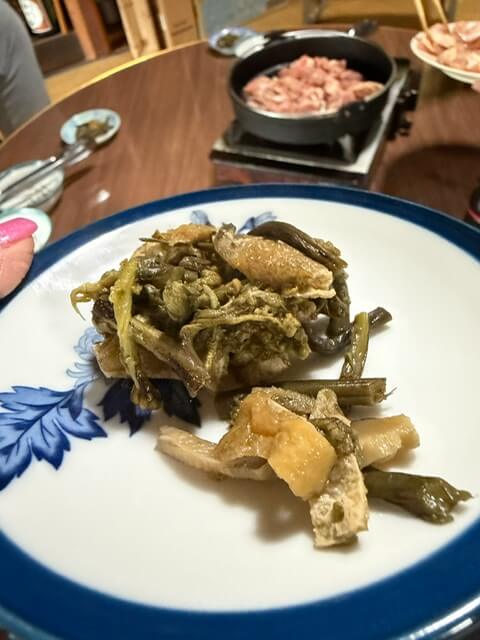
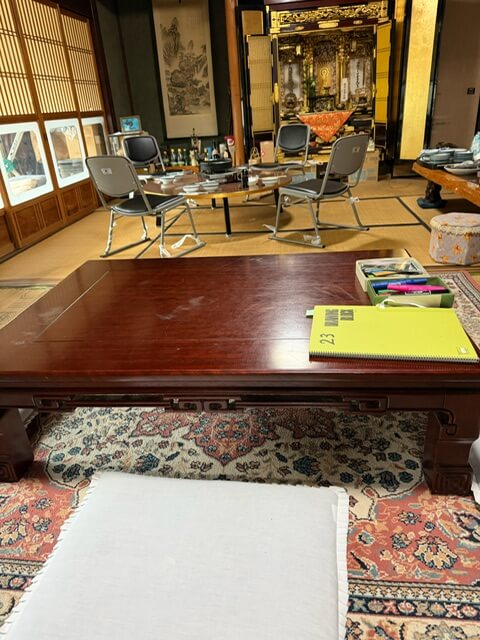
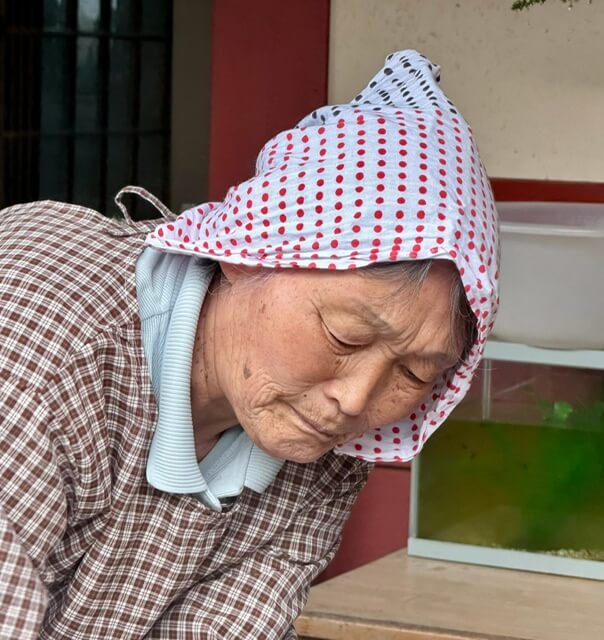
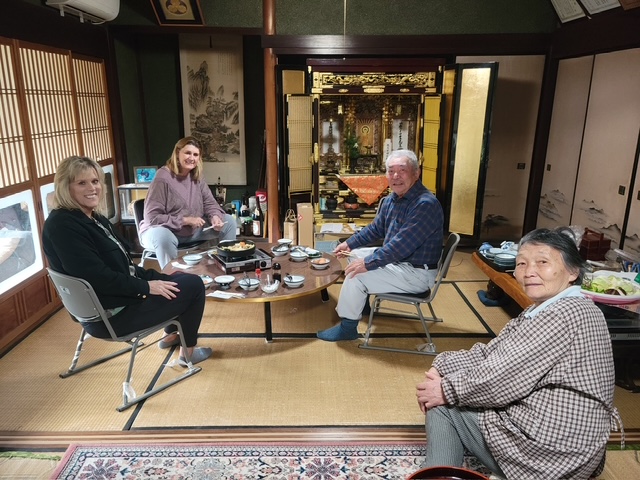
Our host, who is 86, then cooked us the traditional homemade chicken sukiyaki, a simple but delicious Japanese signature dish. His wife prepared some root vegetables and mushrooms they had gathered earlier up on the mountainside. The mushrooms were delicious and the green plant tasted like bitter spinach. The best part of this meal was talking with them ….with our guide as the translator. The house they were living in was built by his great grandfather. It was definitely a traditional Japanese home. Most rooms are separated from each other by very lightweight sliding doors. There’s very little furniture, but lots of cushions to sit on the floor. You have to be conscious of the low door frames so you don’t hit your head.
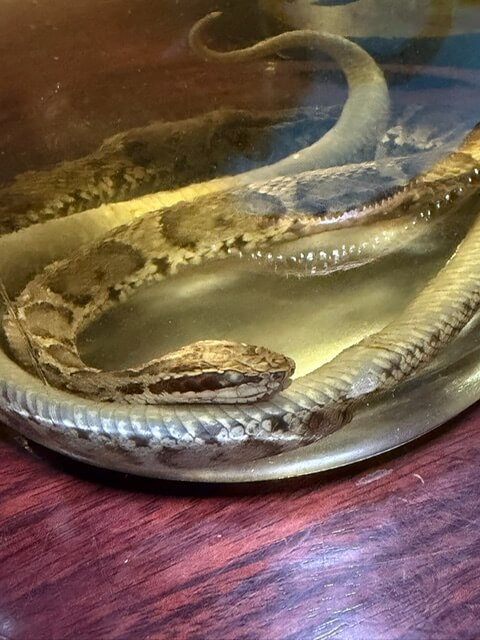
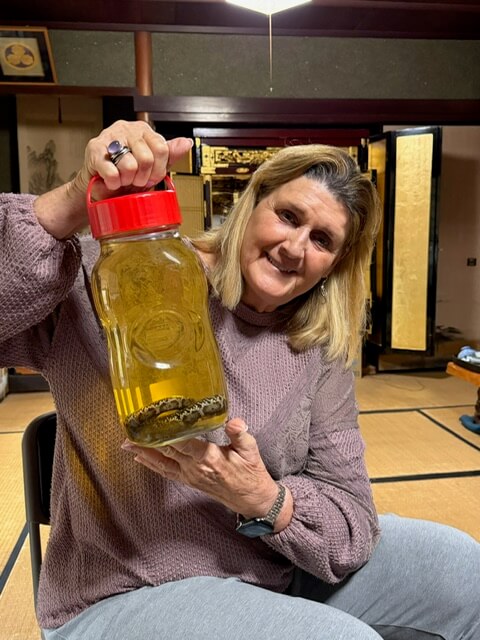
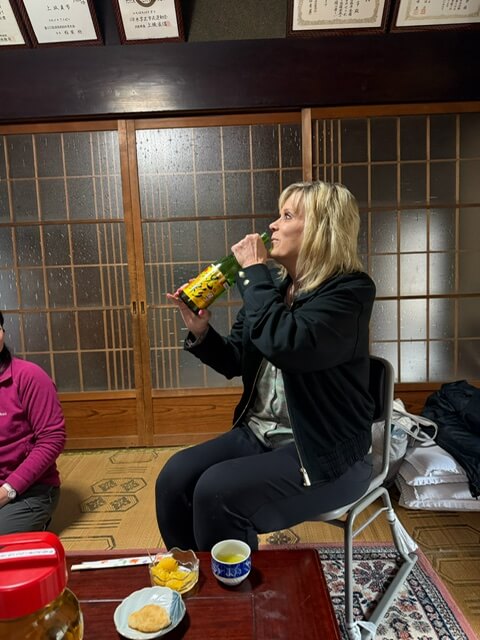
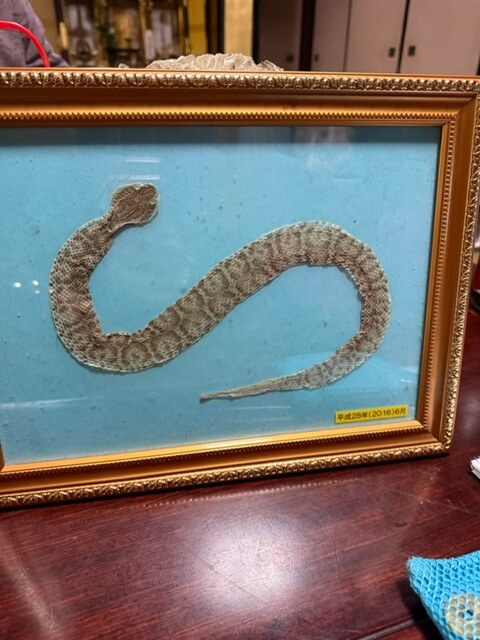
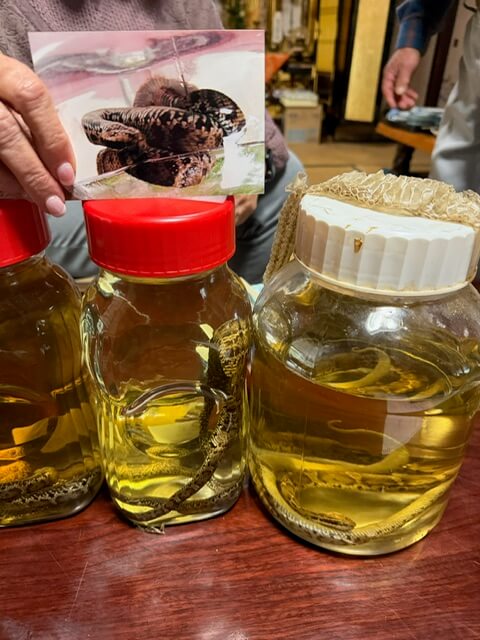
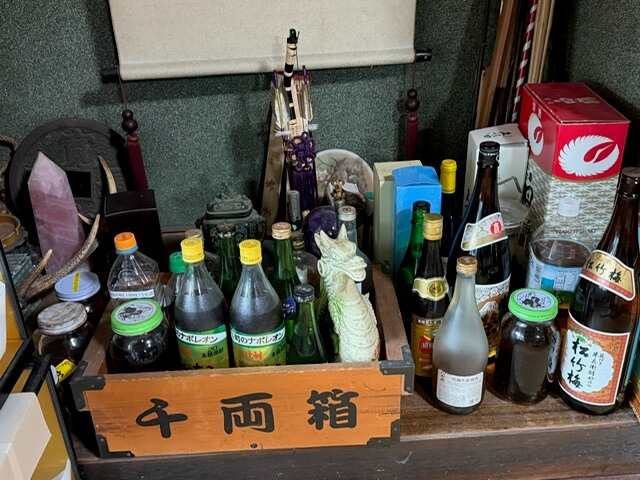
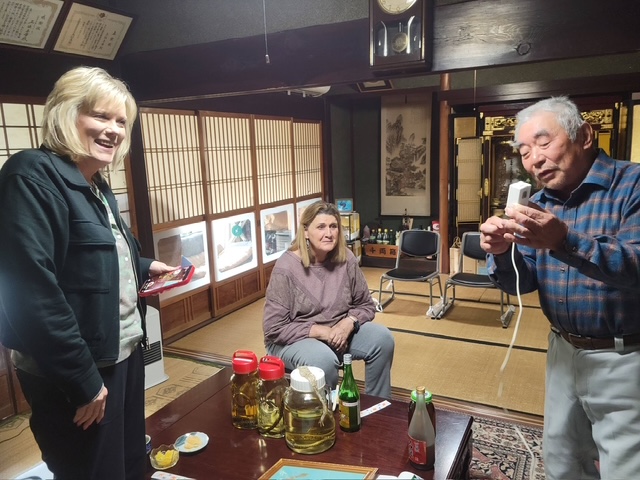
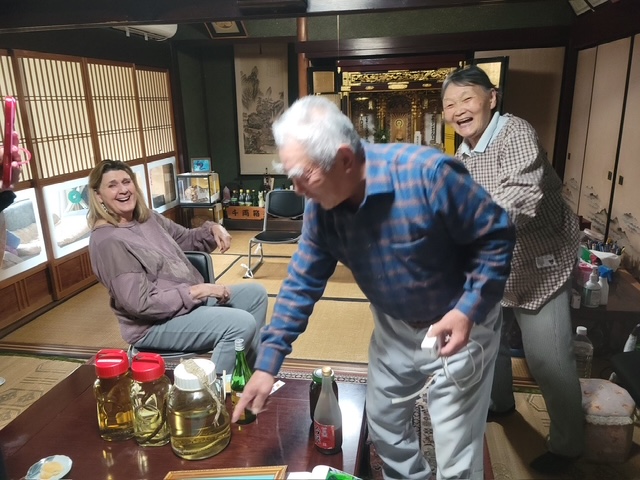
I think the most interesting fact about our host was that he catches vipers in his garden and his neighbors’ gardens, and then makes viper wine. He showed us gallons of the liquid that he had prepared and….Yelp. You guessed it ….the viper was in the bottom of the jar.
Took the train back to Kyoto and dreamed about those vipers😩
Fun Facts…
Jaosnese love odd numbers which represent happiness
You see so many dragons on shrines and statues because they are a symbol of water. Everyone prays for rain so the crops will grow.
Temples are replaced every 50 years in Shinto religion
Good time to visit the farm villages is late April/early May because each village has a festival to pray for a good harvest.
They gather mushrooms from the mountain forest and dry them in netted cages

0 Comments