
Bucharest, Romania…
Communism, Chandeliers, Churches & a Very Serious Glass of Palinka 🇷🇴
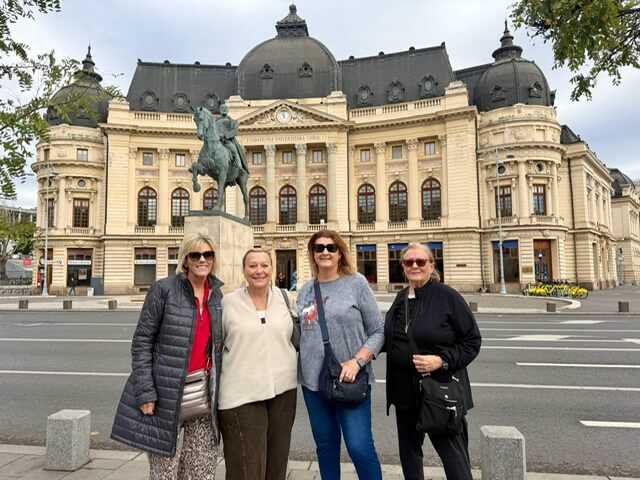
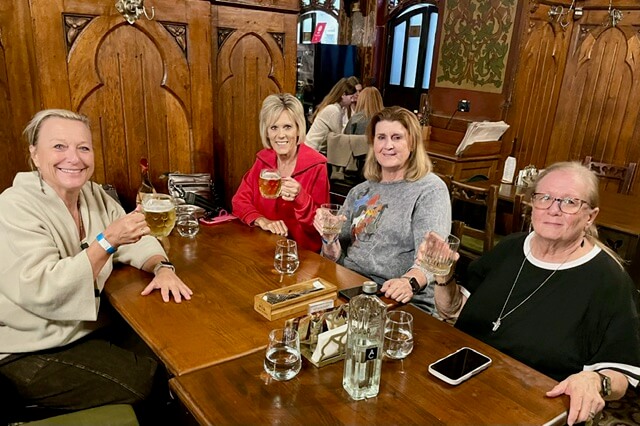
Four ladies, one Romanian capital, a whole lot of history, and enough gold leaf to make King Midas feel underdressed. Welcome to Bucharest!
Our first impression? Well… let’s just say Bucharest wasn’t exactly love at first sight. The streets were dirty and most of the buildings looked as though they’d been waiting several decades for someone to give them a fresh coat of paint to cover all the graffiti.
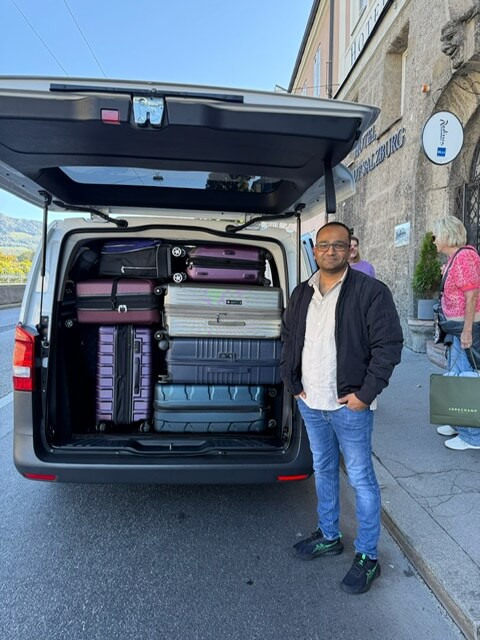
It didn’t help that our plane was late and we arrived at our lodging after dark … our Uber driver was just plain rude and basically kicked us out. Then came the BIG surprise… we had to drag our multiple 50+ lb suitcases up the 20 cement steps to the courtyard… then up 6 more steps to the building door, then go up individually in the SMALL elevator to the second floor. 😩 Thankfully the flat we had rented was very clean, although it only had the bare amenities… but each of us had a bedroom with a comfortable bed. We did venture out late the first night although somewhat uncomfortable, and found an acceptable restaurant with good food and BAD wine… but Connie did find her pink gin.
Bucharest is a city with a fascinating past, a complicated present, and some pretty spectacular surprises hiding behind those weathered façades.
A Little History Before We Get to the Wine… OOPS I Mean, Palinca!
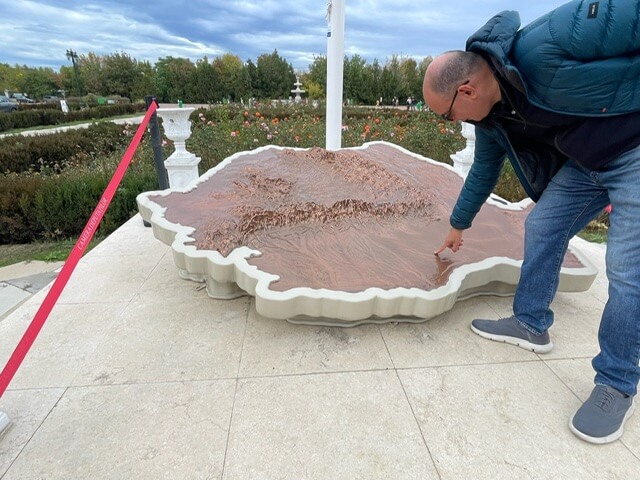
Romania has about 19 million people and is less than half the size of Texas. It’s smaller than both Poland and Ukraine, but it certainly has a BIG history. Bucharest, the capital since the 1600s, has around 2 million residents and, according to our guide, approximately 1.5 million cars. Apparently, two or three cars per family is becoming common. We were beginning to understand the traffic!
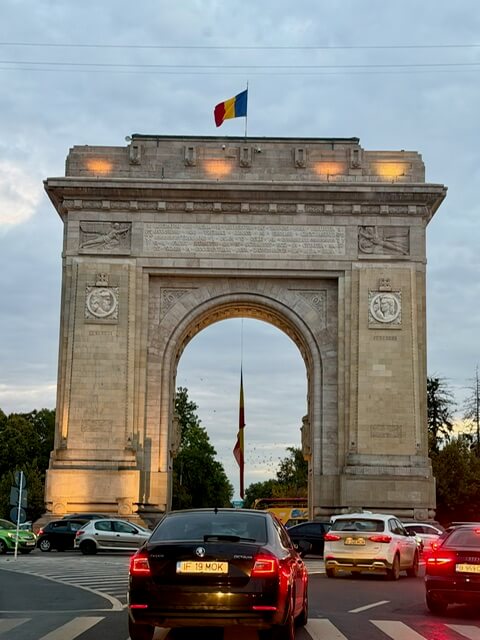
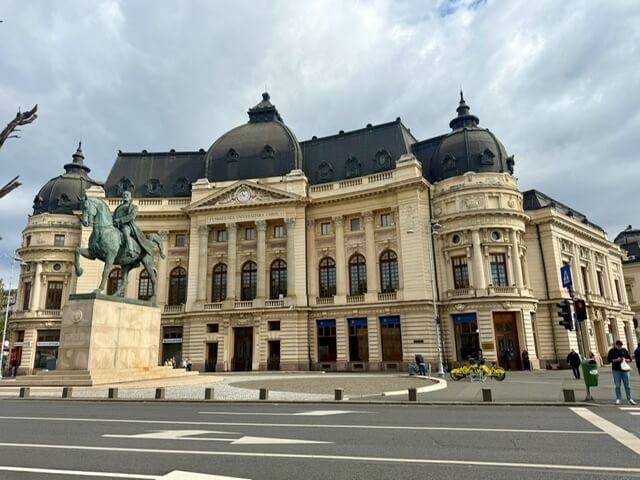
The first recorded mention of Bucharest dates to 1459. Romania was influenced by the Ottoman Empire, later gained independence in 1878, and developed a strong French architectural influence. Many of its elegant buildings date from the late 1800s, featuring neoclassical designs that earned Bucharest the nickname “Little Paris.”
And then came the communists.
In 1947, the communists took control. The country remained under communist rule until the bloody Romanian Revolution of December 1989 — just 37 years ago! Around 1,100 people died during the revolution. Nicolae Ceaușescu, the country’s last communist dictator, was executed along with his wife on Christmas Day in 1989. Imagine going from a brutal dictatorship to democracy in less than four decades. That’s RECENT history, not ancient history!
Romania joined NATO in 2004 and the European Union in 2007, although it still hasn’t adopted the euro. And here’s a fun fact: Romanian is a Romance language descended from Latin, so there are plenty of familiar ITALIAN-sounding words. The Romans were here about 2,000 years ago, and apparently, they left their linguistic calling card.
Revolution Square: History with a Capital H
We visited Revolution Square, where the country’s dramatic political transformation unfolded. It was a sobering reminder that the freedom many of us take for granted came at an enormous cost for Romanians.
Today, the president is elected every five years and may serve up to two terms, while parliament is elected every four years. After everything this country has been through, its political history is still very much part of everyday life.
The Parliament Building: Go Big or Go Home!
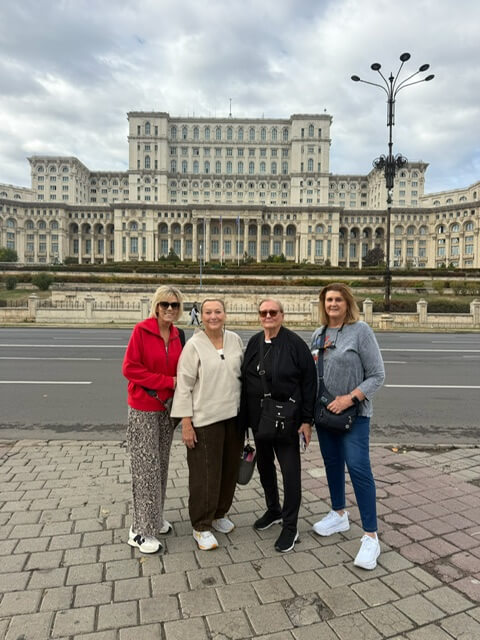
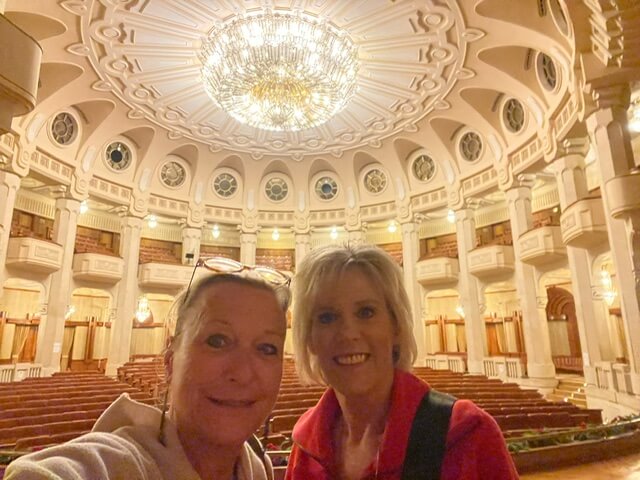
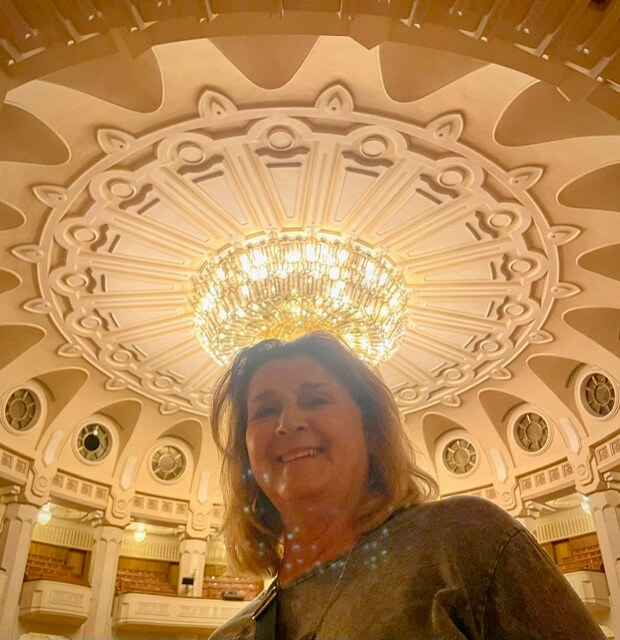
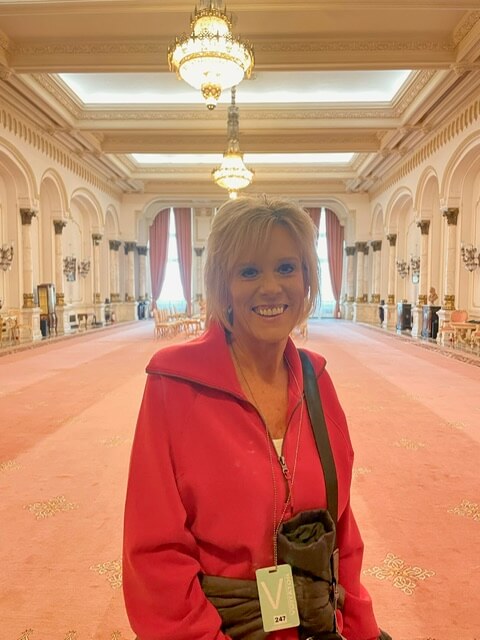
If there is one thing we learned about Romania’s former dictator, Ceaușescu, it’s that he wasn’t a fan of subtlety. The Palace of Parliament is generally described as the world’s second-largest administrative building by floor area, after the Pentagon. It is also widely cited as the world’s heaviest building and one of the most expensive ever constructed… this place is HUGE!
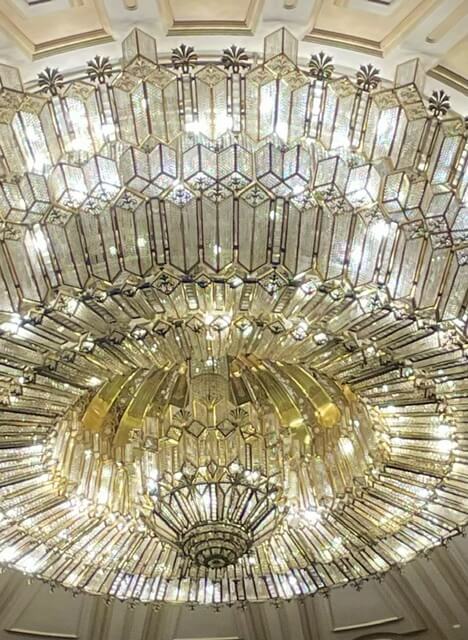
We saw pink marble, elaborate carpets, enormous rooms, and chandeliers that could probably illuminate a small town. One of the largest weighs around five tons! But don’t overlook the smaller chandeliers hanging between the columns on every level. Apparently, one gigantic chandelier simply wasn’t enough. The building was intended to showcase the power and grandeur of the communist regime, while ordinary Romanians faced serious hardships.
Here’s another story we heard: Donald Trump supposedly offered billions for the building to turn it into the world’s largest casino, but the government declined. Can you imagine? A casino big enough to make Las Vegas say, “Perhaps we should rethink our business plan.” It’s a great story, although we couldn’t verify the details of that story.
And then there was Michael Jackson. During a 1992 visit to Bucharest, he famously greeted the crowd from the balcony of the Parliament building and accidentally said, “Hello, Budapest!” 😜 Yes, Michael. Close enough geographically… but not exactly a small mistake when you’re addressing an entire country! 🙃
Money That Can Survive the Washing Machine
Romanian money is called the lei or RON, and its banknotes are made of plastic-like polymer rather than ordinary paper. Our guide explained that you can wash them in the washing machine without destroying them. Finally, a currency designed for people who forget to check their pockets! The banknotes also feature notable Romanian cultural figures, including playwrights and poets. In Romania, apparently, even your money comes with a literature lesson.
Churches, Gold & More Gold!
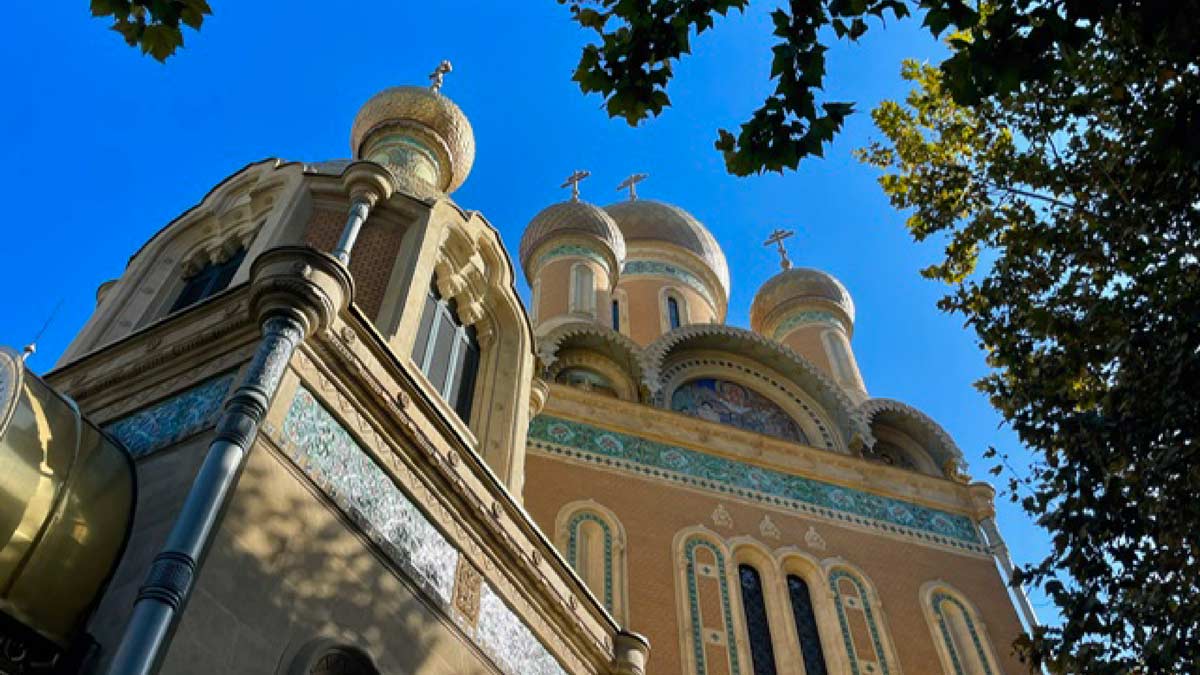
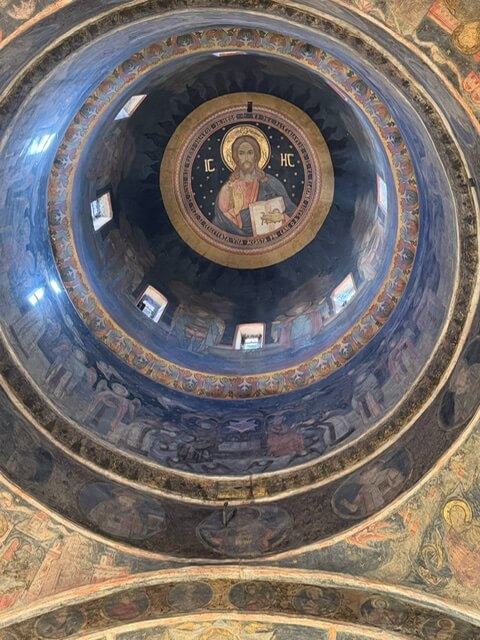
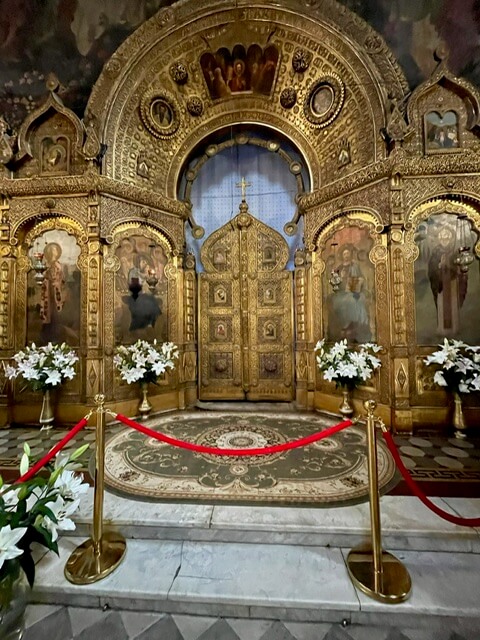
One thing that really surprised us was the number of beautiful Orthodox churches tucked throughout the city. Romania is predominantly Eastern Orthodox, and the church remains an influential institution. We visited churches filled with elaborate woodwork, gold trim, painted ceilings, and walls covered with larger-than-life religious murals.
Two particularly beautiful stops were:
●
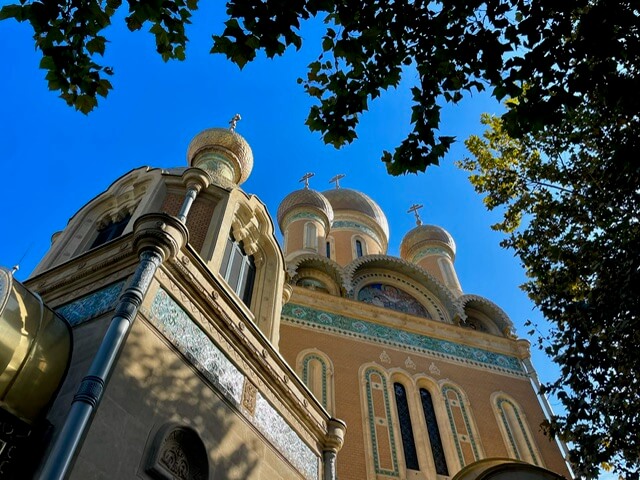
St. Nicholas Russian Church, built between 1903 and 1909, with its distinctive Russian-inspired architecture.
●
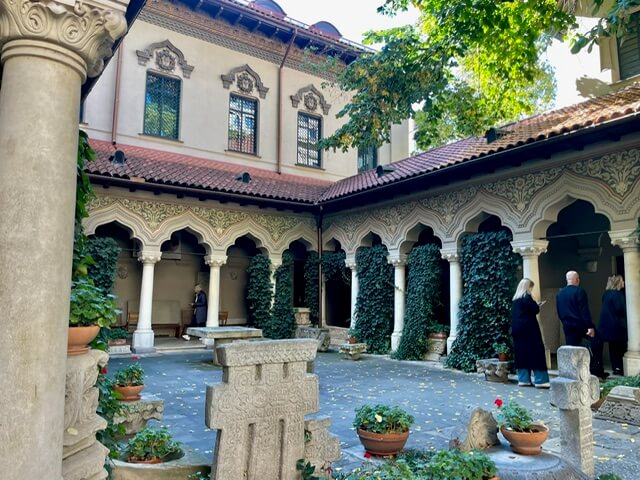
Stavropoleos Monastery, dating to 1724, a small architectural jewel with exquisite decorative details.
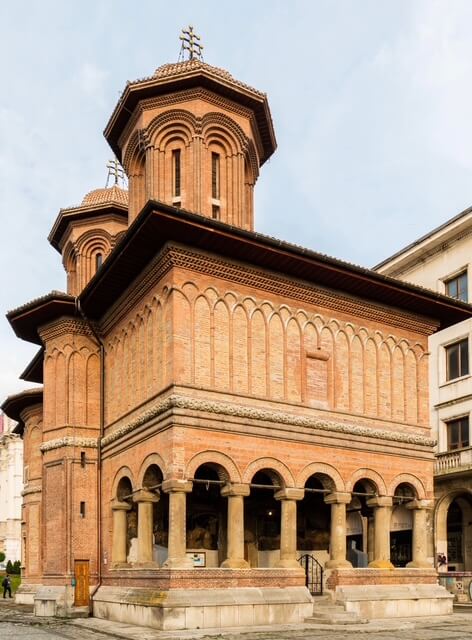
We also saw Kretzulescu Orthodox Church, built in the early 18th century. These churches were a world away from the enormous communist-era architecture. They felt intimate, peaceful, and wonderfully intricate. And Romania is building another enormous statement of faith: the National Cathedral, a monumental Orthodox cathedral project begun in 2007. Its scale is extraordinary, and the interior painting and mosaics are an enormous undertaking.
Between the chandeliers at Parliament and the gold inside the churches, we were starting to wonder whether Romania had a national policy against leaving any surface undecorated!
Calea Victoriei & Lunch Fit for Royalty
We explored the OLD TOWN historic center and Calea Victoriei, one of Bucharest’s most famous avenues, where grand old buildings, churches, shops, and restaurants tell the story of the city’s more glamorous days.
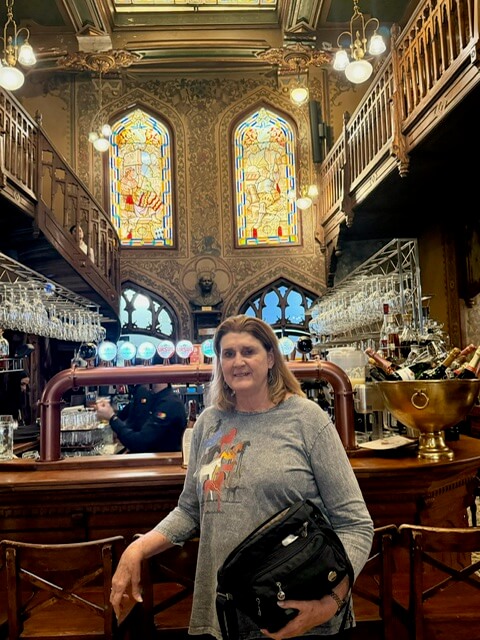
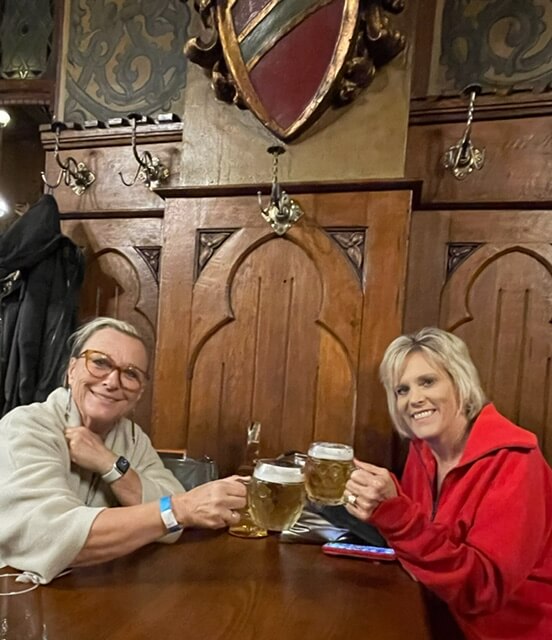
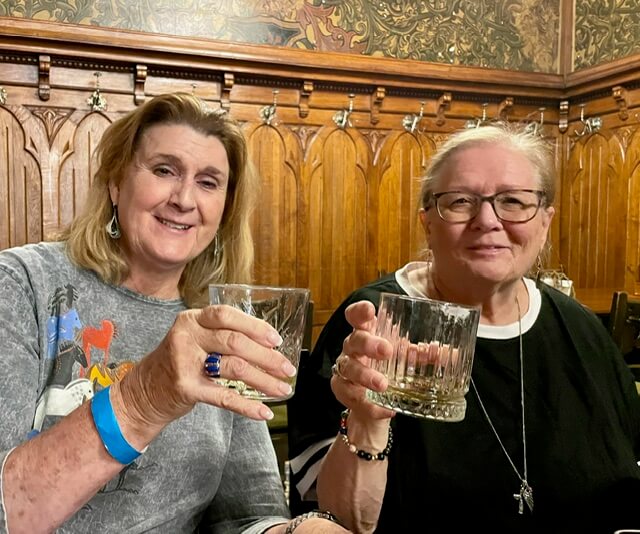
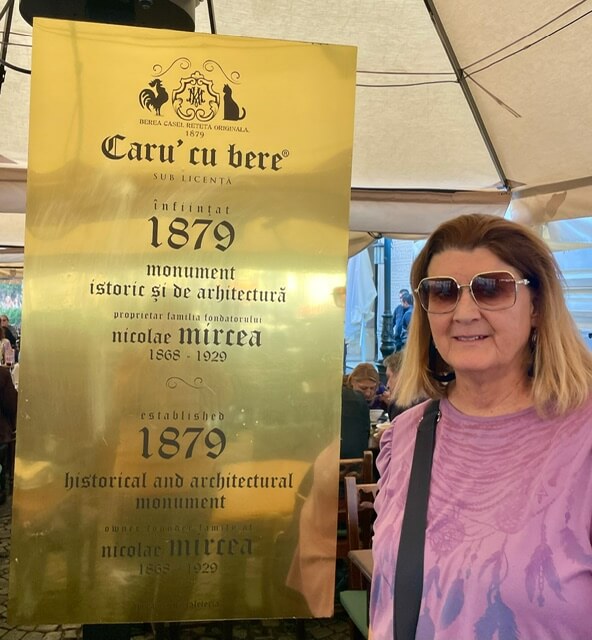
Then came lunch at Caru’ cu Bere, a legendary restaurant dating to the late 19th century.
The dining room was spectacular — elaborate carved woodwork, stained glass, decorative ceilings, and the sort of atmosphere that makes you want to order something extravagant even if you only came in for soup.
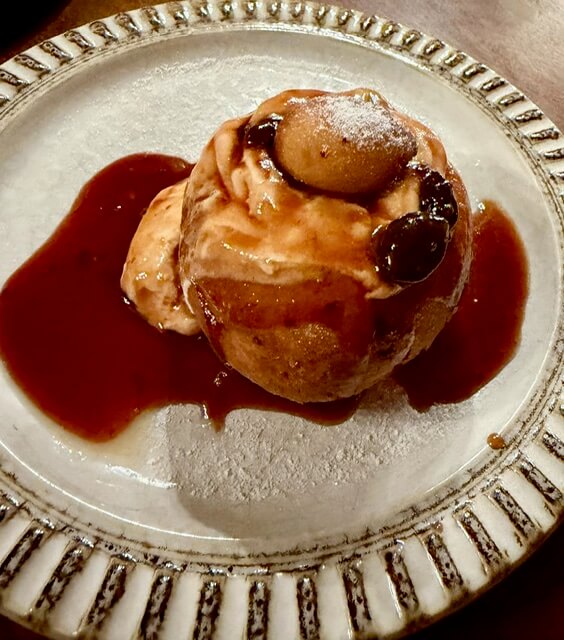
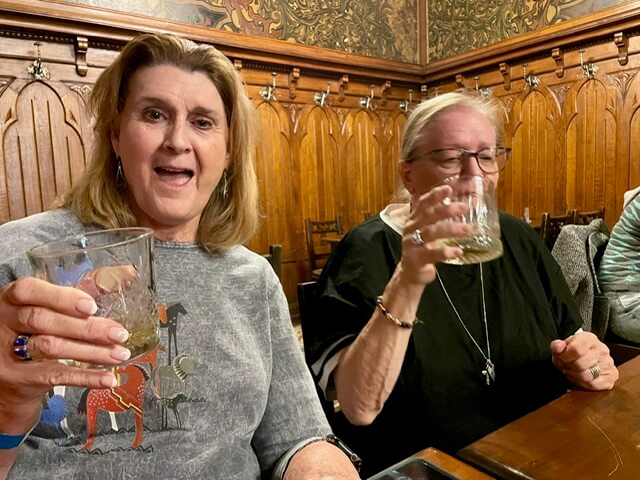
We sampled traditional Romanian dishes and, of course, had to try their famous dessert: papanasi… Think fried doughnut-style pastry with sweet cheese, sour cream, and fruit preserves. Obviously, any diet plans we had for this trip flew right out the window. But wait… Our host also introduced us to PALINKA, the famous fruit spirit popular in Romania and neighboring countries.
I had tasted this national drink of Hungary back in 2013 in Budapest with my friend Maria, who doesn’t normally drink. On the way to our next destination, we realized we couldn’t take an open bottle into the airport, so we passed the bottle around in the taxi. She got so drunk sipping it in an attempt to reach the fruit at the bottom that we had to literally carry her into the airport.
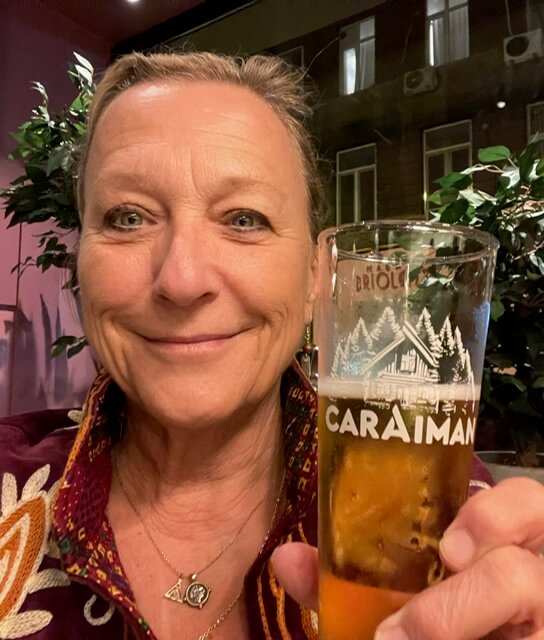
Believe me… this is NOT a delicate little after-dinner cordial. It was more like drinking a glass of pure determination! One sip and your taste buds feel on fire! 🔥 Let’s just say we didn’t need a second glass to appreciate the experience. 😮💨
A Cathedral of Food: Our Last Night
After days of sightseeing, we decided our feet deserved a little pampering.
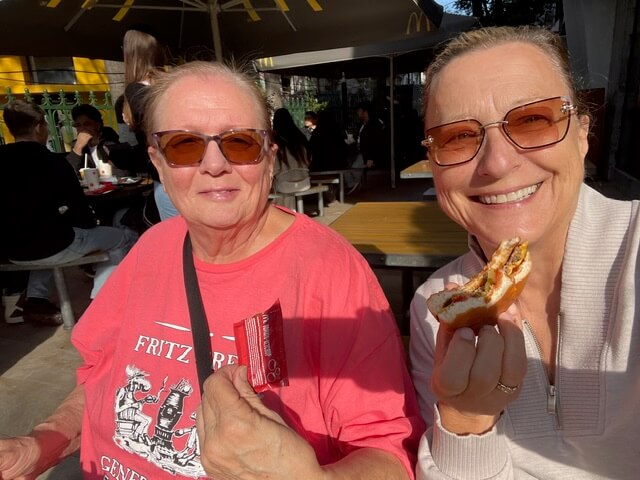
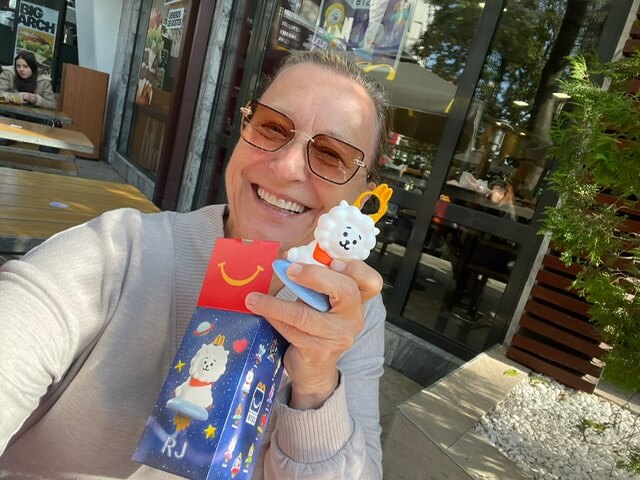
Our final day began with a spa day — followed by a highly sophisticated culinary stop at McDonald’s for French fries. Because sometimes, after all that culture, nothing says luxury like a salty potato! But we weren’t finished eating.
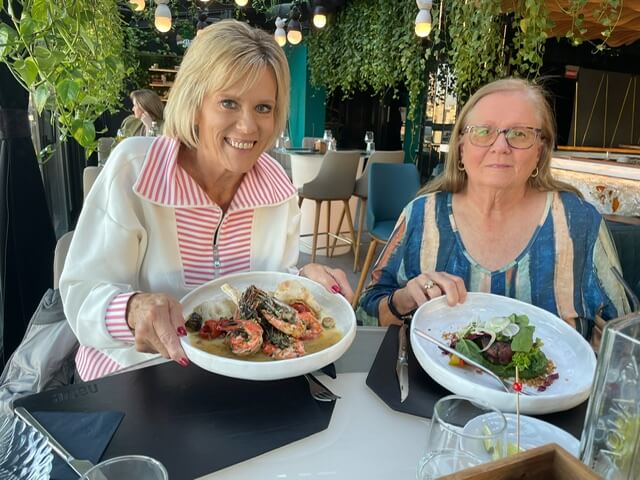
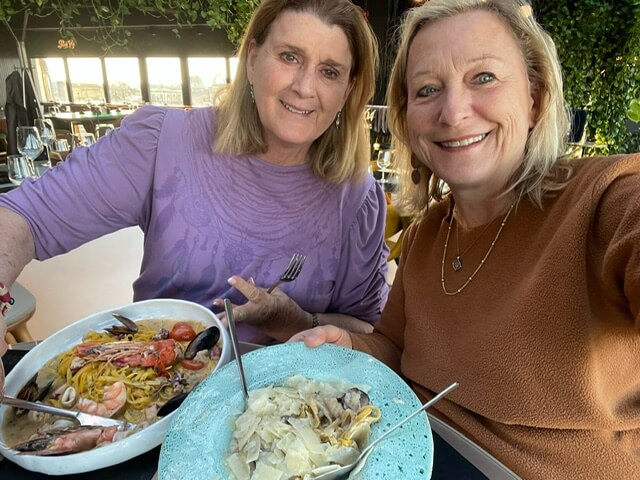
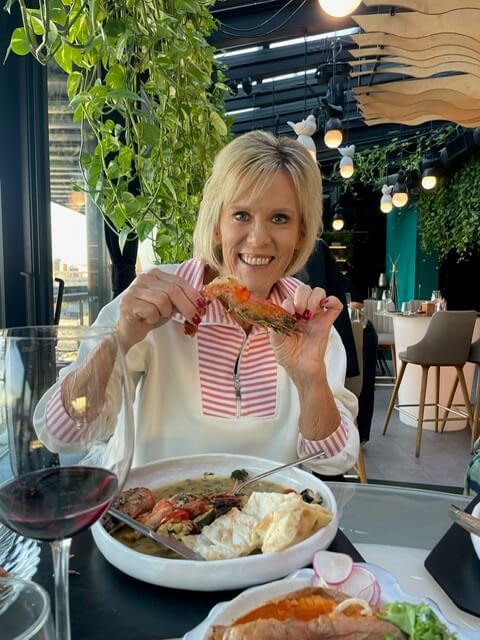
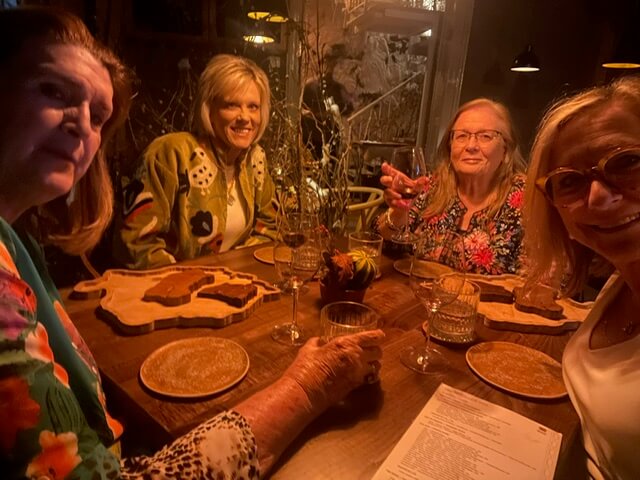
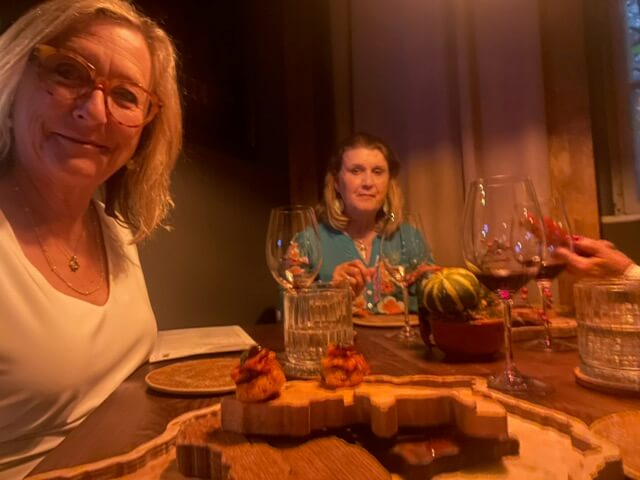
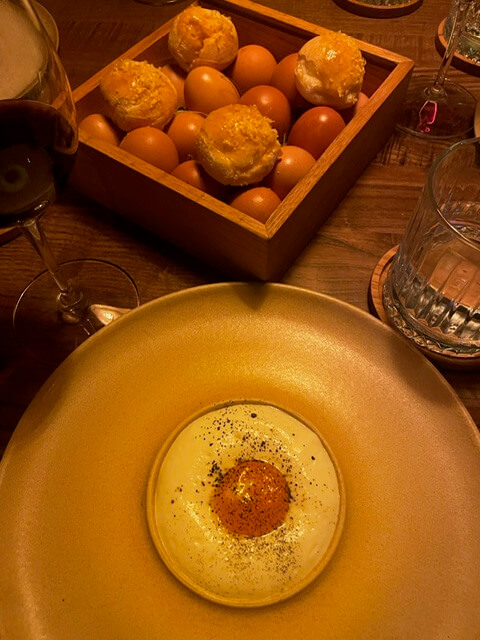
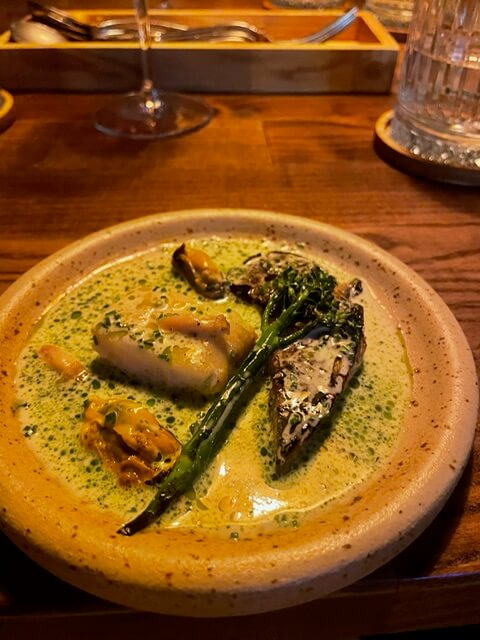
For our farewell dinner, we went to NOUA, where we enjoyed an outstanding tasting experience featuring 17 bite-sized Romanian dishes. SEVENTEEN! This wasn’t dinner so much as a culinary journey through Romania, one little masterpiece at a time. Each course offered something different, and the meal was a wonderful way to experience modern Romanian cuisine.
Over 3 days, we had gone from traditional doughnuts and potent fruit spirits to a carefully choreographed tasting menu. Our taste buds had certainly covered some ground.
Final Thoughts
Bucharest wasn’t the prettiest city I have ever visited at first glance. Some areas are worn, the traffic is intense, and the layers of history are sometimes difficult to take in… But beneath the rough edges is a city of remarkable contrasts: grand French-inspired architecture, powerful communist monuments, beautiful churches, a proud food culture, and people whose country has undergone extraordinary change in a relatively short time. We came for the sights and history, stayed for the food, and left with a new appreciation for Romania.
And if you ever find yourself in Bucharest, remember three things:
Look beyond the graffiti. Admire the chandeliers. And never underestimate the palinka.
Four ladies, one fascinating city, seventeen Romanian courses, and enough stories to fill a suitcase.
Next stop… more adventures in Brasov, Romania… home to Dracula’s Castle.

0 Comments