
Tea Ceremony, Temples and Cherry Blossoms
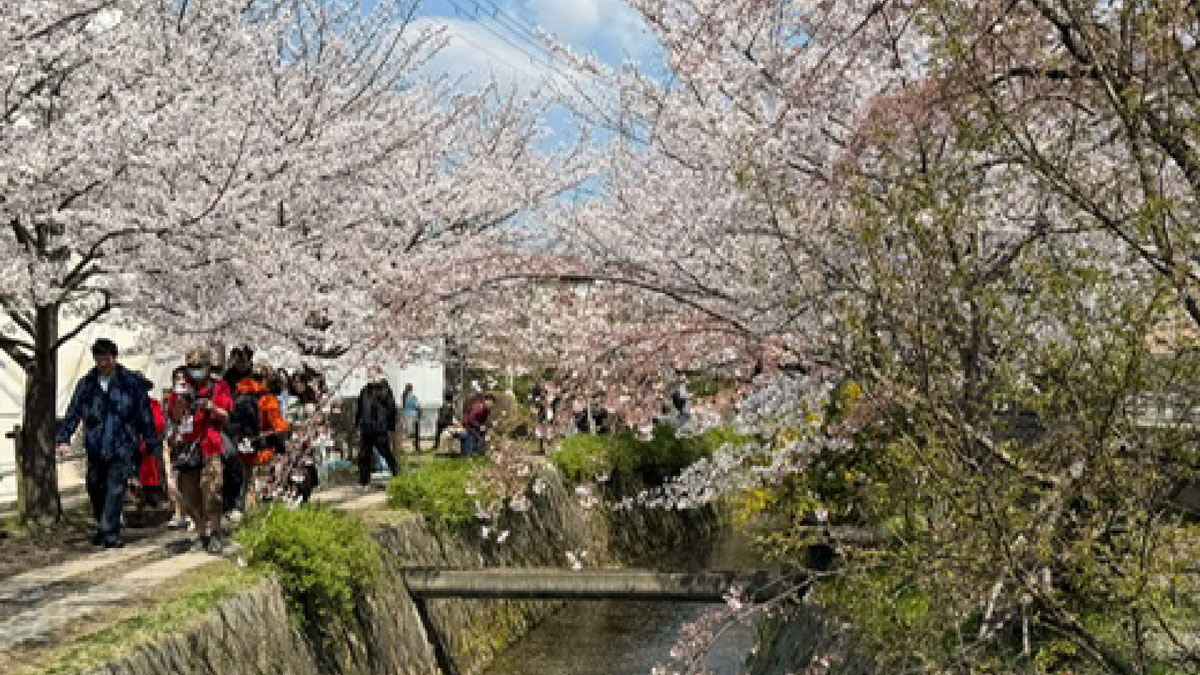
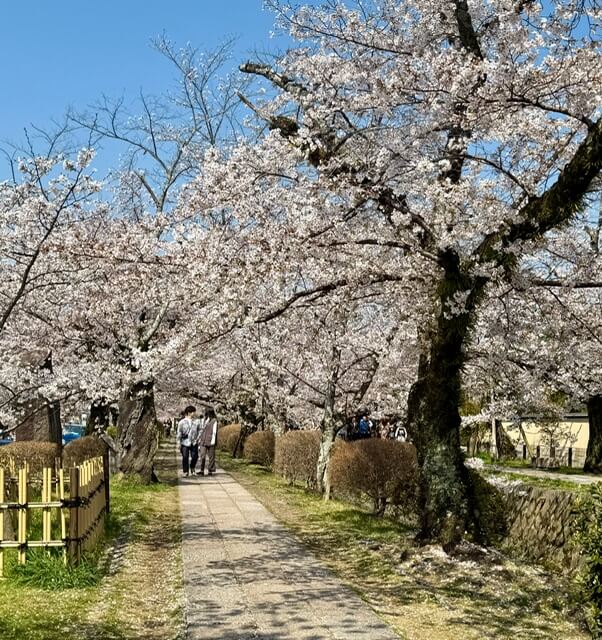
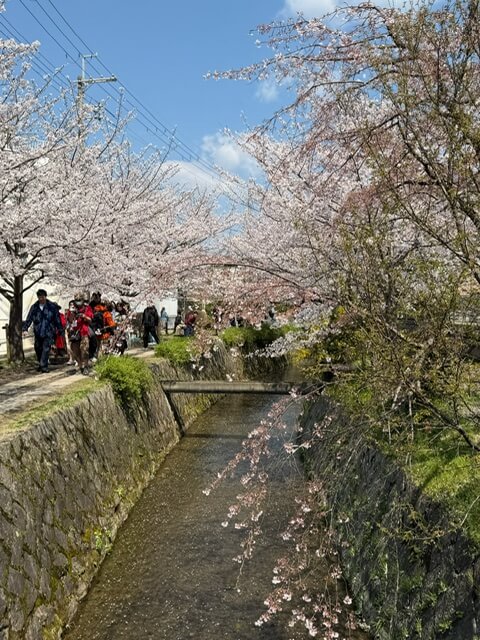
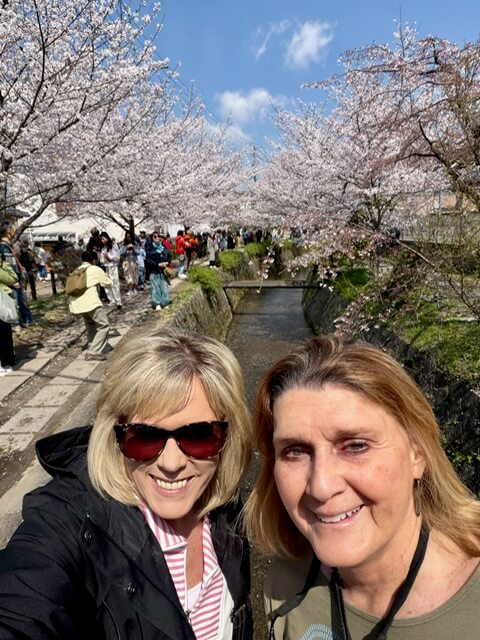
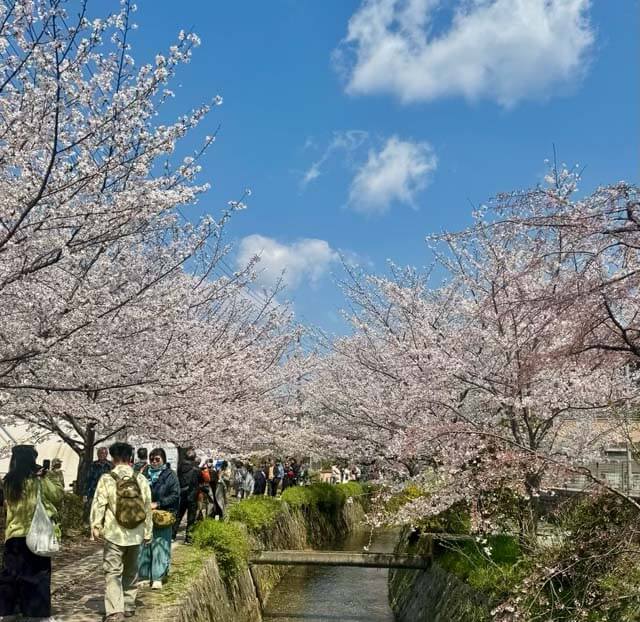
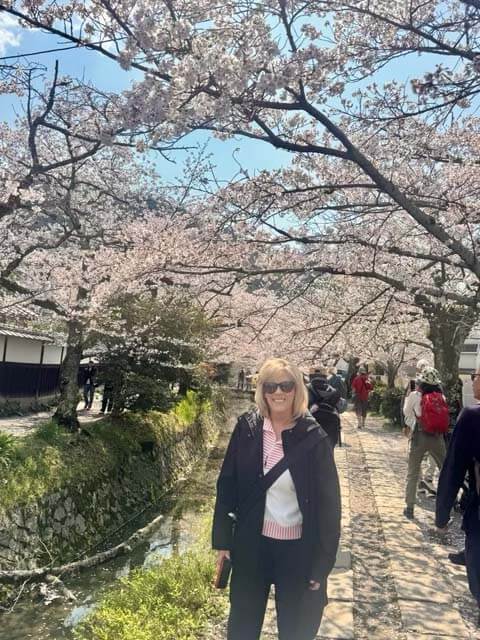
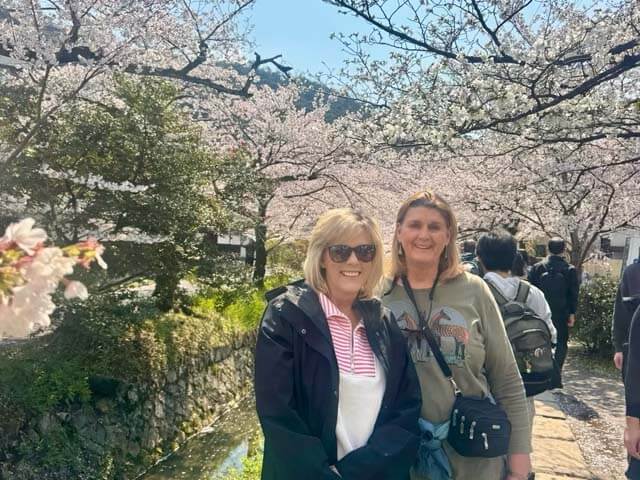
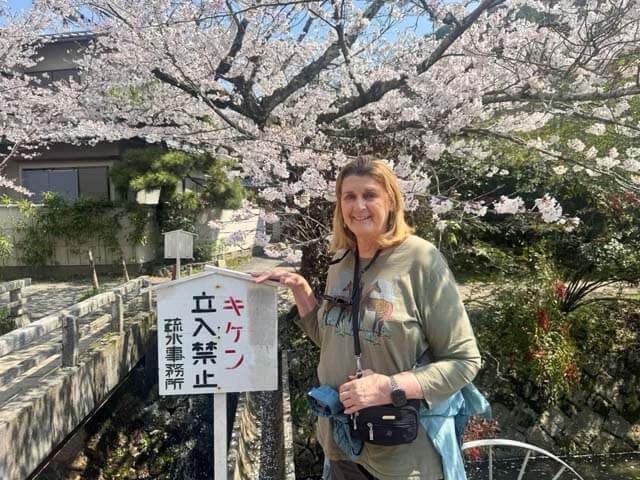
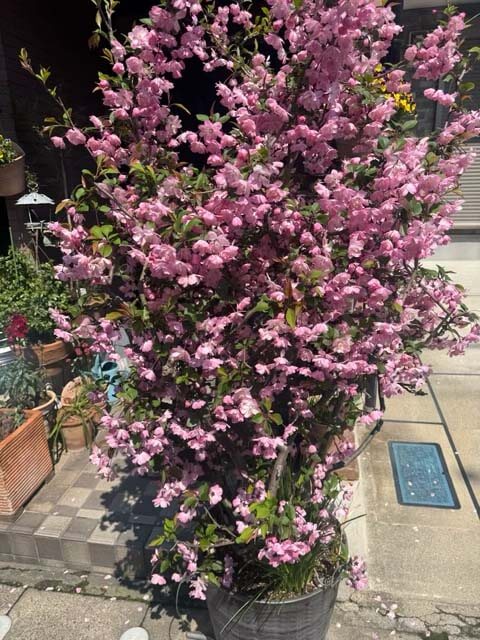
Philosophers Path leads up to the Zen Silver Temple and is lined with cherry blossom trees. With the trees currently in full bloom, it feels fairytale like …petals are falling softly like snow all around on on you … and the small canal is turning pink. Disadvantage… very crowded this time of year.
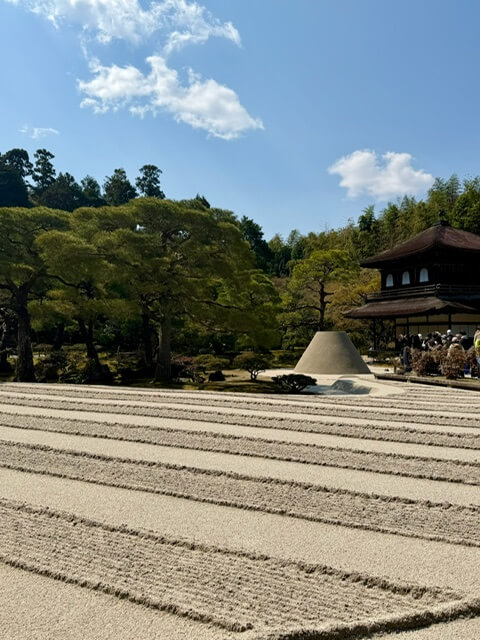
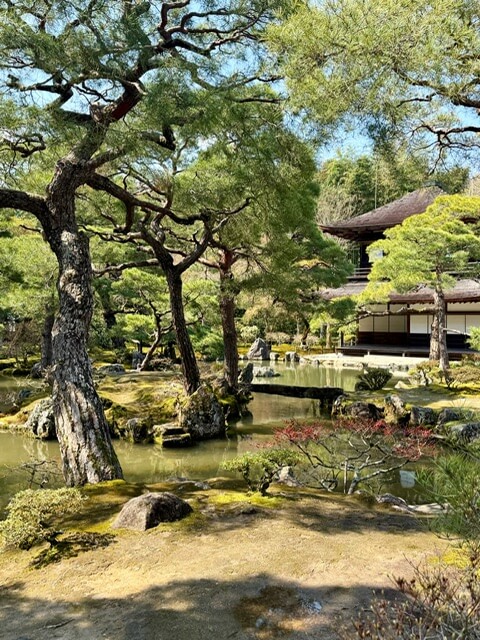
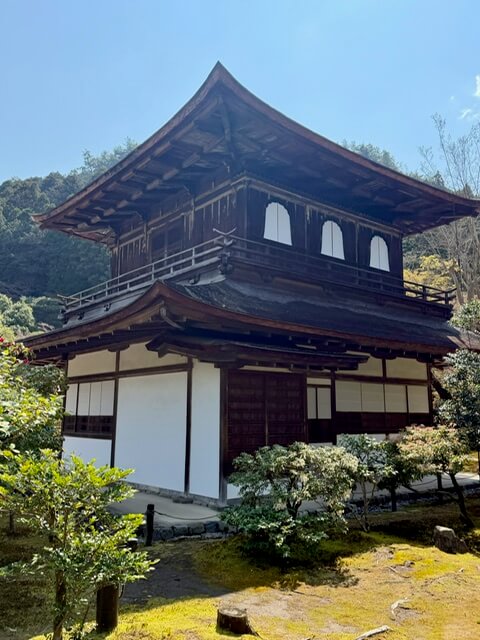
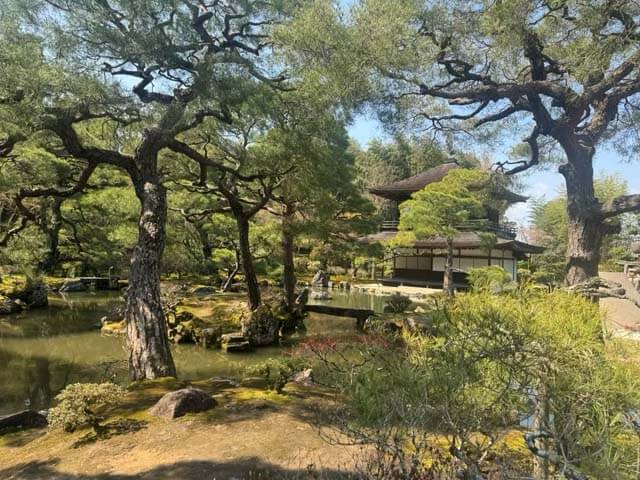
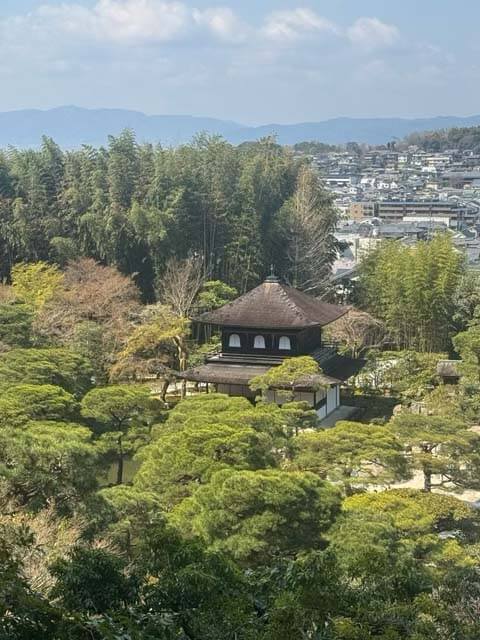
At the end of the Path is the Silver Temple (Jishoji), dating back to 1492. It was designated in 1994 as a UNESCO World Heritage site. It was built by the Grandson of the same guy who built the Golden Temple …for his own residence. Not sure why it’s called The Silver Temple because it has no silver anywhere on it… not even silver paint. Their reasoning long ago was that silver is below gold and the grandson is below the grandfather who was living in the Golden Temple. The Silver Temple is actually the original and hasn’t been restored… as opposed to The Golden Temple which was restored only five years ago.
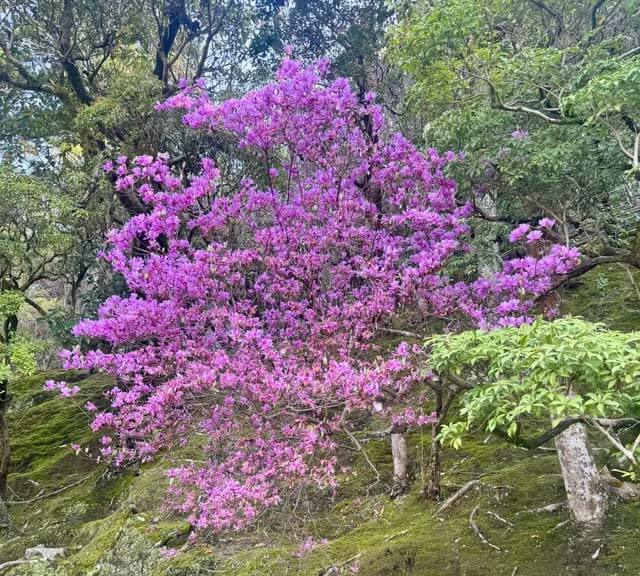
On our walk above the Temple, our guide pointed out a bush with small white blooms and informed us it was a poisonous plant…they call it the “plant that kills horses “…. But overall, the Gardens were beautiful and the view from the top of the hill looking down on The Temple with the mountains beyond is worth climbing the multitude of steps required….even though my knee said differently.
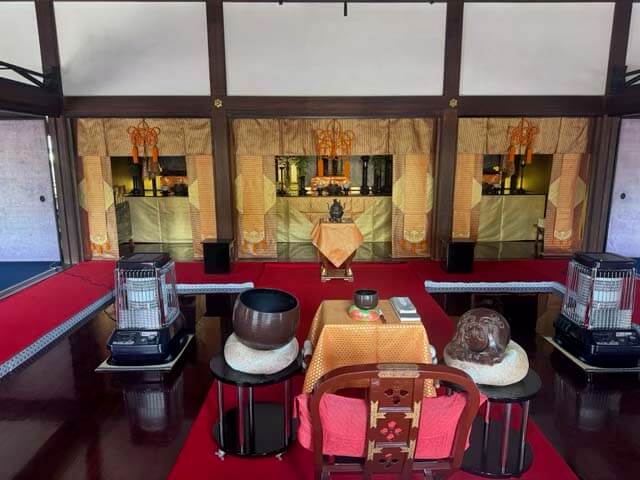
Next we visited a Zen Temple built in the late 1500s… that has never been restored. Even though it is designated as a Buddhist temple, there is also a Shinto shrine in the complex. Long ago, 70 monks lived here…but now only one priest occupies the complex. The guy who designed and built this Temple taught the Shogun about tea; but, in the end, the Shogun got upset with him and ordered him to commit suicide …and he did.
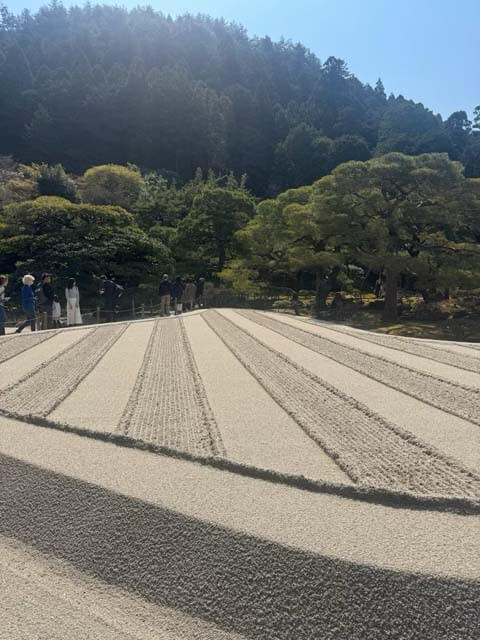
One of the many unique architectural designs in the complex was the Garden. When designing a Japanese garden there’s 5 important Steps….Asymmetry, Balance, Enclosure, Scenery and Symbolism. In this garden the white gravel symbolizes water. Also, the Lantern feature which is prominent in most Asian gardens (to look out for intruders) …normally sits high in parks and other historical sights in Japan…but this one actually sits on the ground… very RARE thing… but if you bend down (or sit, if your knees allow) and look thru the hole in the lantern, you can see the mountains in the distance…in other words they believed “if you change your point of view, you see things differently”. Wish we were more in tune with that philosophy in our 250 year old country.
The use of sand in many of these old temple gardens represents the sea and the bright white sand reflected the light …remember they had no electricity.
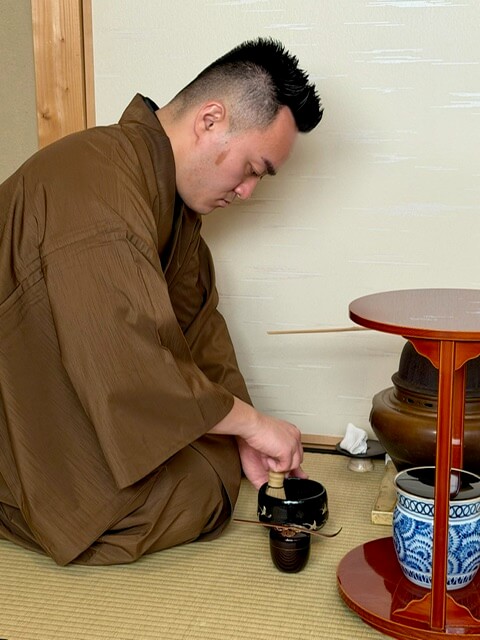
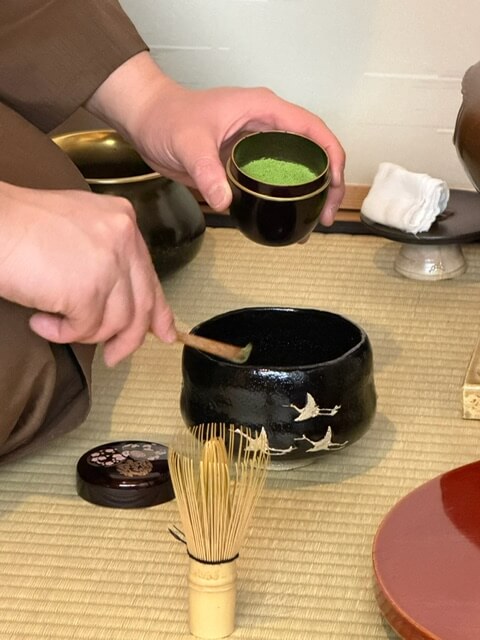
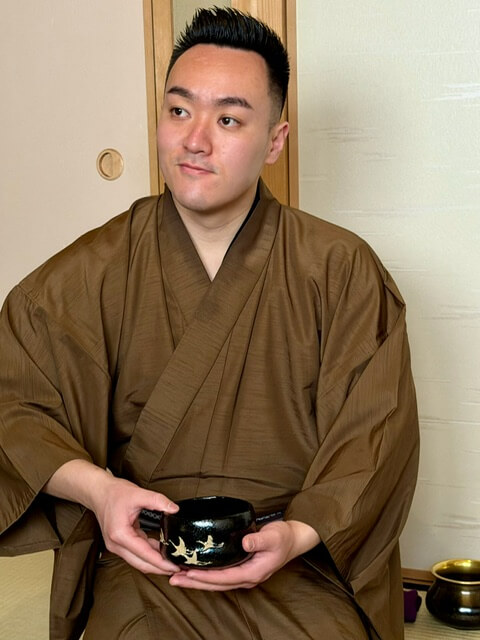
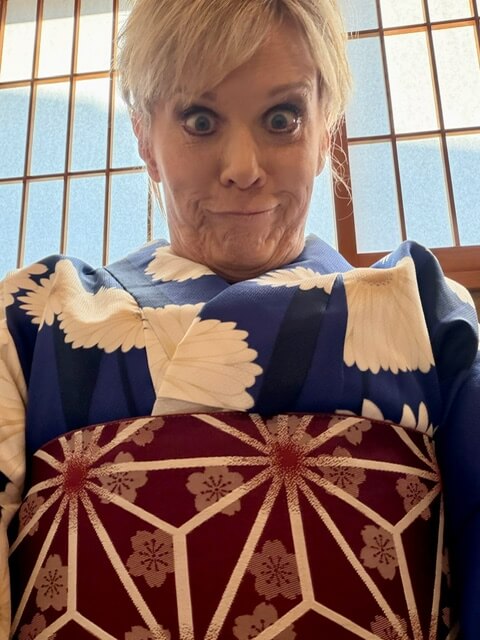
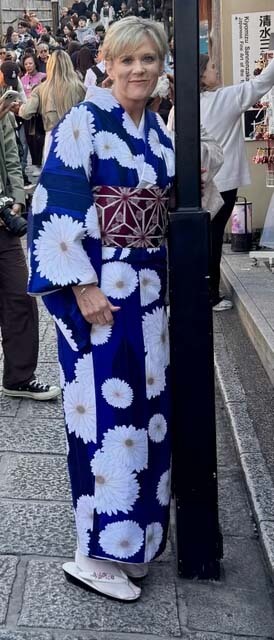
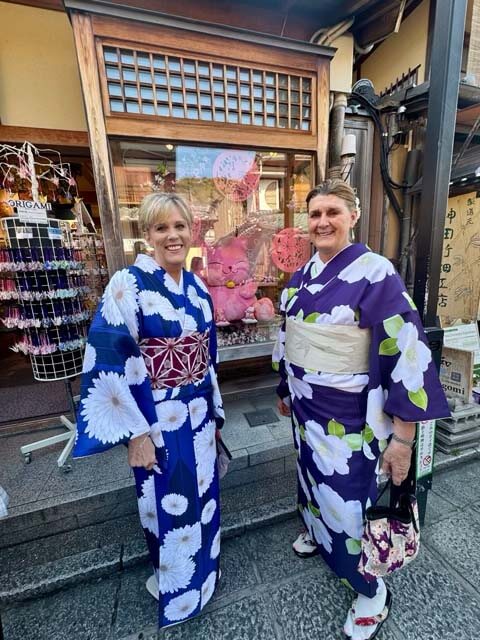
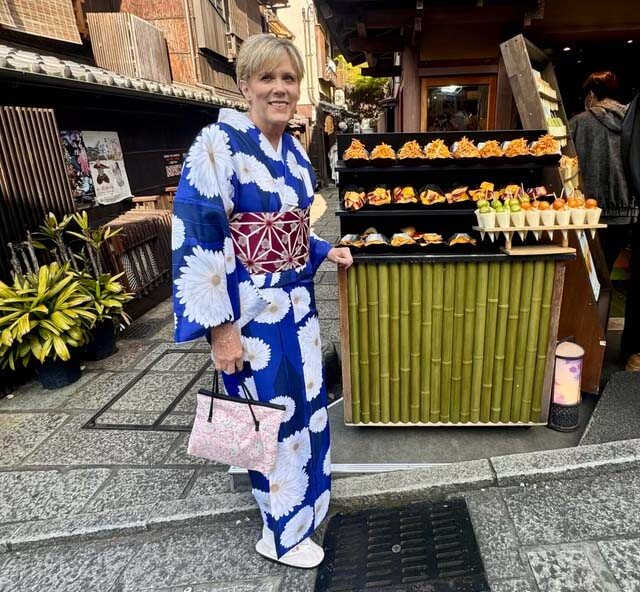
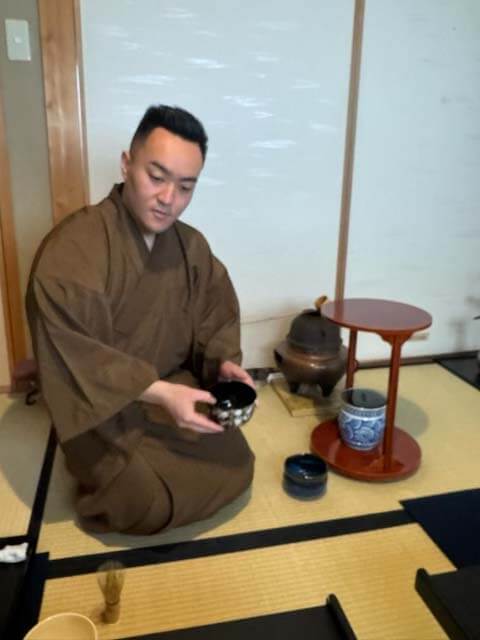
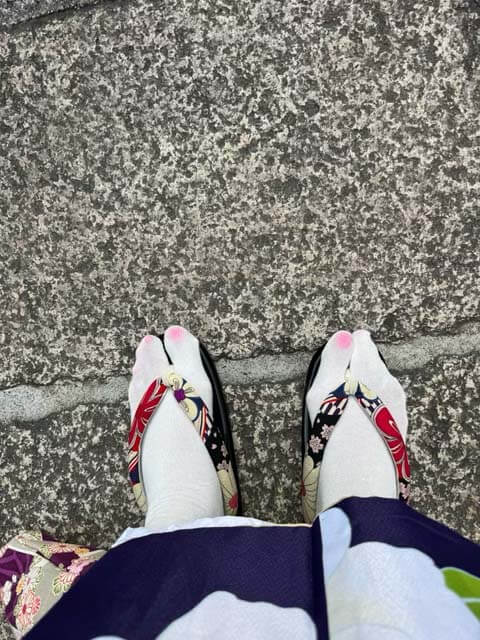
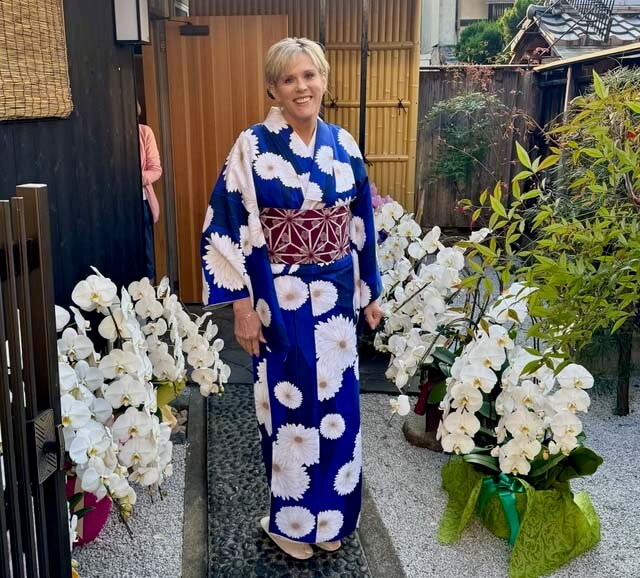
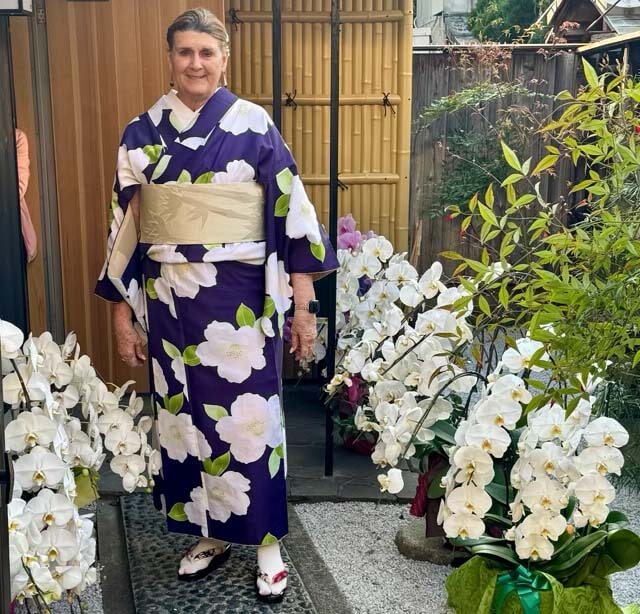
What would a trip to Japan be if I didn’t experience a traditional tea ceremony??? Well let me just say, I equated the one here in Kyoto as a “tourist trap”. My advice is to skip it. We experienced a more authentic one in the small village we visited yesterday. I’ve always heard: “to know tea is to know Japan” – and as a tea drinker (I don’t do coffee), I looked forward to the opportunity to dress up in a kimono and drink matcha tea in a traditional machiya Kyoto townhouse…and watch a certified tea master practice their craft with a full explanation in English. Tea ceremony – or to use its proper name, the Way of Tea – lies at the heart of Japanese culture. First we were dressed up by a couple sweet ladies who manage to put this corset type item around my waist and chest that knocked the breath of me when they went to tie it! 😫 Then they add layers of clothes till your 10 lbs heavier, finally ending with the kimono and cumberbun. They give you funny socks and some sandals … unfortunately the slippery socks slide around in when you walk, so you’re just shuffling along trying to not fall. After you pass that test, your promoted to meet the tea master …a very young man to be called a “master” at anything, but he was very nice. He performed a 10 minute ritual of putting 2 small spoonfuls of matcha in a cup, then using a long handled wooden cup to pour hot water from a hot pot into the teacup, and then briskly stirring the liquid with a brush to mix with the matcha until it’s frothy. Then you drink it! That’s it! Difficult …right? That’s a master for you. Took him 10 minutes while it take me 2 minutes in the microwave every morning. And, to add injury to this exciting adventure, I was supposed to sit on the floor ….but at my age they were very understanding and shared a small stool that was maybe 5 inches off the floor. Hang in there knees 😩
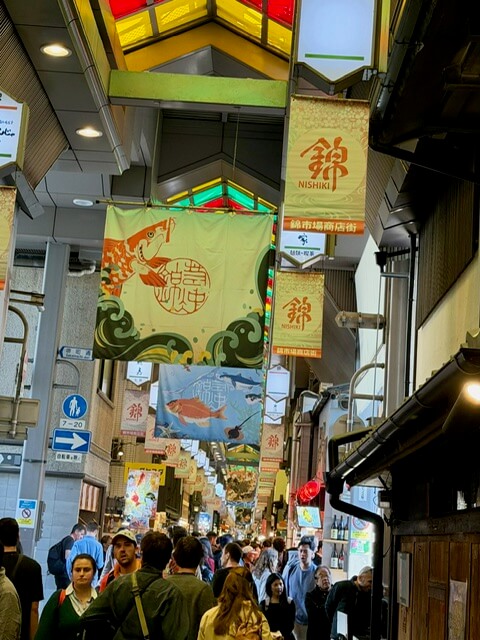
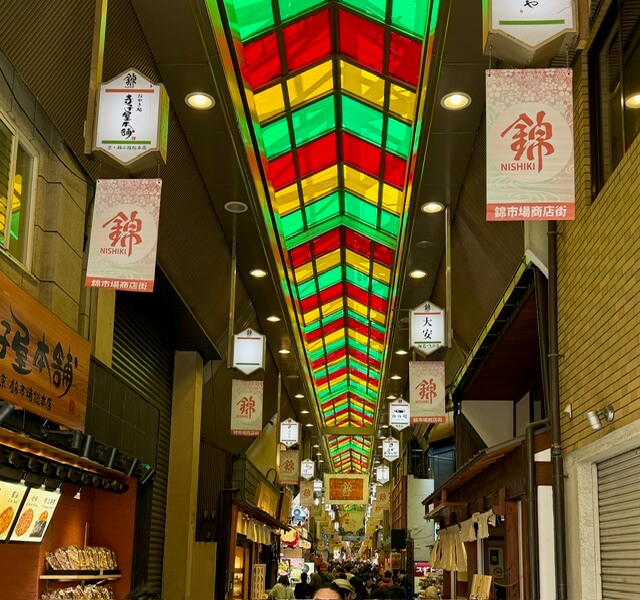
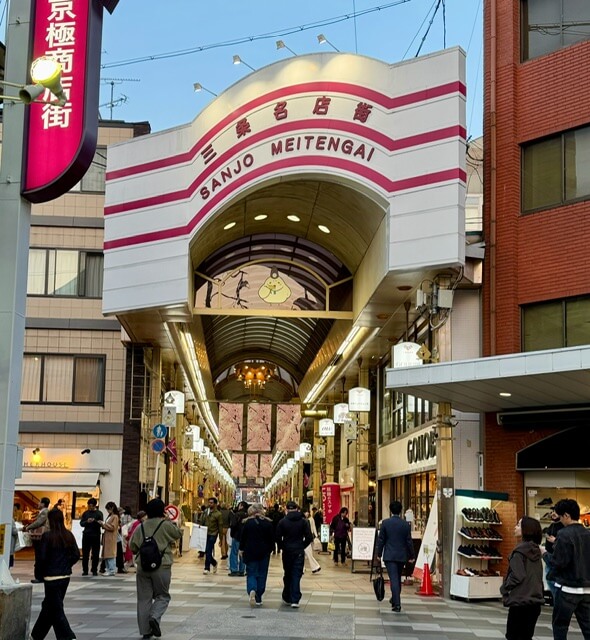
On to the shopping area, bad decision. Crowded is too small of a word. Walked to the hotel, had dinner and crashed …but only after I spent 30 minutes getting the damn Bobby pins out of my “tea ceremony” hairdo.
Slow day, only got in 13,980 steps😳
Fun Facts….
- Japanese are very much perfectionists and believe in the spiritual world.
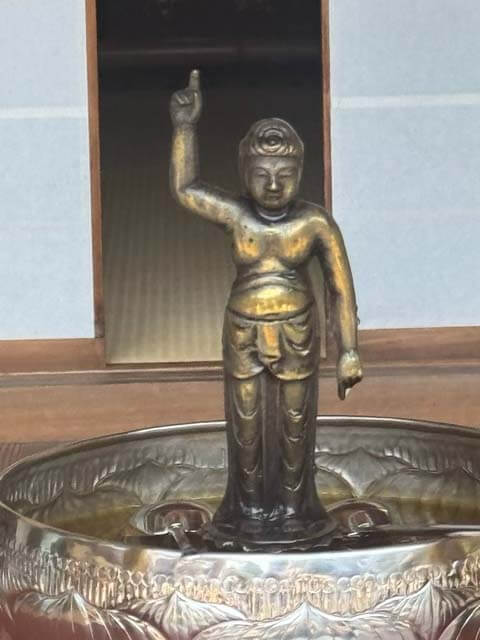
- When you see the Traditional Buda statue or image, 1 hand up and 1 hand down ….index finger pointing up or down.
- First novel ever written was a Romance written by a Japanese woman author.
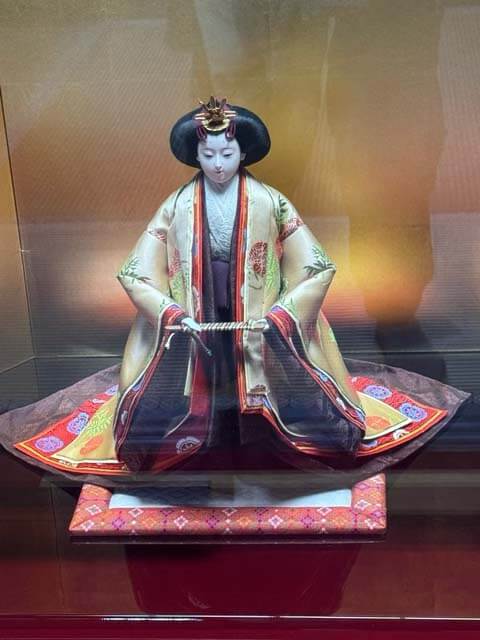
- Women of Nobility wore 12 layers of kimonos (about 40 lbs)…ugh!
- Nintendo company started here and the name in Japanese means leave it up to heaven (or chance)…they sure hit the jackpot
- There is a 1000 yr old tea house in Kyoto and a 25th generation lady runs it
- Houses here in Japan deteriorate by 10% a year. This is partially because of the building materials, but also they believe the spirit of who lives there stays there and they all want a new house when they start out.
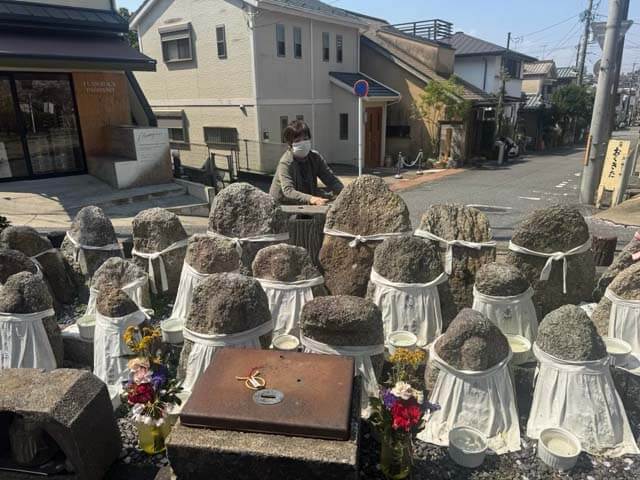
- If you die as a child (before 13) they set up a stone for the spirits to take you over to the other side
- There are 33 colleges and universities in Kyoto.



0 Comments