
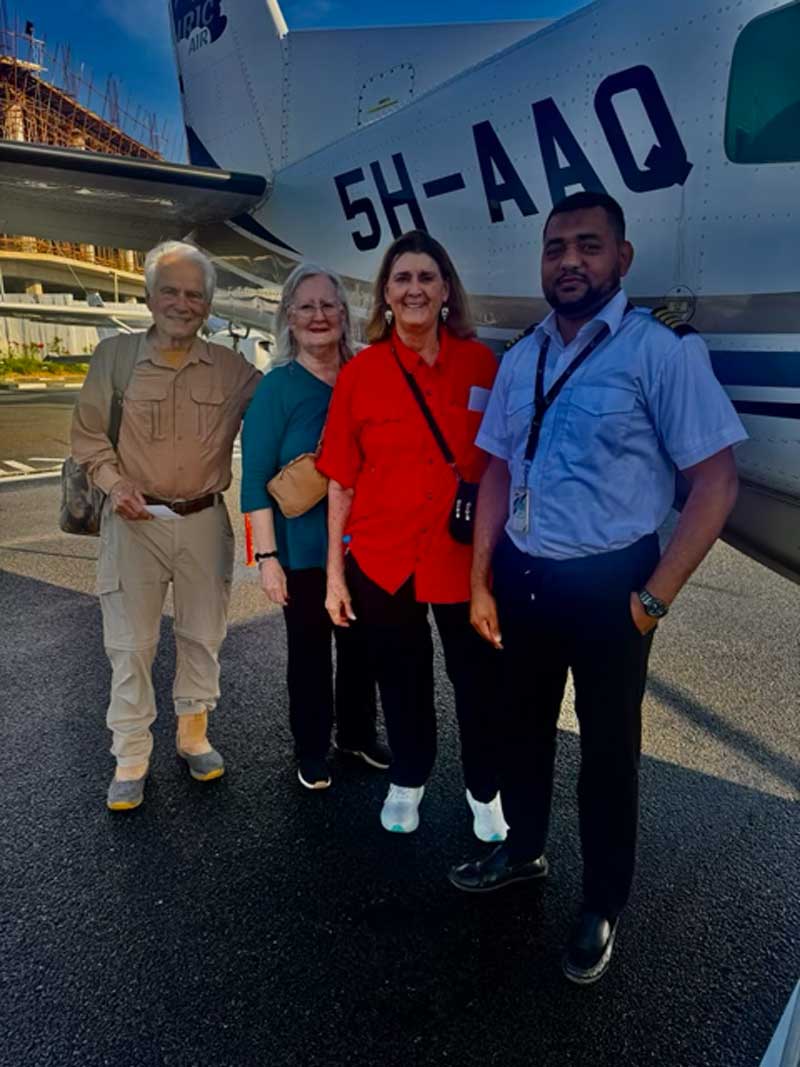
After almost 3 days of travel, we arrived in Dar es Salaam, Tanzania. It was touch and go for a week prior to beginning our adventure due to the riots over political unrest following their the recent election. In fact, there were four of us scheduled to go and Connie dropped out due to safety concerns when the US government raised the risk level from 2 to 3. Traveling went smooth (with the exception of KK losing her purse in the Denver airport) and considering the air traffic controllers were on strike. When we finally arrived in Dar es Salaam, our driver assured us things were safe. Then he quickly went on to explain that his brother had been shot the previously week during the riots as well as a close friend had been killed . He said there were police and soldiers in the street randomly firing off automatic weapons straight into the crowds. Hundreds were injured… so you can imagine his stories made us feel real safe… NOT! 😩 And sadly, he added they’re due to have more riots on December 9 which is their Independence Day… Good news is will be the hell out of Dodge by then. We did spend one night at the Hyatt and felt completely safe inside, not venturing out. Up early and onto the airport to fly to our first Safari camp, Luna Luna via bush plane.
Safari in Tanzania feels like stepping into a storybook—one illustrated by Disney, edited by National Geographic, and narrated by the wind. Everywhere I looked, the landscape held secrets: ancient trees, strange habits of animals, and the kind of stories the guides only tell once they trust you.
The Ancient Giant: The Baobab
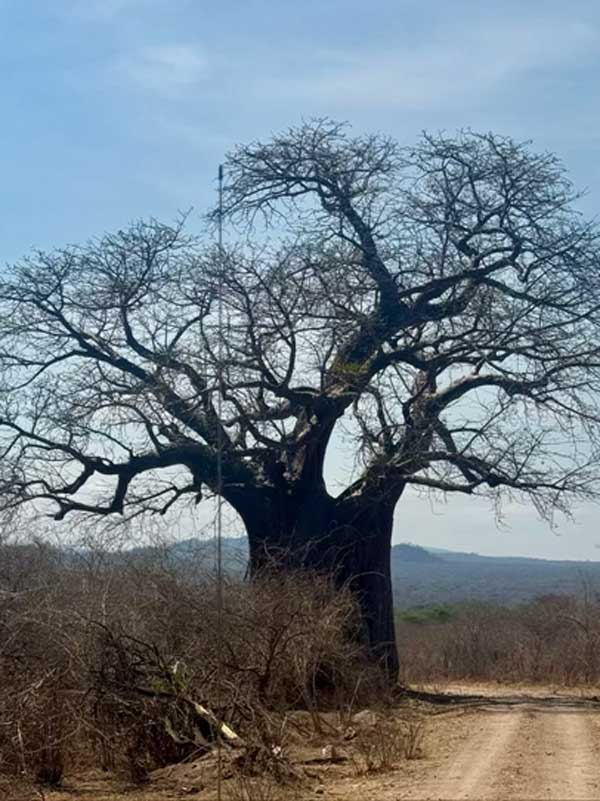
The first marvel was a 6,000-year-old baobab tree, a towering presence that looked like it had been plucked straight from a fairytale. Its trunk was hollow, a natural cathedral to hold water. Hurara, our guide and driver, explained how this magnificent “Tree of Life” feeds the world around it:
- Fruit rich in vitamin C
- Roots used as food
- Bark stripped by elephants using their tusks
It was surreal—this ancient being had been here since before the pyramids.
Hurara shared with us personal stories….the kind of stories you only hear out in the true wild. While he was training at a professional hunting camp, he watched a guest miss a shot at a leopard that was perched in a tree, feeding on an impala. In a blur of muscle and instinct, the leopard launched itself straight into the Jeep—just as the professional guide lifted his rifle. Before he could pull the trigger, the cat clamped onto the guide’s forearm, tore it clean off, and vanished into the bush with it. Leopards can cover nearly 20 feet in a single bound, and they are nothing to trifle with. This is my 10th safari, and I’ve only seen 2 leapords.
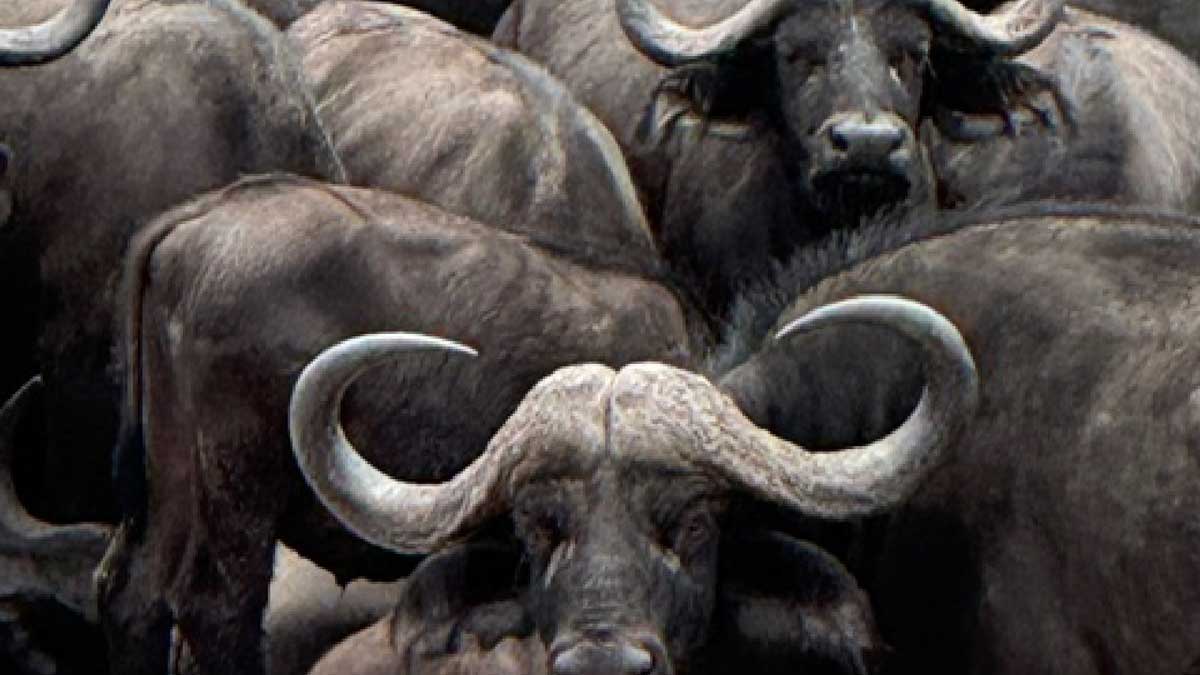
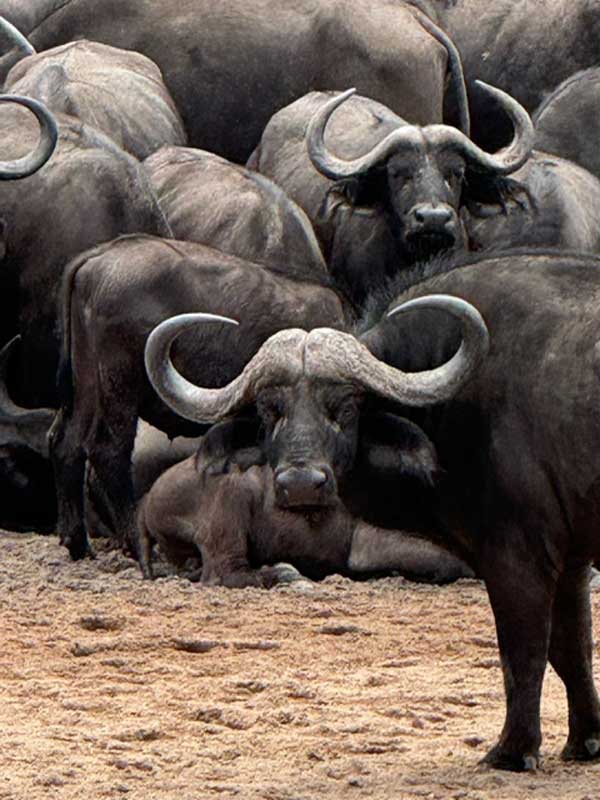
He told another story from a different camp during his training days. Everyone in the vehicle was completely absorbed, staring at something happening to the right of the truck—so absorbed that no one noticed the water buffalo they were disturbing on the left. It charged with no warning, driving its horn straight into the side door where Hurara was sitting up on the window sill. He fell out of the jeep and while the animal’s horn was still wedged in the metal and the animal was fighting to pull free, he sprinted to the opposite side of the vehicle hoping to escape danger. The buffalo finally yanked itself loose—taking the entire door with it—and thundered off with the mangled door still hanging from its horn.
Out here, life and danger blur into a single, unforgettable memory.
Plants With Personalities
Not all plants are peaceful.
The Candelabra cactus, also called the death tree, leaks a poisonous milk that only rhinos are immune to. And then there’s the humble toothbrush tree, which locals actually use for brushing their teeth.
The Animals of Day One
It felt like the entire savannah rolled out a welcome mat:
- Dik-dik….the tiniest and daintiest antelope
- Cape buffalo with their heavy helmets of horn
- Warthogs (Puma) trotting with tails held high like little flags
- Yellow baboons traveling in troops up to 200
- Black-faced monkeys, whose males sport unforgettable bright blue testicles
- Impala—so many they practically painted the plain
- Southern Ground Hornbill, marching like a regal officer
- Zebras, kudus, waterbucks with oily coats, and of course—
- Giraffes, the elegant “tower” browsing through the treetops
And David even had a Bush Buck visit his tent.
But nothing steals your breath like Elephants.
- Females travel with their babies, forming strong matriarchal herds
- Young males are pushed out to prevent inbreeding
- Pointed foreheads = female
- Rounded foreheads = male
- They live up to 60 years
- Their eyesight is poor, but their hearing and sense of smell are extraordinary
- They take 22 months to have a baby—almost two full years…LADIES, CAN YOU IMAGINE!
- They even burn dried elephant dung in the back if the jeep to create smoke that repels tsetse flies.
Day Two: The Small Five & the Ugly Five
When you hear about Safari, you always hear about the big five… Lion, Leopard, Rhinoceros, Water Buffalo, and Elephant . But, Safari isn’t just about the big animals—the little ones have their own magic.
The Small Five
- Buffalo weaver
- Leopard tortoise
- Antlion—tiny but fierce, digging perfect cone traps in the sand
- Rhino beetle
- Elephant shrew
The Ugly Five
Beauty is subjective, but charm is undeniable:
- Warthog (Puma) adorable in its own way)
- Wildebeest
- Hyena—bone-crushers with incredibly calcium-rich milk; their babies are born with a full set of teeth
- Leopard-faced vulture
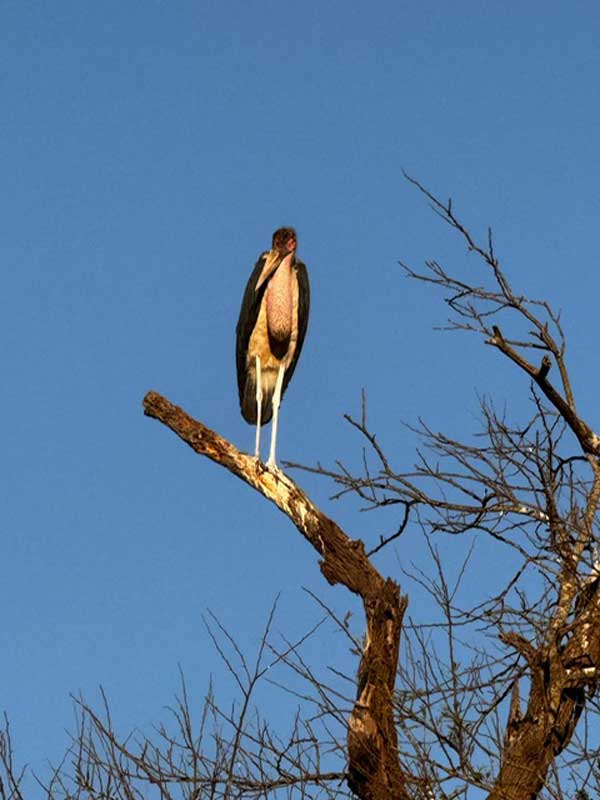
- Marabou stork, the Undertaker of birds
Hippos & Crocodiles
Watching the hippos, I learned they poop in the water to mark territory, which also feeds fish—this, in turn, attracts crocodiles. Nature doesn’t waste anything.
Crocodiles bury their eggs in sun-baked sand. The nest depth even determines the sex of the babies:
- Deep = females
- Shallow = males
The mother somehow knows exactly when to return, uncover the nest, and escort her hatchlings straight to water.
Birds of Day Two
The sky gave us its own safari:
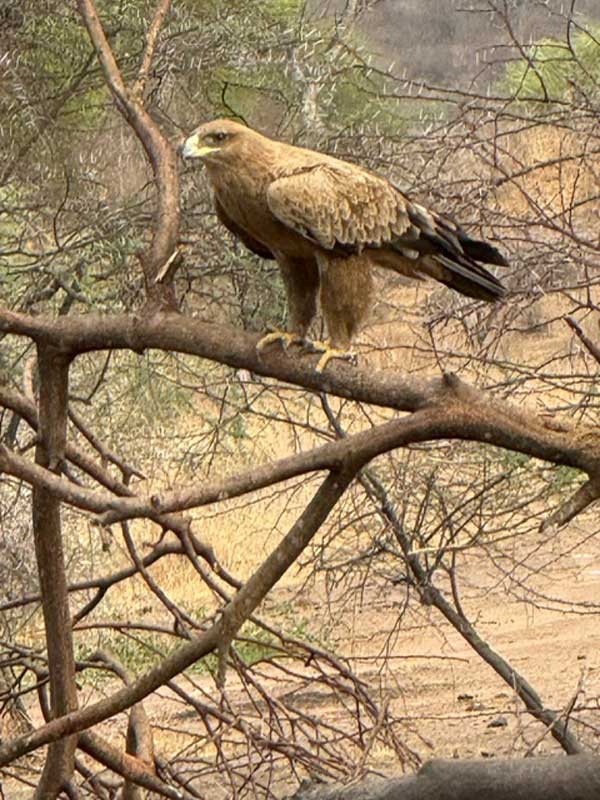
- Tawny eagle
- Ring-necked dove
- White-crowned lapwing
- Sand grouse, which can carry water in their feathers for miles—up to 50!
- What we think was a grey kestrel
Day Three: Colors, Calls & the Unusual
Each day we continued to see giraffes, hippos, lots of Impala’s, etc. but I could feel myself settling into the rhythm of camp life and the smaller animals and birds were intriguing.
- A tiny dik-dik (Donna small deer) blinked at us from the shadows
- The black-and-white hornbill with the orange bill swooped overhead
- A stunning lilac-breasted roller, the most colorful bird I’ve ever seen
- A spirited little bee-eater, which our guide Huruma proudly showed us a picture of on his phone
- And a mischievous favorite: the fork-tailed drongo, able to mimic up to 19 different sounds, tricking other animals to steal their food
Hurara, our guide, made everything deeper, richer—his knowledge, humor, and gentle love for the land shaped the experience. My first safari camp in Tanzania wasn’t just a place—it was a feeling. A reminder that the world is ancient, untamed, and spectacularly interconnected. Every tree, every story, every sound belongs to a larger conversation happening all around us.
And I’m grateful I got to listen, see and experience the “wild” with my two life long good friends, KK and Dave. Missing Connie!




0 Comments