A MUST ON ANYONE’S BUCKET LIST
Words can’t describe the feeling of euphoria I felt as I stepped thru the ancient walls on top of Machu Picchu today and saw this amazing immense city spread out on the top of the mountain. I, like most people, have seen the pictures of Machu Picchu; but, I can assure you, they do NOT capture its mystical and astounding beauty. There’s no question as to why It’s been credited with being the 7th Wonder of the Modern World. The mere fact that 600 years ago a small group of people could build a city of rock with such precision, complexity and perfection was truly inconceivable to my tiny brain. My astonishment with the sight before me was overwhelming and took my breath away. After a brief stop to regain my composure, I stepped into this ancient w
After our visit to Machu Picchu, we decided to take what we believed would be a leisurely drive thru the countryside on our return to Cusco. Much to our surprise, our day was spent surviving the winding dirt roads up the mountainsides ….where our driver would honk excessively at sharp corners, BUT the tourist bus would still come around the curve at a hug rate of speed, meet us head-on and force us to within a few inches of the 800 ft cliff side. Closing your eyes was a reflect but NO screaming was allowed! Thank God for a fabulous driver.
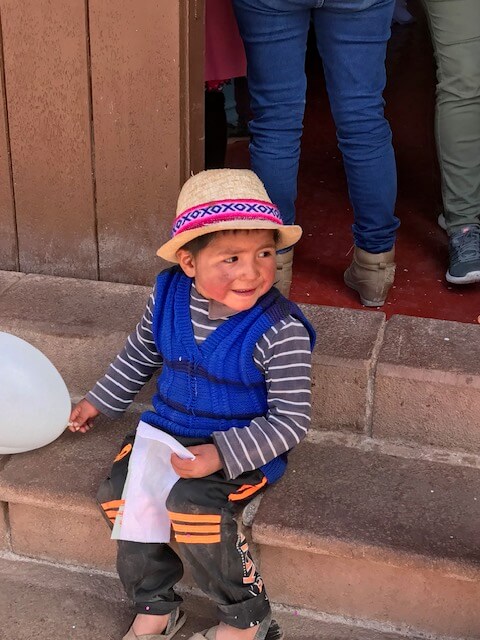
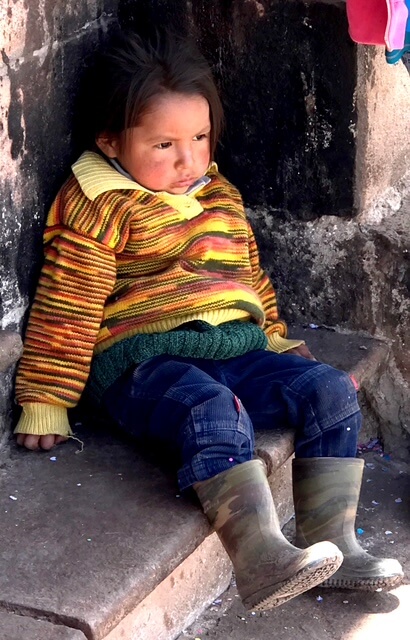
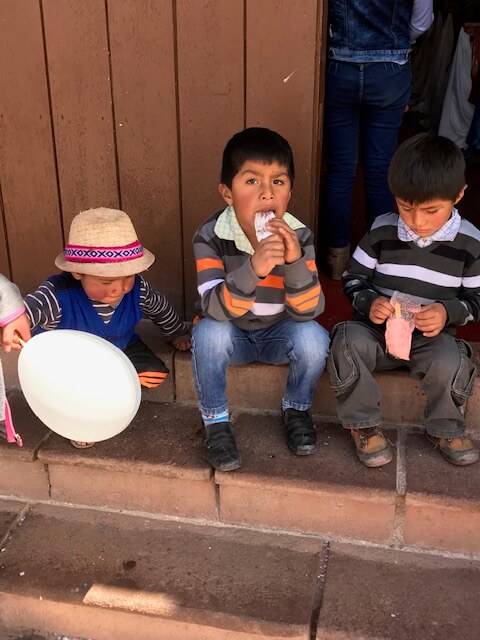
Our private guide for several days of our trip, Gina Navarro has been excellent and showed us a lot of things off the beaten track during our stay in Peru. Today, we visited the Colonial town of Moray known for “having more donkeys than people”. With no public transportation, donkeys serve a necessary function and are much more practical because llamas can only carry 50 lbs, while donkeys can carry 100 lbs. This town is famous for being the Spanish gateway to the jungle in the 17th century. The market was attended by visitors throughout Peru. Today tourists have started coming here in the past few years to admire the carved stone doorways. They are very detailed and have survived since the 1600s. A Red flag on a stick protruding from the doorway means they sell homemade corn beer. The small children are allowed to drink a mild form of the corn beer mixed with strawberries, but by age 14, the young adults are allowed to drink the real thing… full strength.
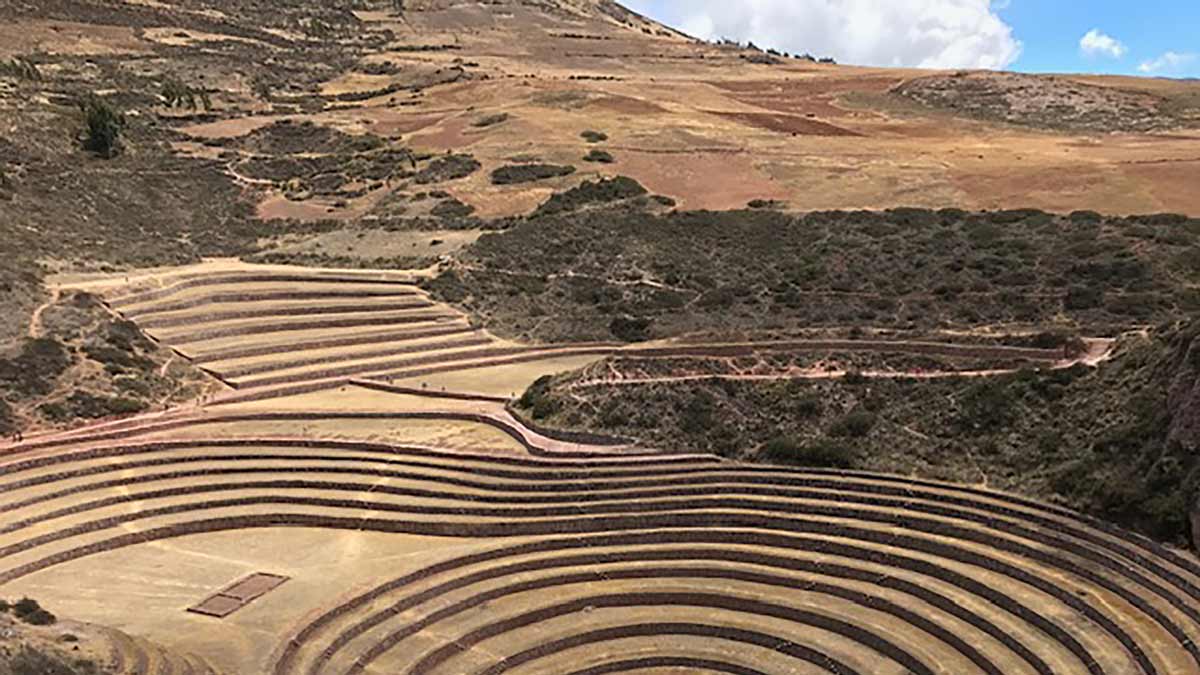
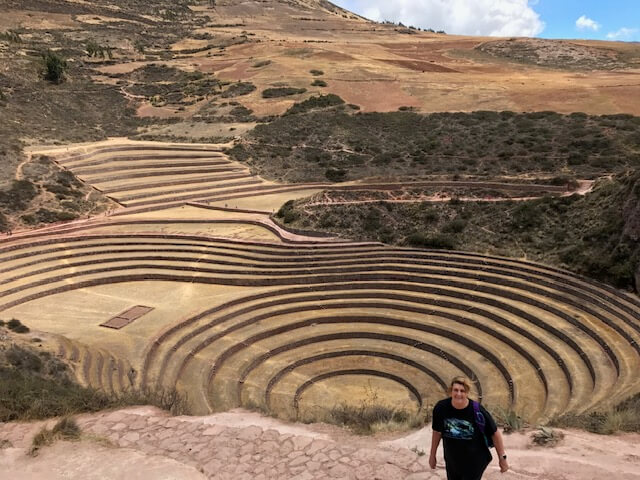
We were fortunate to witness a rural wedding in this “donkey” town chapel before headed out to the outskirts where we viewed the cooperative large agricultural area. It is believed the Incas found this large canyon and decided to build terraces at different height levels in the same shape as the natural hole. They obviously realized they could grow different crops on each level based on closeness to the sun; therefore, the temperature required for each crop to flourish was different. Width & height of each terrace also mattered.
The bottom terraces were coolest and higher terraces closer to the sun were warmer. They were able to grow 250 types of crops … bringing many new plants from the jungle and learning how to grow them here. Surprise….there are 1,250 varieties of potatoes and more than 4,000 varieties of quinoa in South America. This archaeological site stayed hidden til the 1930s.
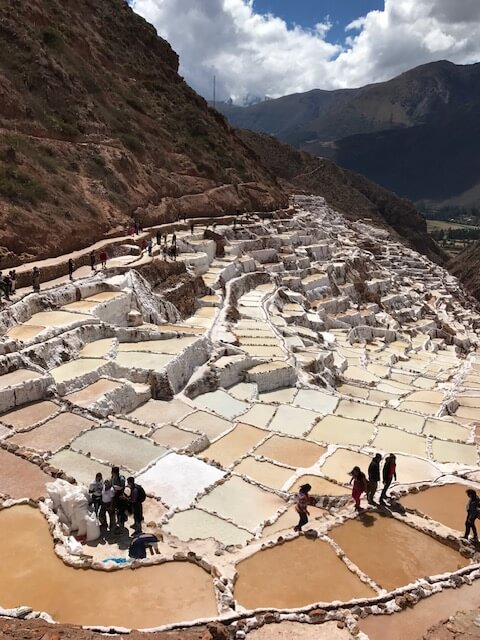
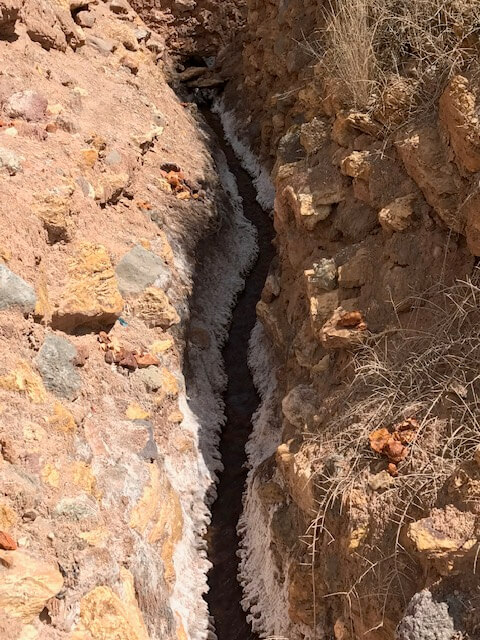
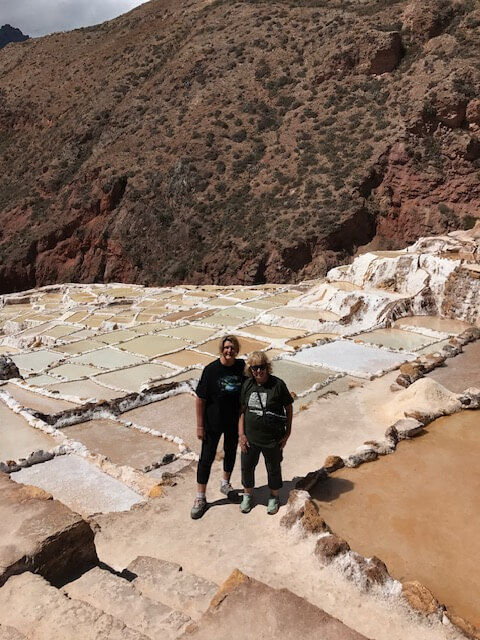
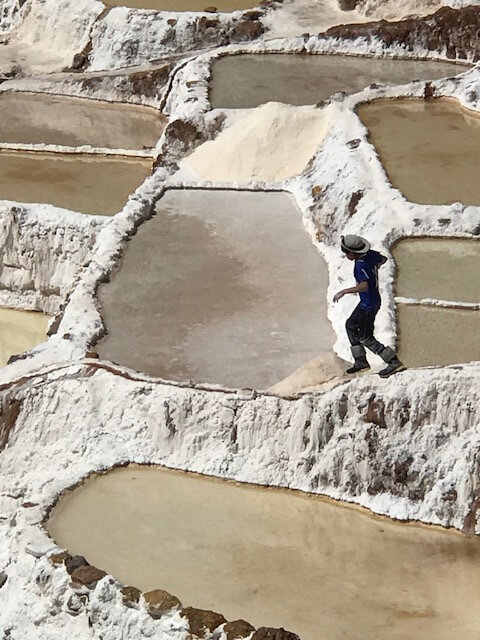
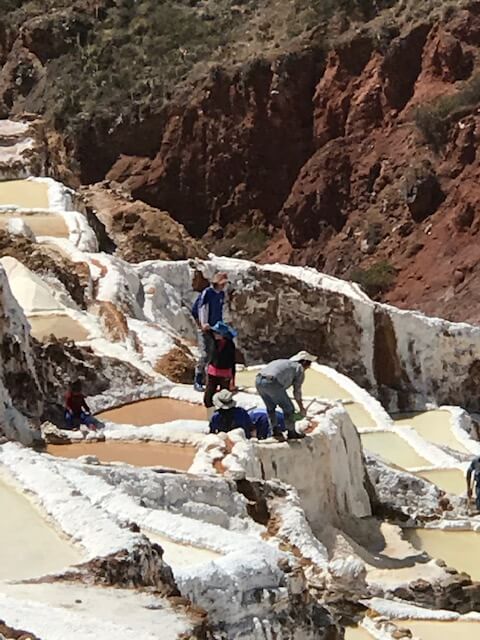
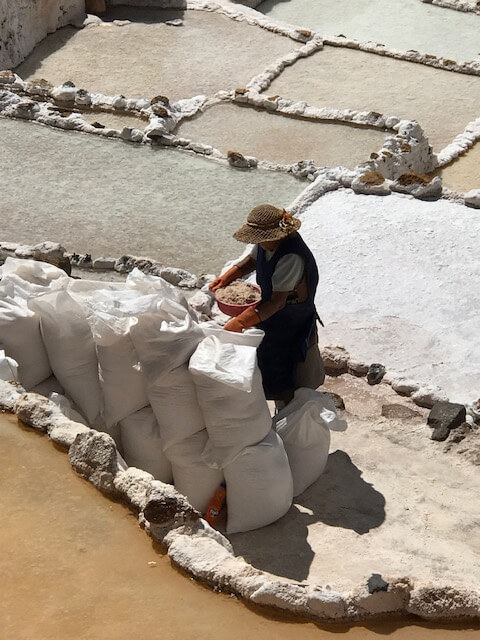
Next stop was our most impressive of the day… the salt mines which have existed for more than 100 years before the Inca Empire… but only opened to the public 2 years ago. There are 3,000 pools of salt worked by a cooperative of 3 communities consisting of approximately 350 people total. The Salt water is coming from an underground spring inside the mountain. As I bent down to taste the water (careful not to lose my balance, and wincing with pain as my “old” knees felt the impact), I found it very warm and extremely salty. More salty than ocean water.
The Sun heat the water and it evaporates, then crystals form. Every 3-4 days the locals have to add water and more crystals form…until they get to harvest the salt once a month. It is Pure salt … high quality no other ingredients . The salt is different colors based on the debt it is taken from the pool. The deeper debt is brown, middle is pink, top is white because it’s bleached. About 5 years ago, a private company came in and taught these local workers to use gloves to protect their skin and sunglasses to protect their eyes. They also taught them to mix the salt with other products so they can make more money … but the real money now is the entrance frees tourists, like us, pay to visit the salt mines. It’s really hard work to harvest the salt, but they hope to start exporting in the near future.
When we returned to Cusco, we were privileged to see a wedding of a important person, complete with fireworks in the city square next to our boutique hotel.
Peru has been an educational and pleasurable experience. I know tourism has not been popular here years back because of the terrorists and rebels, but I can assure you it is a safe, comfortable, and beautiful place to visit. Headed to Ecuador tomorrow to mark off a few more things on our bucket list and visit some dive buddies.
0 Comments