
Cusco, Peru…
Imagine if you can…5,000 years ago man came to this region of the earth. Now if you’re from Texas…stretch your imagination a little further… before man settled here, the ancestors to the armadillo clamored thru these mountains. Yelp, they were actually 3-4 times larger than our domesticated armadillos.
Today, our exploration of Cusco, the historic capital
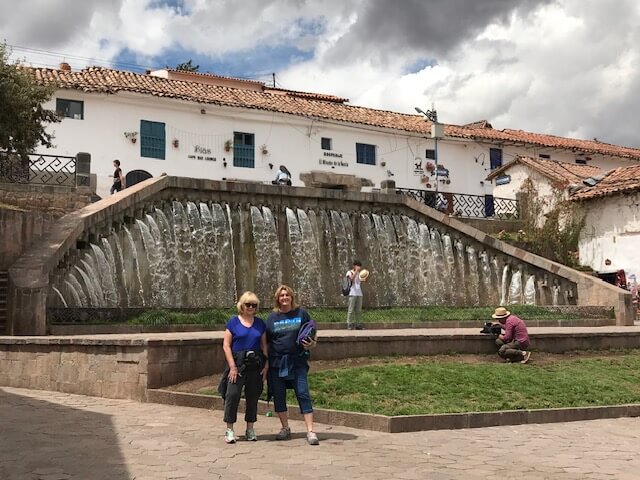
of the Inca Empire, started near our hotel, where the Incas built a beautiful fountain and wall back in the 1300s to mark the outskirts of the city and beginning of the jungle area. Everything was based on the number 7. There are 7 fountains named after 7 streets and a total of 49 falls. At night they are lite up and the colors dance in the water.
History lesson….The Inca Empire existed thru 14 Emperors and by the 1600s the population had grown to 12 million. The Spaniards invaded Cusco in 1632 and brought diseases, so by the 1700s, the population had fallen to only 2 million. The Spanish replaced the Inca’s practice of worshipping their nature Gods with the Catholic religion. They destroyed their temples and melted all the gold statues and emblems just for the money.
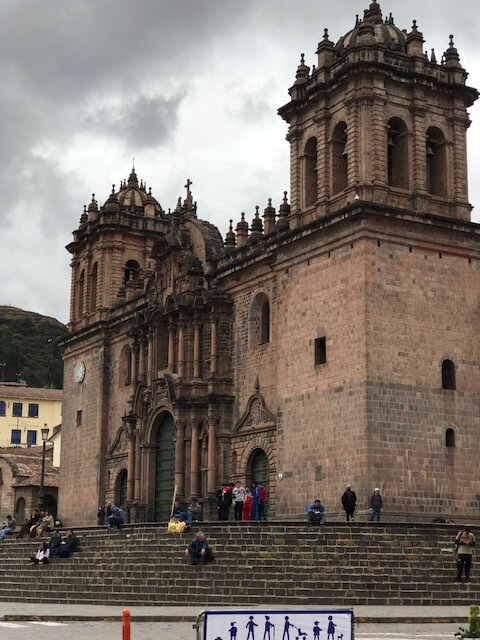
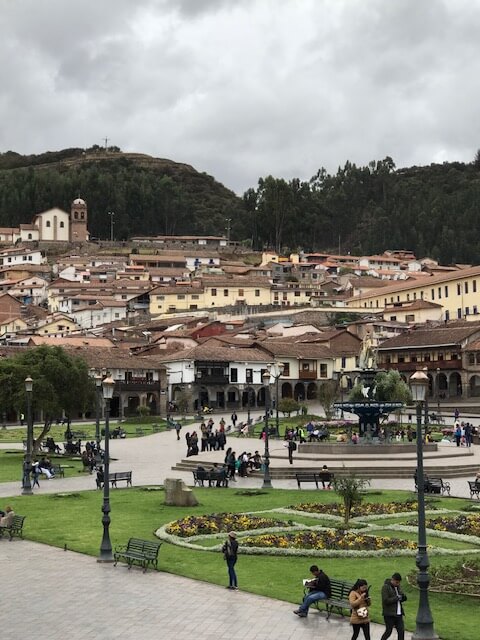
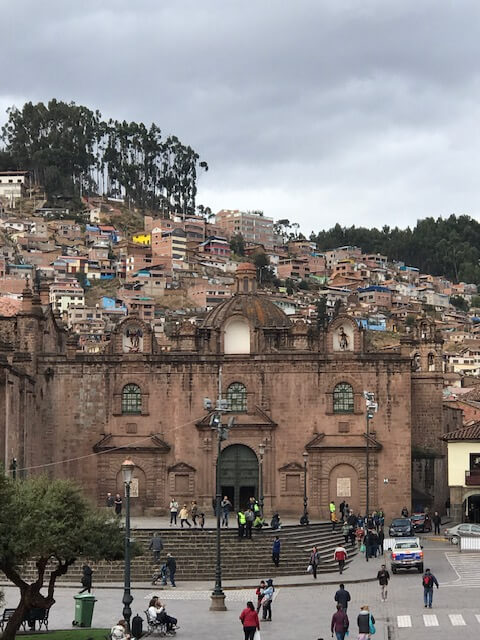
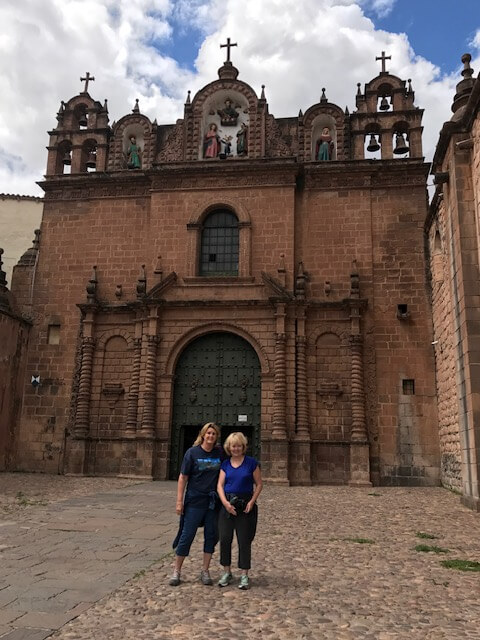
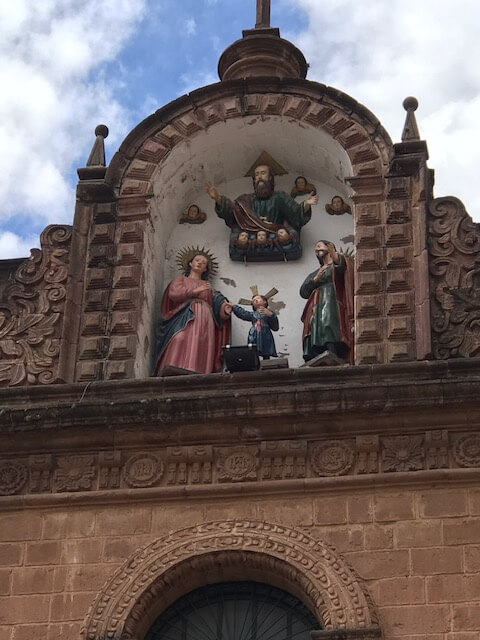
Today, we walked (carefully on narrow cobblestone alleys) to the main plaza and visited a breath-taking cathedral the Spaniards took 100 years to build. They allowed local artists to create extremely detailed alters and statues of wood and then gold and silver plate them. Sadly, no pictures are allowed of these magnificent works of art inside the church.
After lunch at a local restaurant, we decided to throw caution to the wind, and test the national alcoholic drink… a pisco sour, made by mixing Peruvian pisco with Key lime juice, simple syrup, egg white, Angostura bitters (for garnish), and ice cubes.
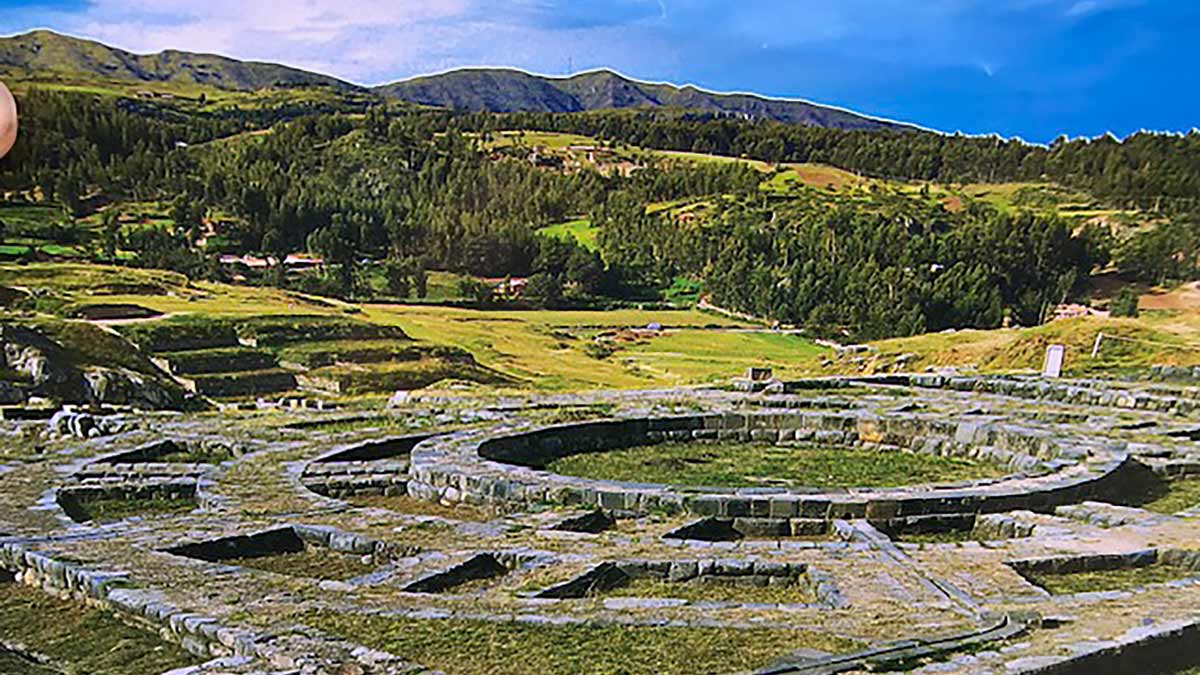
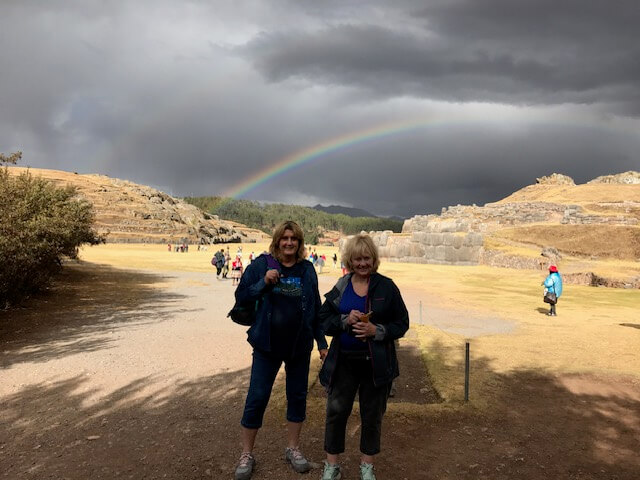
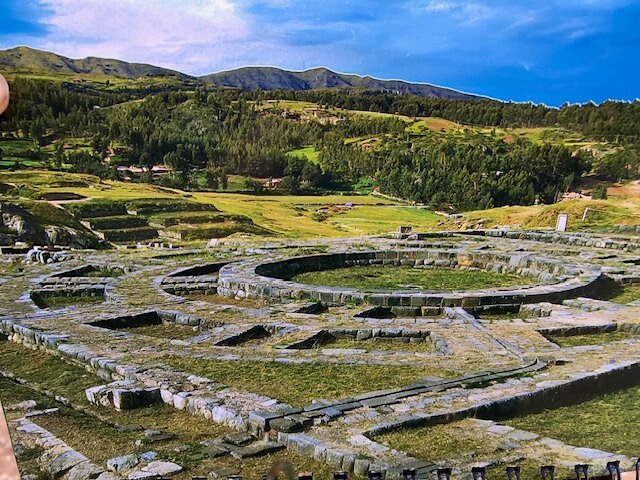
In full approval of this concoction and feeling no pain, we happily headed up the mountain overlooking the city. As we entered the most famous religious archeological site, Sasaywaman, a citadel on the northern outskirts of the city. we were greeted by a colorful Rainbow. Since the rainbow was considered a Deity among the Incas, our local guide was in awe, and so I quickly explained, Texas women are LUCKY and this wasn’t our first rodeo!
This site is a religious tribute to the Sun God and the Inca Emperor was considered the son of the Sun god. It took
25,000 people 75 years to build this tribute. They could only work during dry season.
7,000 workers moved the huge heavy boulders to the mountain top, estimating it took 100 men per boulder. They built 3 zig zag walls on 3 levels using the largest boulders on the corner ends. It seems inconceivable they were able to move the boulders and achieve such perfection.
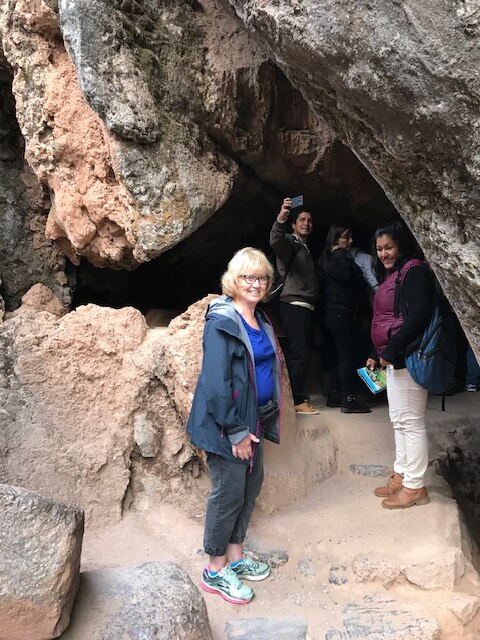
Next we visited another famous Inca site called Q’enqo… a Shrine to Mother Earth. The Incas build a beautiful alter within a cave here where they traditionally sacrificed a lama to the Gods.
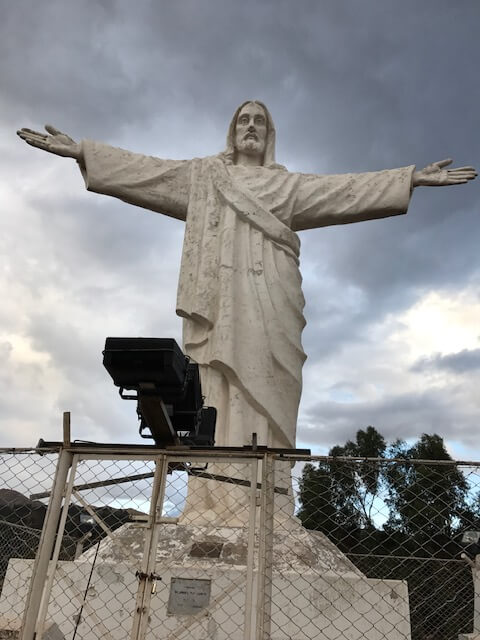
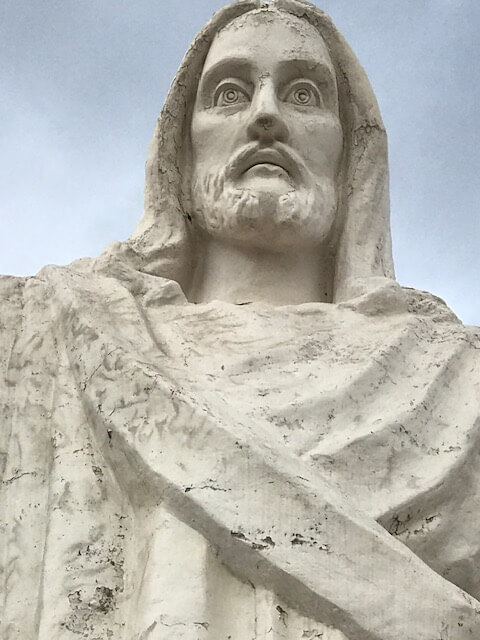
Last stop on the mountain was to the Peruvian version of The Christ. It is miniature in comparison to the Brazilian version and was a gift from the Palestinians in 1959.
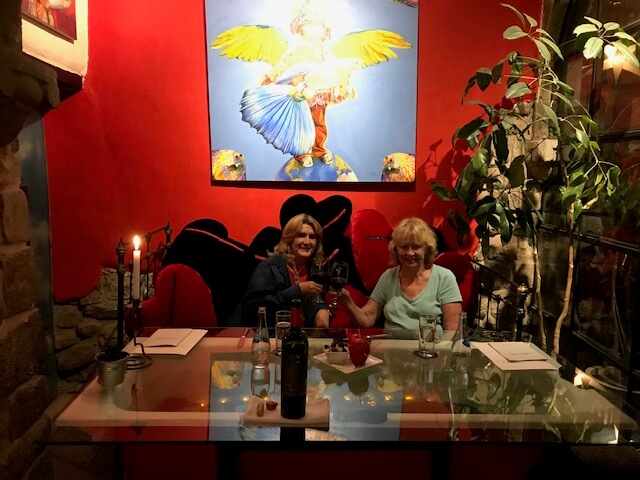
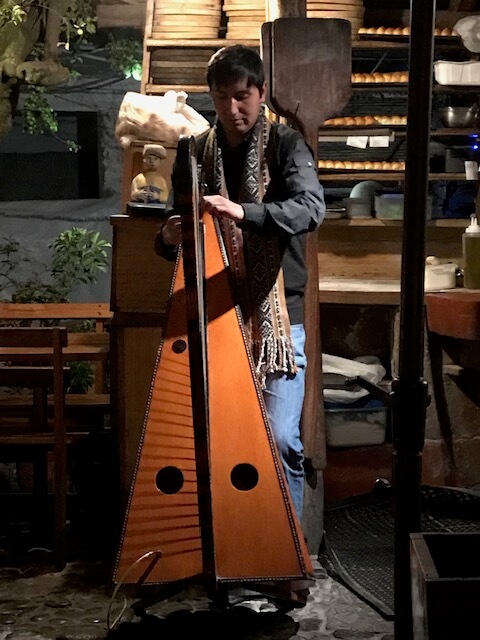
Our evening finale consisted of being serenaded by an Indian harp musician, playing Beatles music, outside under the stars with the smell of the wood burning fireplace drifting thru the air. We feasted on alpaca prepared by the locals (texture of chicken, but much tastier) and a bottle of Peruvian red wine. Satisfaction at its height.

0 Comments