Road tripping thru the Sacred Valley
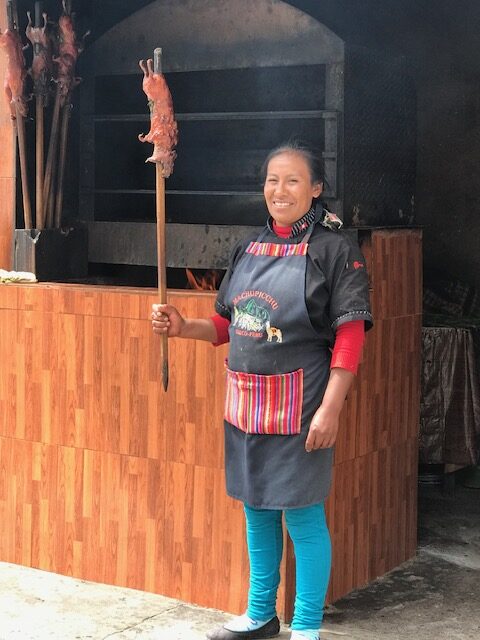
After a 3 course delicious breakfast, we grabbed our back packs and via private driver & guide set out to explore the Inca Trail and make our way to Aqua Calientes, the small town at the base of Machu Picchu mountain. I continue to be amazed at how friendly and courteous the Peruvian people are to us. The atmosphere is safe and casual in every town we visit. The rural people only eat meat once a week because the animals are very expensive… Guinea pig is the delicacy the people eat for special occasions like we eat turkey on Thanksgiving… there’s very little meat and the average roasted guinea pig costs $12. We actually visited one small town where they raise the guinea pigs for most of Peru. Yes, we left in tears😂
The houses in the countryside are made of mud bricks and have thatched roofs with a cross and/or statue of a bull at the entrance. Bulls came here with the Spaniards in the mid 1600s and allowed the Inca people to do their farming and other chores much easier & quicker. They are considered strong, and therefore insure the house will stand for long time.
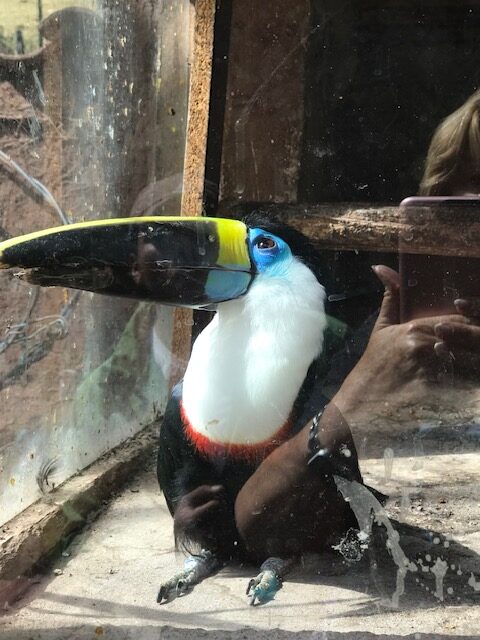
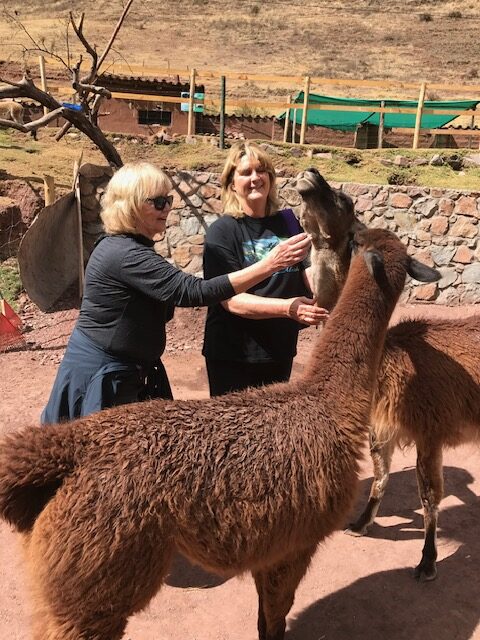
As we entered the Sacred Valley, an endangered animal reserve held us captive as we petted apachas and were educated about several endangered species in South America.
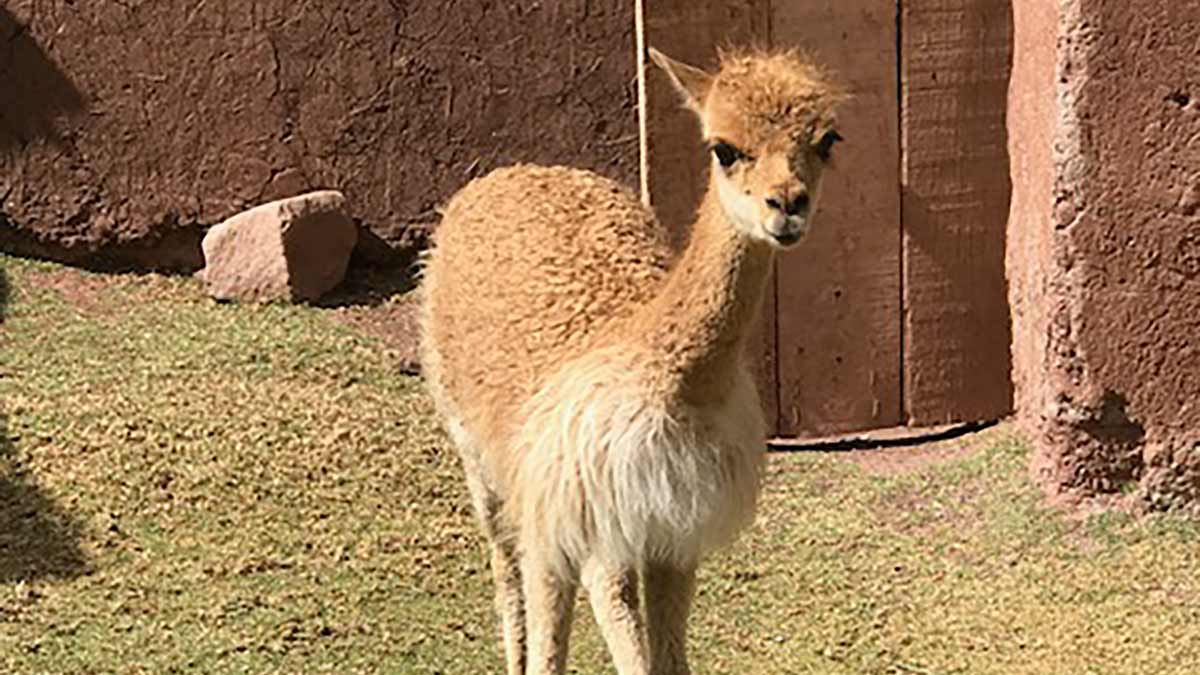
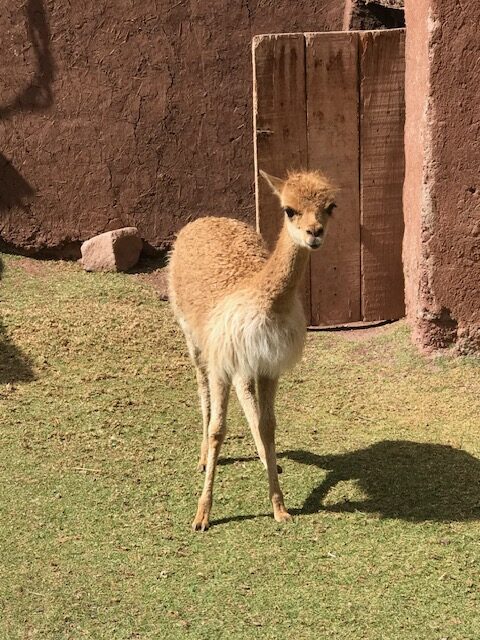
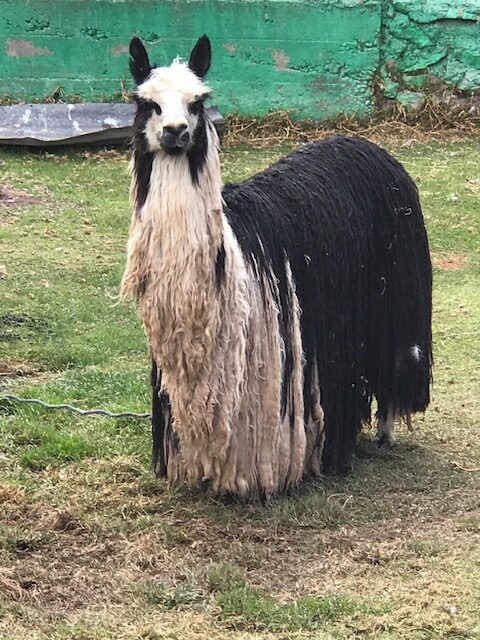
Who could resist the baby Vicuña? Her fur is the most expensive in the world… finer than cashmere … but it’s illegal to kill this species. The locals go as a group, surround the herd and catch them only long enough to shave the fur and then sell it.
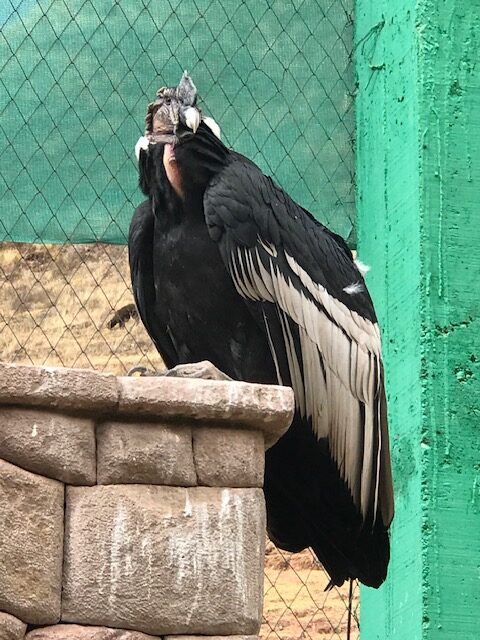
There was also a Spectacled bear – the only Bear in America, black with a short face. We saw Andean geese, a striking Puma, a Peruvian Eagle and the religious bird of this country… the Condor. The magnificent bird lives to be 75-80 years. They have a 10 ft wing span, mate for life, and are only found in South America. The Inca people believed in 3 worlds… the Condor represented their Heaven, the Puma represented Mother Earth, and the snake signified the underworld.
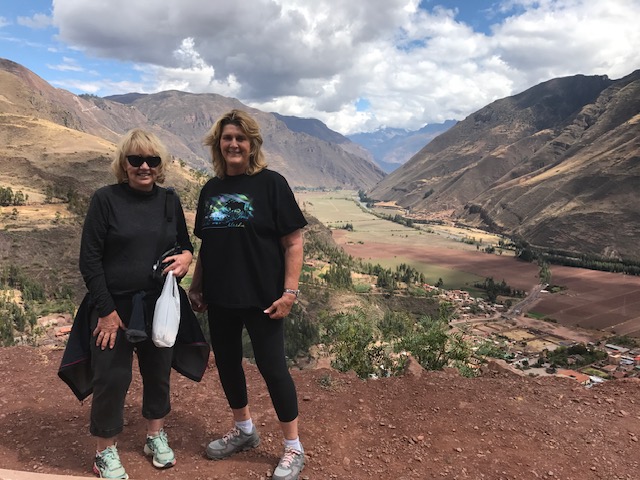
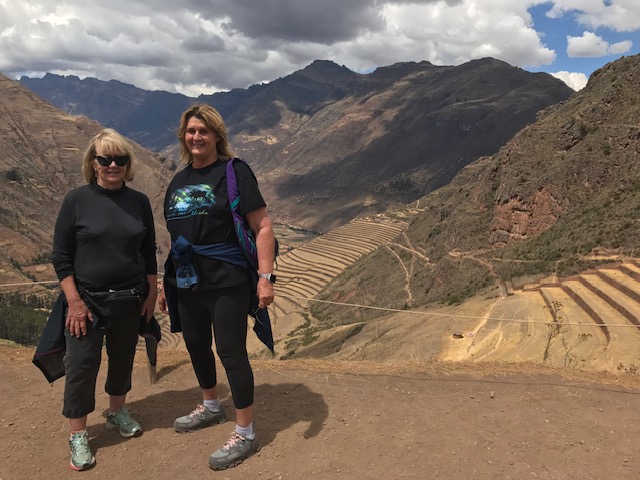
As we drove thru the Sacred Valley, we began seeing all the terraces built by the Incas to accommodate growing their crops on the mountainsides. Irrigation and drainage was critical to their success, so they had three layers of rocks: bottom later big rocks, middle layer smaller rocks and top later very fine gravel. They cover is with good soil from the valley, and voila… corn grew. Corn is still the main export product of the Sacred Valley.
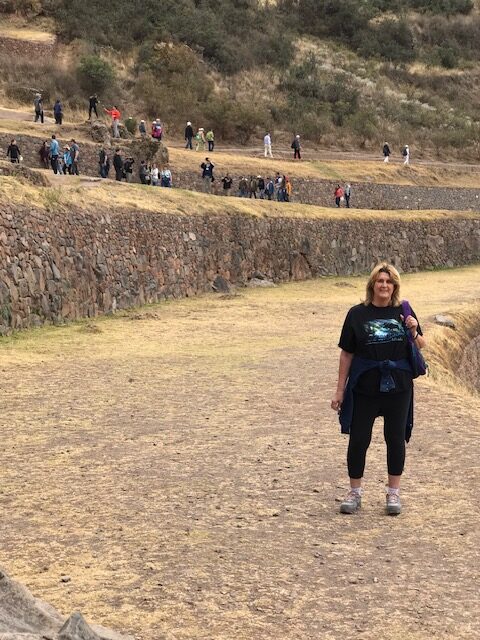
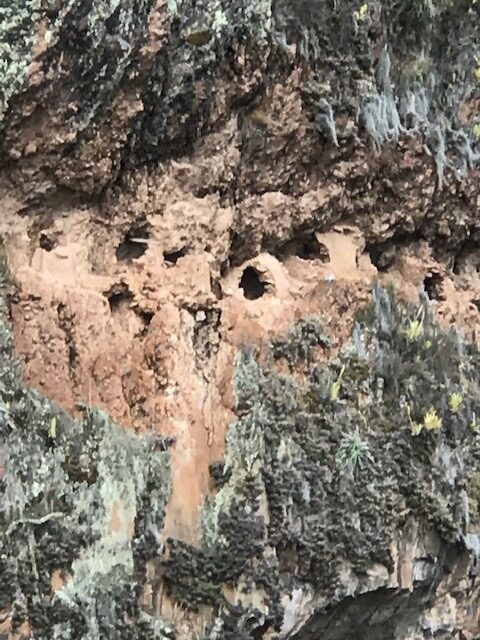
To test our endurance for the day, we tried up to Pisac mid-day. Huffing and puffing we attempted to focus on the beauty of this awe-inspiring Inca city designed and inhabited by professional back in the 1400s. Astrologists, architects, some royalty, priests and others of knowledge. Remember… knowledge was power then …just like today! The city was built in the shape of the condor. Like in most Inca cities, the land at the very top of the mountain was reserved as a tribute to the Sun God, then the next level if hosting was for royalty, and then the common man’s housing continued down the mountain to the river in the valley below. I was saddened by the evidence at this site of the barbaric pilfering by the Spanish when they conquered the Incas. The Incas buried their dead with gold and other precious possessions. As I gazed out to burial side of the mountain, there were huge holes where the Spaniards dug out the bodies to get the gold and valuables. I could even see the white bones next to the holes. Anger was definitely the emotion running thru my blood.
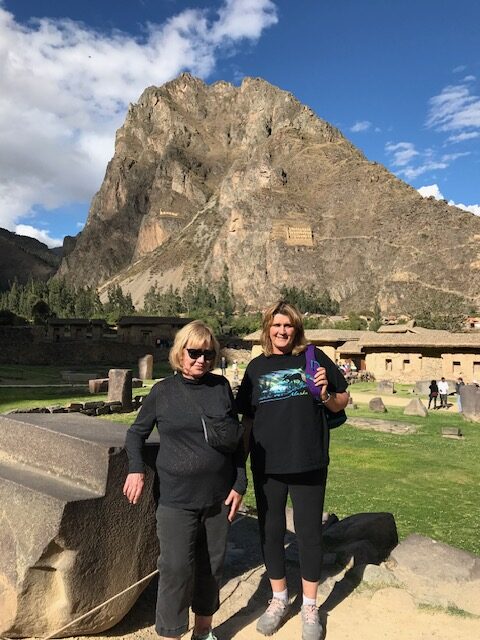
Our final conquest for the day was Ollantatytambo. These ruins sit on the Urubamba River amid snow-capped mountains. Our legs were actually moving in slow motion now, but we were truly impressed with the architectural design and superior planning that went into building this ancient city.
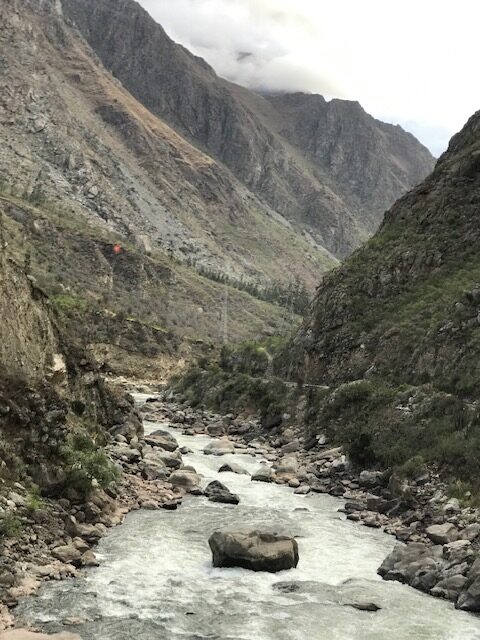
Our energy and excitement surged again as we heard the train whistle blow announcing it was time to board the Inca Rail to Aqua Calientes. The train followed alongside the raging Willkanuta river which was running much faster than us, crashing over giant boulders, and taking us toward the jungle area and the 7th Wonder of the Modern World… Machu Picchu. And yes, a bottle of red wine was waiting patiently for our arrival, accompanied by fresh local fruit.
0 Comments