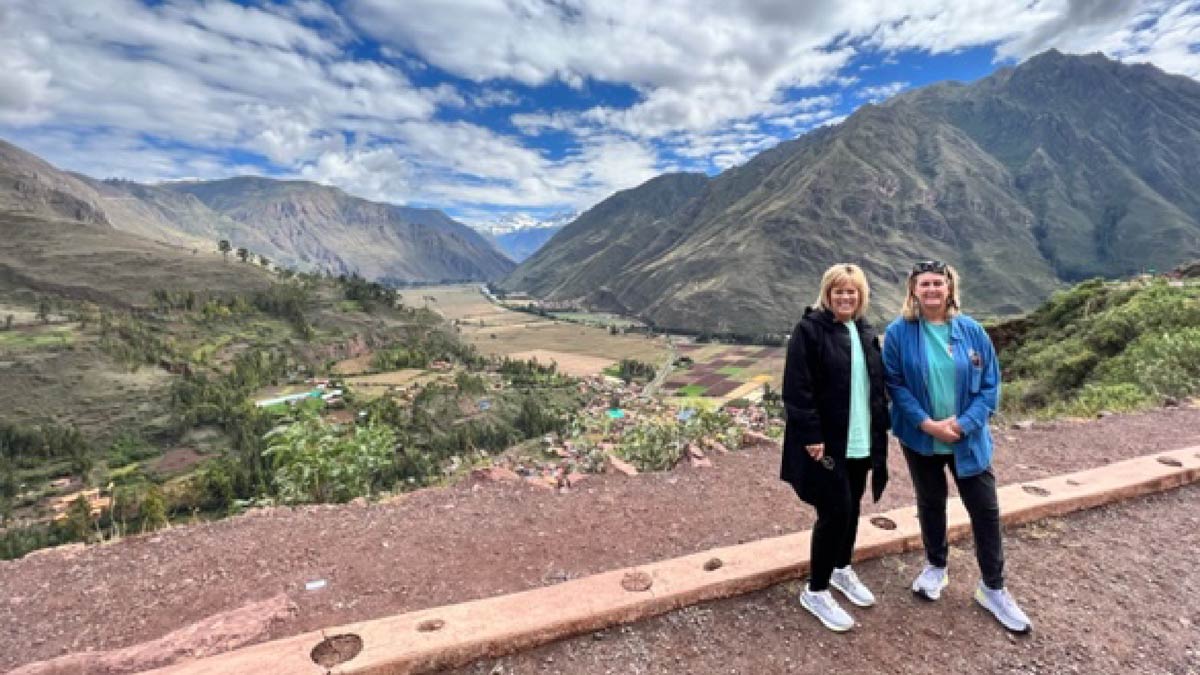
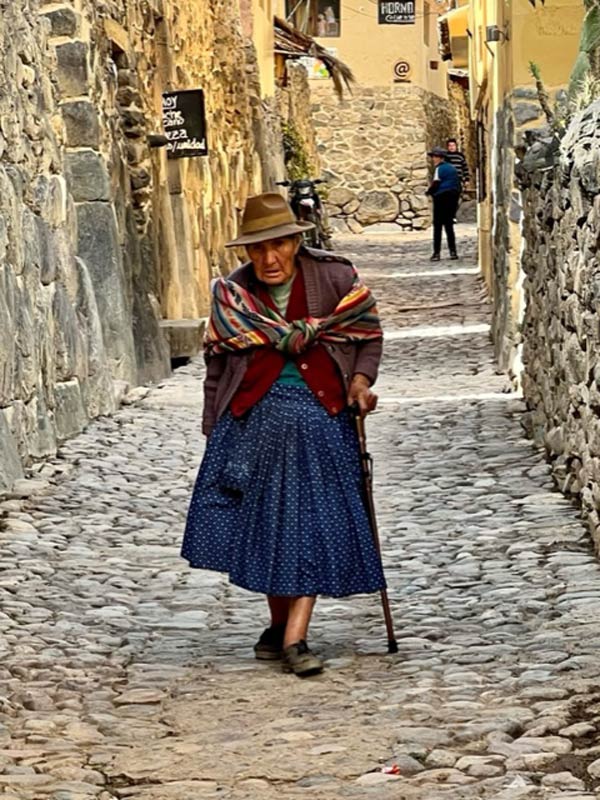
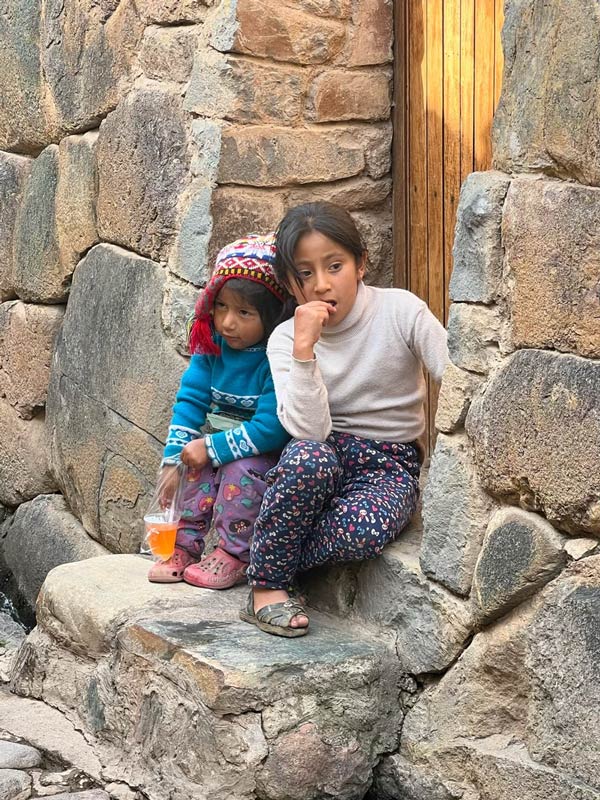
After a 3 course delicious breakfast, we grabbed our back packs and via private driver & guide set out to explore the Inca Trail and make our way to Aqua Calientes, the small town at the base of Machu Picchu mountain. I continue to be amazed at how friendly and courteous the Peruvian people are to us. The atmosphere is safe and casual in every town we visit.
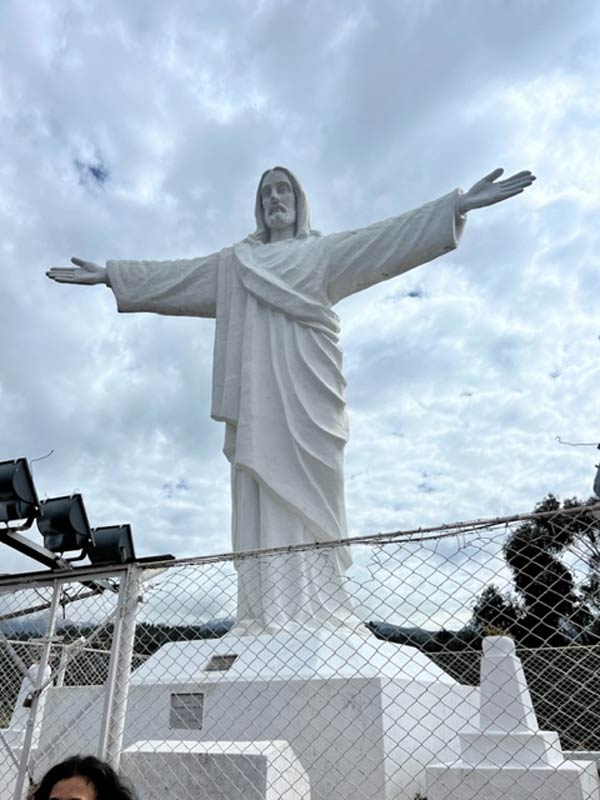
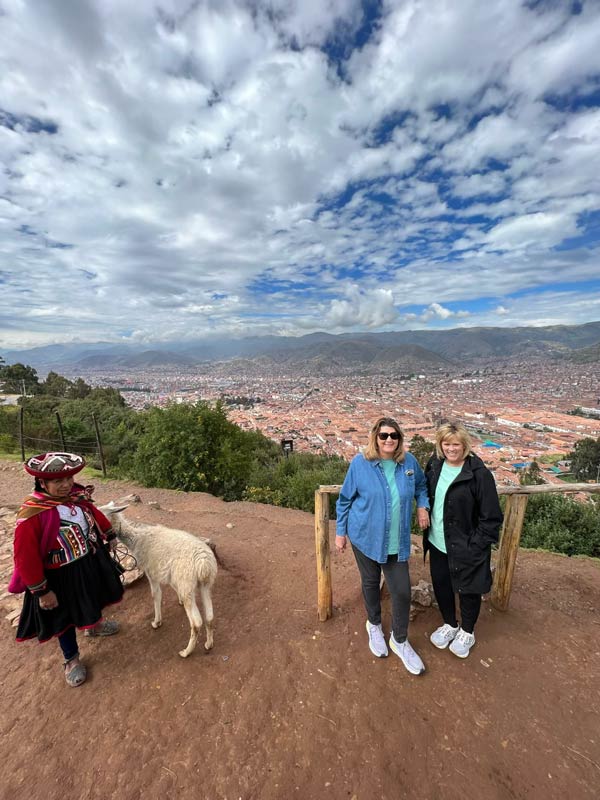
First stop was at top of mountain overlooking the city of Cusco, population of 600,000, but over 1.2m million in the immediate area. Here sits the Peruvian version of The Christ. It is miniature in comparison to the Brazilian version and was a gift from the Palestinians in 1959.
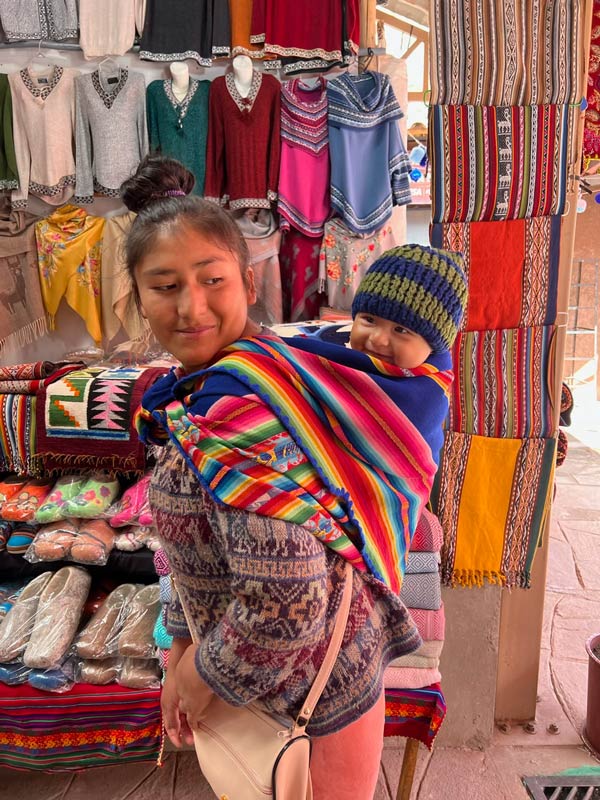
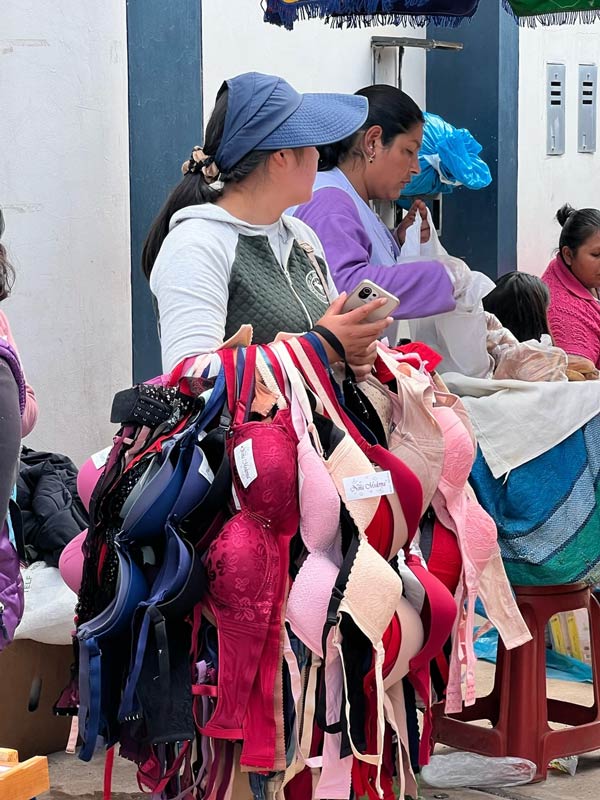
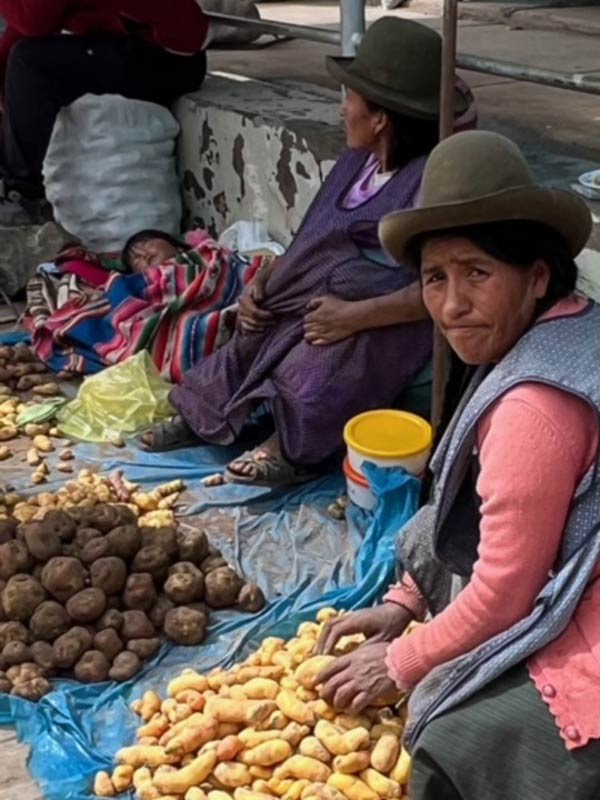
Driving down into the Sacred Valley, we stopped at a local market full of crafts and all types of products.
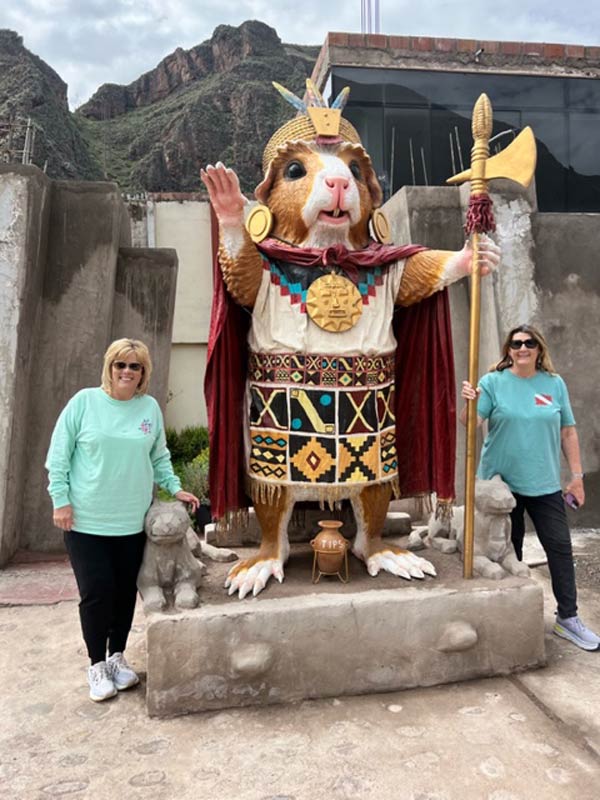
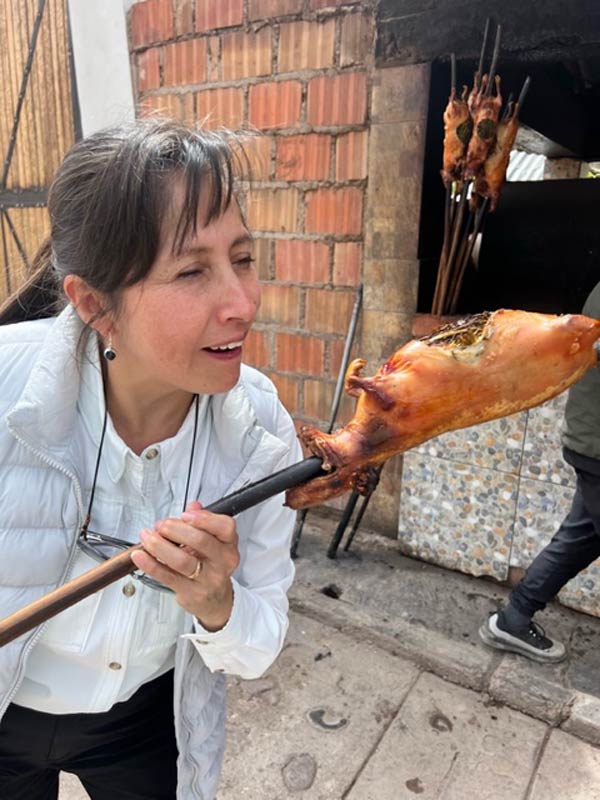
The rural people only eat meat once a week because the animals are very expensive… Guinea pig is the delicacy the people eat for special occasions like we eat turkey on Thanksgiving… there’s very little meat and the average roasted guinea pig costs $12. We actually visited one small town where they raise the guinea pigs for most of Peru. Yes, we left in tears😂
The houses in the countryside are made of mud bricks and have thatched roofs with a cross and/or statue of a bull at the entrance. Bulls came here with the Spaniards in the mid 1600s and allowed the Inca people to do their farming and other chores much easier & quicker. They are considered strong, and therefore insure the house will stand for long time.
Who could resist the baby Vicuña? Her fur is the most expensive in the world… finer than cashmere … but it’s illegal to kill this species. The locals go as a group, surround the herd and catch them only long enough to shave the fur and then sell it.
The Inca people believed in 3 worlds… the Condor represented their Heaven, the Puma represented Mother Earth, and the snake signified the underworld.
As we drove thru the Sacred Valley, we began seeing all the terraces built by the Incas to accommodate growing their crops on the mountainsides. Irrigation and drainage was critical to their success, so they had three layers of rocks: bottom layer big rocks, middle layer smaller rocks and top later very fine gravel. They covered the gravel with good soil from the valley, and voila… corn grew. Corn is still the main export product of the Sacred Valley.
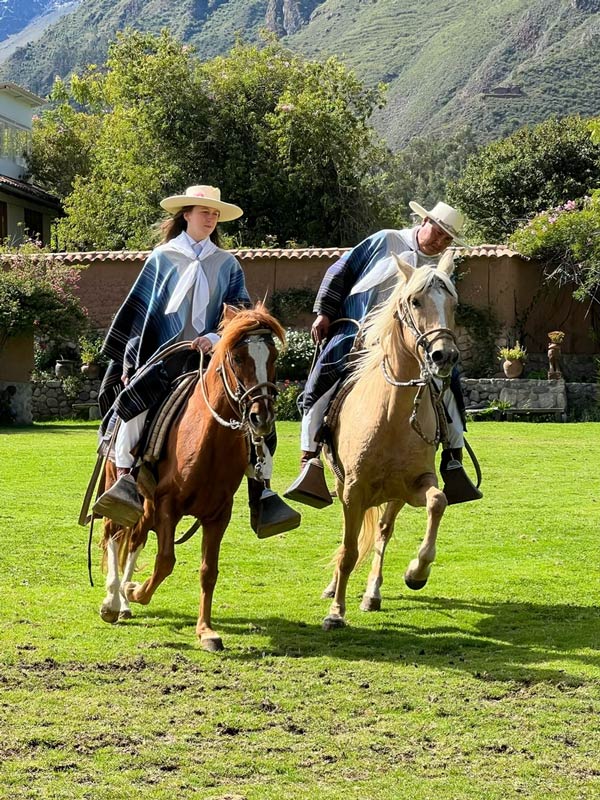
Lunch was at a ranch and there was a Horse show of prancing horses. Not near as impressive as the one Lezlie and I saw in Columbia last fall, but impressive nevertheless.
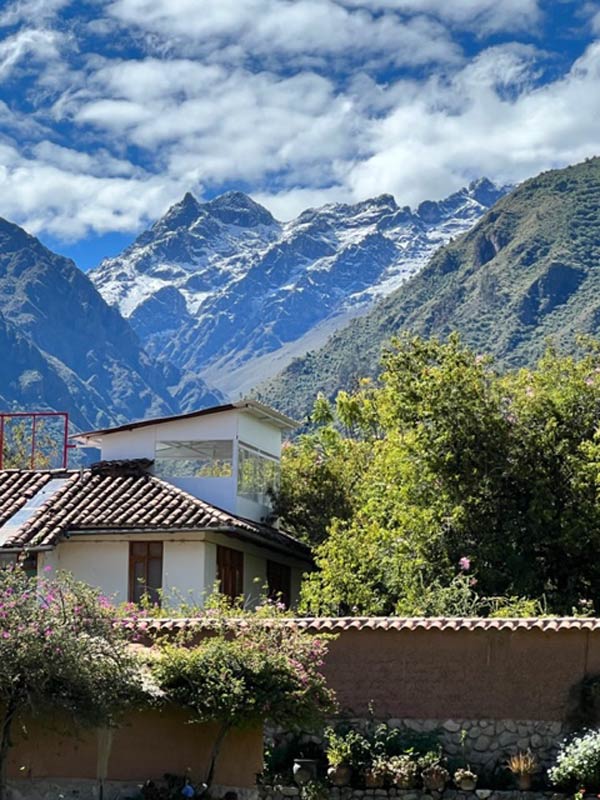
Our final conquest for the day was Ollantatytambo. These ruins sit on the Urubamba River 5amid snow-capped mountains. Our legs were actually moving in slow motion now, but we were truly impressed with the architectural design and superior planning that went into building this ancient city.
Our energy and excitement surged again as we heard the train whistle blow announcing it was time to board the Peruvian Rail to Aqua Calientes. The train followed alongside the raging Willkanuta river which was running much faster than us, (too fast for rafting) crashing over giant boulders, and taking us toward the jungle area and the 7th Wonder of the Modern World… Machu Picchu. Día iluminador!
0 Comments